




Estimated 2016 Road Deaths Climb 6%
The National Safety Council recommends eight policy actions to reverse the disturbing trend.
Photo by Famartin via Wikimedia Commons.
Photo by Famartin via Wikimedia Commons.
As many as 40,000 people in the U.S. died in motor vehicle crashes last year — a 6% increase compared to 2015 and a 14% jump compared to 2014, according to preliminary 2016 data from the National Safety Council.
The figure represents the most dramatic two-year escalation since 1964. The preliminary estimate means 2016 may have been the deadliest year on the nation’s roads since 2007.
An estimated 4.6 million roadway users were injured seriously enough to require medical attention in 2016, and the estimated cost to society was $432 billion, according to NSC.
An NSC survey released Feb. 15 provides a glimpse at the risky behaviors propelling this trend. Although 83% of drivers surveyed believe driving is a safety concern, a startling number say they are comfortable speeding (64%), texting either manually or through voice controls (47%), driving while impaired by marijuana (13%), or driving after they feel they’ve had too much alcohol (10%).
Motor vehicle fatality estimates are subject to slight increases and decreases as data mature, according to NSC. The organization uses data from the National Center for Health Statistics, an arm of the Centers for Disease Control and Prevention. Included are deaths that occur within 100 days of a crash and deaths that occur on both public and private roadways, such as parking lots and driveways.
“Our complacency is killing us. Americans believe there is nothing we can do to stop crashes from happening, but that isn’t true,” said NSC President and CEO Deborah A.P. Hersman. “The U.S. lags the rest of the developed world in addressing highway fatalities. We know what needs to be done; we just haven’t done it.”
NSC is calling for immediate implementation of these eight measures:
Mandate ignition interlocks for convicted drunk drivers and better education about the nature of impairment and when it begins.
Install and use automated enforcement techniques to catch speeders.
Extend laws banning all cell phone use — including hands-free — to all drivers, not just teens; upgrade enforcement from secondary to primary in states with existing bans.
Upgrade seat belt laws from secondary to primary enforcement and extend restraint laws to every passenger in every seating position in all kinds of vehicles.
Adopt a three-tiered licensing system for all new drivers under 21 — not just those under 18.
Standardize and accelerate into the fleet automotive safety technologies with life-saving potential, including blind-spot monitoring, automatic emergency braking, lane departure warning and adaptive headlights.
Pass or reinstate motorcycle helmet laws.
Adopt comprehensive programs for pedestrian safety.
NSC has issued traffic fatality estimates since 1921. Supplemental estimate information, including estimates for each state, can be found here.
In response to NSC's 2016 road death projections, the Governors Highway Safety Association released a statement calling for action by the highway safety community. The group also urged the federal government to ease restrictions on how federal funds are spent to advance state safety efforts.
“The good news is we know what works to save lives — high visibility enforcement of strong traffic laws coupled with public education and awareness,” GHSA said. “At the same time, state highway safety offices need the flexibility to try new approaches and strategies to administer their federally-funded programs. Too often, state programs are bogged down by unnecessary and repetitive paperwork and federal bureaucracy, which detract from the effort spent on safety.”
More Safety

Nexar-Nauto Merger Aims to Give Fleets Better Safety Intelligence Through Larger Driving Dataset
Stefan Heck tells Automotive Fleet that combining more than 10 billion miles of driving history with Nexar's AI models will give fleets deeper insights into driver risk and roadway conditions than either company could provide independently.
Read More →
Don't Wait for a Crisis: 5 Ways to Build Mental Health Into Your Fleet Safety Program
For Suicide Prevention Month, fleet and safety leaders have an opportunity to put mental health where it belongs: at the center of workplace safety.
Read More →
How Camera Data Can Strengthen a Fleet’s Insurance Renewal
Insights from a commercial insurance carrier and a broker show how fleets can turn video telematic data, driver coaching, and improved claims results into a stronger case at insurance renewal.
Read More →
The Safest Fleets Aren’t the Ones with the Most Technology
You’ve made the telematics investment. Here’s how to capture the other half of its value and build the safest fleet on the road.
Read More →
Hidden in Plain Sight: Fleet Compliance Risks
Fleet compliance isn't just about having policies — it's about consistently enforcing them. This practical guide reveals six hidden compliance risks common in public sector and shared fleet operations and outlines proven strategies to improve visibility, accountability, and audit readiness
Read More →
NETS Sets 2026 Fleet Safety Benchmark Conference for Indianapolis
The Sept. 15–17 program will feature fleet benchmarking data, case studies, emerging technologies, and implementation strategies while running alongside the NSC Safety Congress & Expo.
Read More →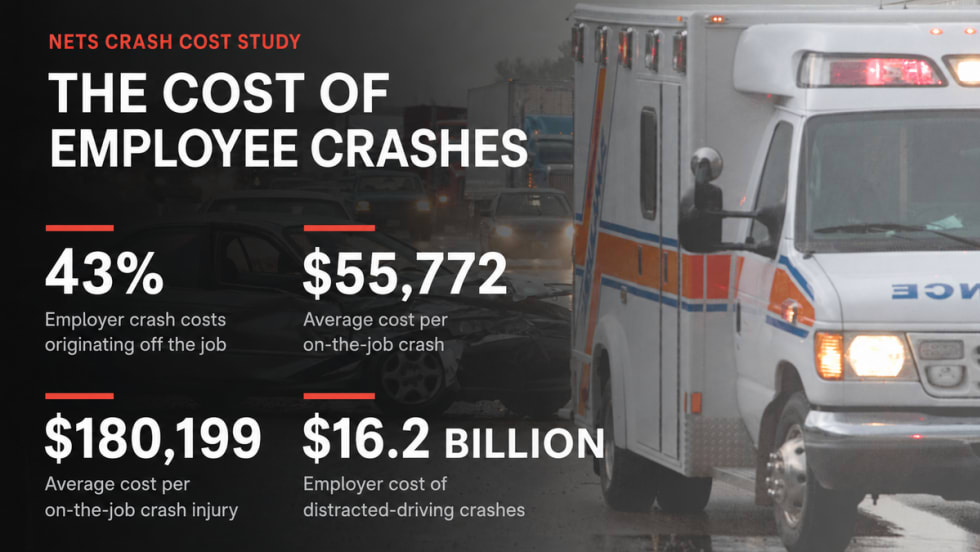
Off-the-Job Crashes Account for 43% of Employers’ $61.7 Billion Crash Burden
NETS quantifies costs dispersed across fleet, risk, HR, and other departments while providing new per-crash benchmarks for employers.
Read More →
Ram Recalls More Than 1.27 Million 1500 Pickups for Seat Belt Anchor Issue
The recall affects certain 2019-2026 Ram 1500 pickups that may have improperly attached second-row seat belt buckle anchors.
Read More →
How Better Visibility Cut Speeding Violations by 48%
Fleet leaders don't need more data, they need clearer visibility into what the data is saying. This case study explores how one utility replaced speeding-event counts with a single metric — miles driven in violation — to strengthen safety and significantly reduce speeding violations.
Read More →
Operation Safe Driver Week: Why the Industry's Oldest Safety Campaign Still Matters to Fleets
A look at how a 2007 enforcement initiative became one of the most consequential weeks on the fleet safety calendar, and what it means for your drivers in 2026.
Read More →