




EPA Proposes New Tier 3 Emissions Standards That Would Start in 2017
The U.S. Environmental Protection Agency (EPA) has proposed new Tier 3 tailpipe and fuel standards that are designed to reduce emissions and the sulfur content in gasoline.
The U.S. Environmental Protection Agency (EPA) has proposed new Tier 3 tailpipe and fuel standards that are designed to reduce emissions and the sulfur content in gasoline. The proposed standards would go into effect in 2017 if approved as-is.
The proposed Tier 3 standards are designed to be in line with the California Air Resources Board’s (CARB’s) Low Emission Vehicle III program, which would allow automakers to sell the same vehicles in all 50 states, EPA stated.
In terms of costs, EPA estimates that it would add $130 to the cost of each vehicle in the year 2025 and about 1 cent to the average cost of a gallon of gasoline once the standards are completely in place. For total costs, EPA estimates the program will cost $3.4 billion but will provide between $8 billion and $23 billion in health benefits.
According to the EPA, the proposed standards will reduce the amount of volatile organic compounds and nitrogen oxides by 80%, establish a 70% tighter particulate matter standard, reduce fuel vapor emissions to close to zero, and reduce vehicle emissions of toxic air pollutants, such as benzene and 1,3-butadiene by up to 40%.
The automakers from the Association of Global Automakers and from the Alliance of Automobile Manufacturers both came out in support of these new standards.
“We have been anxiously awaiting this rulemaking because it is good for the environment and will help harmonize the federal and California programs for both vehicles and fuels,” said Michael J. Stanton, president and CEO of Global Automakers.
“Automakers have already reduced vehicle emissions by 99%, and we’re working to go further while also delivering high quality, affordable vehicles to our customers,” stated the Alliance. “Our goal is a rule that harmonizes with California’s Low Emission Vehicle (LEV III) program finalized in 2012. Eliminating differing timelines, regulatory procedures and test methods at the federal and state levels will help reduce emissions and avoid extra costs to consumers.”
You can view the proposed Tier 3 standards from the EPA here.
More Green Fleet

EV Charging Use Is Outpacing Infrastructure Growth
ChargePoint’s 2026 Charging Forward Report points to rising charger use, higher-powered charging, commercial vehicle electrification, and energy-management technology. Here’s what fleets should know.
Read More →
Merchants Fleet Reports 290M EV Miles as Fleets Navigate Changing Electrification Market
From millions in operating savings to hundreds of millions of EV miles, Merchants Fleet’s latest report reveals what’s working and what’s changing in fleet electrification.
Read More →
The EV Breakdown Nobody's Talking About: Why Most Electric Vehicle Roadside Calls Aren't Mechanical Failures
Here's why EV breakdowns are widely misunderstood.
Read More →
ChargePoint Now Available in Energy Pass
ChargePoint and additional planned charging network integrations were added to GM's Energy Pass.
Read More →

First Look: Slate Auto's Electric Fleet Pickup
Could an affordable, modular EV pickup make electrification more practical for fleets?
Read More →
Slate Debuts Colorful, Unique EV Models
A recent media and client event, studded with electric vehicles dressed up on platforms, planted a new position for the manufacturer in the wider EV market. Fleets will find cost-saving advantages.
Read More →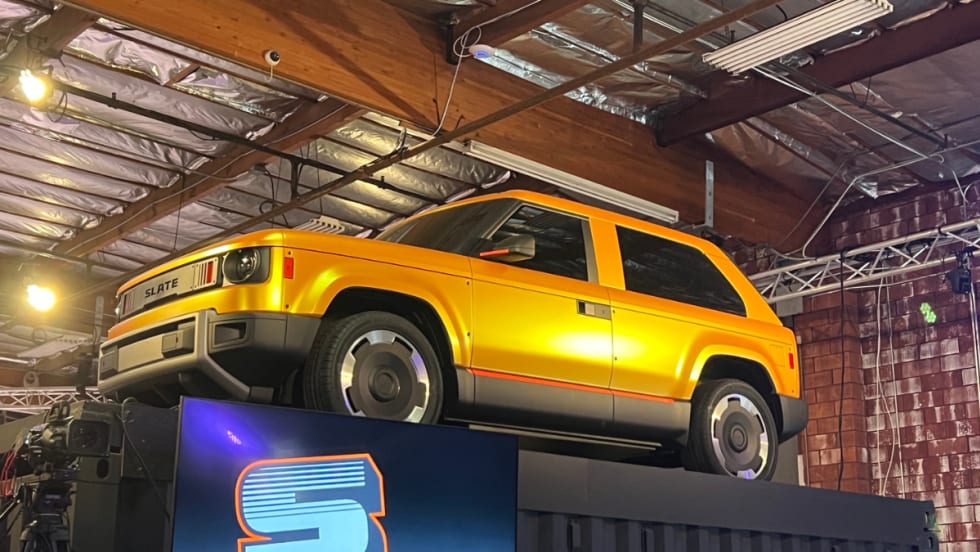
Slate Electric SUV, Pickup Switchable Model Aims For Light-Duty Fleets
Everything about this EV is counterintuitive and understated, making it stand out from the crowd.
Read More →
Inspiration Mobility Acquires Key Electrada Assets
Inspiration Mobility Group has acquired select assets of Electrada, adding the fleet electrification provider's team, technology, and charging infrastructure development capabilities to its energy management business.
Read More →
Turning Connected Vehicle Data Into Decisions That Matter
Fleet leaders have more data than ever, but turning that data into clear, actionable decisions remains a challenge. This white paper shows how leading organizations are using connected vehicle data to improve safety, reduce costs, and optimize fleet performance. Learn how to turn insight into action across your fleet.
Read More →