





Related: Enterprise CarShare Launches at University of Delaware
Enterprise Relaunches Rideshare Service
Enterprise's commuting programs typically consist of four to 15 coworkers who meet at a central location to board a newer van or SUV — sometimes equipped with Wi-Fi, GPS, and satellite radio — and travel to and from work together.
April 11, 2019
Commute with Enterprise also provides 24-hour roadside assistance, insurance, and scheduled maintenance.
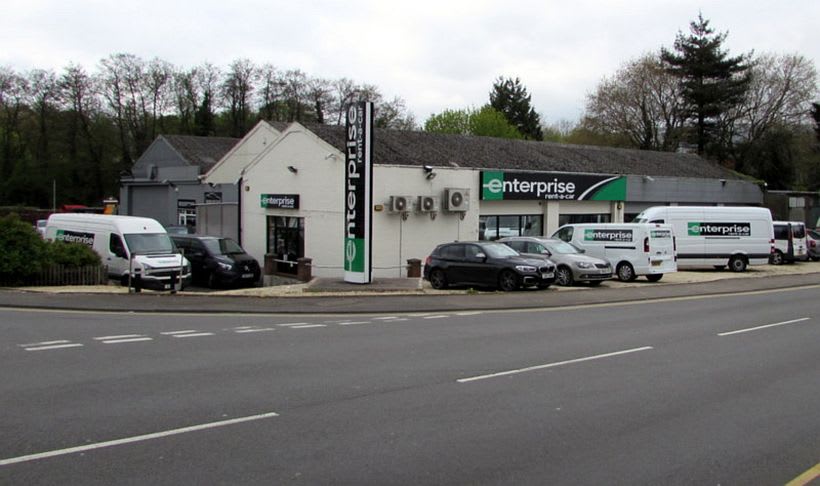
Photo via Jaggery/Geograph.
2 min to read
Enterprise Holdings recently launched Commute with Enterprise — an enhanced service of the Enterprise Rent-A-Car brand that offers a sustainable, comprehensive, and cost-effective local transportation option.
This new name for the company’s vanpooling service (formerly known as Enterprise Rideshare) reflects its longtime mission: creating solutions that not only immediately lower transportation costs for commuters, but also reduce businesses’ environmental impact and improve their corporate sustainability profiles.
Enterprise’s commuting programs typically consist of four to 15 coworkers who meet at a central location to board a newer van or SUV — sometimes equipped with Wi-Fi, GPS, and satellite radio — and travel to and from work together.
Commute with Enterprise also provides 24-hour roadside assistance, insurance, and scheduled maintenance.
Reducing the Cost of Commuting
Enterprise says it can help individuals save thousands of dollars every year by reducing ongoing costs such as gas, tolls, and vehicle depreciation.
A recent analysis of U.S. Census data from Bloomberg showed that employees in the Washington, D.C., metro area have the longest commutes, with a daily average of more than 73 minutes traveling to and from work. Close behind are New York City commuters, who spend 70 minutes, while workers in Atlanta, Dallas and Chicago all log roughly an hour of commuting time each day.
Bloomberg’s report also indicates that commuters in the nation’s capital pay the most to get to work. Seven out of the 10 U.S. counties with the most expensive commutes surround Washington, D.C.
Vanpooling programs address both local and national needs by reducing carbon emissions, parking real estate and traffic congestion. Commute with Enterprise operates 11,100 vanpools in 45 states, eliminating 1.4 billion commuter miles each year and taking nearly 65,000 cars off the road as well as off parking lots. The program also collectively reduces more than 1.1 billion pounds of carbon emissions annually.
According to U.S. Department of Transportation data, commuter vanpools also are the safest mode of public transportation when compared to motor bus, light rail, heavy rail, commuter rail, and other demand response services.
Originally posted on Auto Rental News
More Operations

Fleet Has a Talent Pipeline Problem. What Comes Next? | AF News Recap
Where will fleet’s next generation of leaders come from? This week, we’re looking at the industry’s talent pipeline, what certification can add to a fleet career, how to build an award-worthy track record, and the return of Automotive Fleet’s Personal Use Survey.
Read More →
Smith System Launches Driver Risk Management Program
Fleets have more driver data than ever, but identifying risky behavior doesn't necessarily correct it. Smith System's new Driver Risk Management program combines monitoring, training, and follow-up coaching to help fleets connect risk signals with driver intervention.
Read More →
Automotive Fleet Opens 2026 Personal Use Survey for Commercial Fleet Managers
Less than two weeks left! Commercial and corporate fleet managers are invited to share how their organizations handle company vehicle personal-use policies, charges, and driver eligibility.
Read More →
From AI Prompts to AI-Generated Safety Songs | AF News Recap
Can better prompts make AI more useful for fleet managers? This week, we’re breaking down smarter fleet analysis, an AI-assisted experiment that turned safety training into music, and what happened to fuel prices in August.
Read More →
How to Write Better AI Prompts for Fleet Analysis
Include these six elements in your fleet prompts to generate more relevant analysis and accurate answers.
Read More →
Fleet Meets: Eric Kilgore
This edition of the Fleet Meets series features one of the industry's best leaders driving multi-market and national operations.
Read More →
Why Reactive Fleet Management Is Becoming Too Expensive to Sustain
Research highlights a growing need for proactive management strategies to address rising costs in fleet operations effectively.
Read More →
Sponsored•August 12, 2026
What Your Fleet KPIs Aren’t Telling You
Tracking fleet metrics is only useful when the data leads to better decisions. This guide helps fleet leaders assess cost, utilization, and downtime more accurately, identify performance gaps, and prioritize the actions that can improve operational results.
Read More →
Sponsored•August 7, 2026
Hidden in Plain Sight: Fleet Compliance Risks
Fleet compliance isn't just about having policies — it's about consistently enforcing them. This practical guide reveals six hidden compliance risks common in public sector and shared fleet operations and outlines proven strategies to improve visibility, accountability, and audit readiness
Read More →
Turning Fleet Payment Data into Executive Insights
Does data alone drive results in operations?
Read More →