




Electric Car Maker Aims for the Top with Sports Car
SAN CARLOS, CA – Tesla Motors is a car company that's both decades ahead of its time, and a year behind schedule.
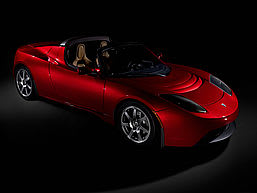
SAN CARLOS, CA – Tesla Motors is a car company that's both decades ahead of its time, and a year behind schedule, according to The Wall Street Journal online. Soon, it will become clear which is more important to Tesla's long-term future, and the future of the disruptive ideas the company represents.
For those who somehow missed the blizzard of publicity that has swirled around this company for the past 18 months or so, Tesla (www.teslamotors.com) is a Silicon Valley start-up, bankrolled by some of the same people who brought you the Internet boom of the late 1990s. The company's stated ambition is to develop over the next several years a full array of electric cars. Tesla's fans — many of them influential leaders of Silicon Valley's "clean tech" green-technology movement — see Tesla as an icon of the broader effort to make big money by unshackling the U.S. economy from petroleum.
According to The Wall Street Journal online, Tesla's first model will be a $98,000 electric roadster, developed around the architecture of a Lotus Elise, that uses 6,831 lithium-ion batteries similar to those used in laptop computers, a patented electric-motor system, and a highly sophisticated package of controllers and software to deliver an exotically attractive car that zaps from standstill to 60 miles per hour in under four seconds and can travel up to 245 miles on a single charge.
Tesla isn't planning any traditional advertising, but if it did, one slogan could be: "You can't kill an electric car you can't catch."
Tesla and its approach to electrifying the automobile may well redefine the car industry. But first, Tesla needs to actually deliver the car. That was once supposed to have happened by early this year. Now, company co-founder Martin Eberhard says, the first Roadsters should come off the Lotus assembly line in Britain sometime during the first quarter of 2008.
"Our plan is to ramp up very gently," Eberhard says. The run of cars produced during the first quarter of 2008 could be only about 50 vehicles, with a goal of building a total of about 600 cars in the 2008 model year. Tesla recently told potential customers that it can no longer guarantee delivery of 2008 models.
Among the problems Tesla has encountered, according to The Wall Street Journal online: The car's body had to be redesigned because the door sills were so high that getting in and out of the vehicle required excessive acrobatics, especially for women in skirts.
A supplier for the car's original transmission failed, and a subsequent decision to move from a one-speed transmission to a two-speed proved more difficult to execute than expected. In August, the car flunked a 30 mile per hour side-impact crash test, necessitating more last-minute design changes.
Tesla's Big Idea was to start with an electric car that appeals to the id, not the superego. From the start, Mr. Eberhard says he wanted a car that could outrun a Porsche in a 0-60 trial, and would go 250 miles on a charge. He says the production Roadster will hit the under four-second target for the 0-60 dash, and will get very close to the original goal on range.
"Our ambition is, one step at a time, to become a real car company," Mr. Eberhard says. Tesla plans to develop more practical and more affordable electric vehicles, expanding its potential revenue. But the time frame for that is now 2010, not 2009 as once proposed.
Last May, Mr. Eberhard told a Senate committee that the company's second model would be a $50,000 sedan built in New Mexico, followed by an even more affordable car. Now, Mr. Eberhard is cagier about exactly what Tesla's "White Star" model line will be, and exactly when it will appear. "We are deep, deep into that," he says. "We are planning on building (cars) in Albuquerque. It's possible we might want to do something different."
Tesla is named for Nikola Tesla, the godfather of alternating current and radio who nonetheless died poor, in part because his weirdness wound up obscuring his genius. In recent years, Tesla has become a patron saint of Silicon Valley.
More Operations

Company Vehicle or Reimbursement? How Fleets Are Rethinking Assignments
As fleet costs and insurance pressures rise, fleet managers are taking a closer look at which employees need company-provided vehicles and when a reimbursement program may make more sense.

Fleetio, ASE Launch Scholarship Program for Automotive Technicians
The second annual program will award 15 scholarships totaling $35,000 to support ASE certification, testing fees, and equipment costs.

Reading the Global Signals: What AI and the Energy Transition Mean for Fleets Now
In this opening keynote of the 2026 Fleet Forward Conference, John Rossant, founder of CoMotion, How can fleet managers navigate a never-ending, changing industry landscape?

90% Use Telematics. Are Fleets Getting Safer? | AF News Recap
This week, we're breaking down which industries have the highest rates, how Jamie McKay manages 2,400 vehicles, what's happening with the 2027 fleet awards, and why software-defined vehicles could introduce new costs.

What's Best Handled by an FMC, and What's Better Done Directly?
Fleet managers continue to rely on FMCs for essential services but are taking a closer look at where working directly with suppliers can improve efficiency and responsiveness.

Fleet Meets: Erin Gilchrist
Meet Erin Gilchrist, the inaugural Mike Antich Spirit of Fleet Award winner, as she shares insights on leadership, mentorship, the power of industry connections, and why people remain at the heart of fleet's future.

How 2026 Fleet Visionary Jamie McKay Manages 2,400 Vehicles Across 37 States
How do you keep 2,400 vehicles running across 37 states? Fleet Visionary Award winner Jamie McKay shares how collaboration, flexibility, and a few simple strategies help her tackle fleet management challenges at Aptive Pest Control.

Managing Fleet Costs in an Era of Permanent Volatility
Fleet operating costs have risen more than 20% since 2020, raising a key question: When does extending a vehicle's service life stop making financial sense?

The Next Evolution of Fleet Management: Autonomous Operations
This opening keynote session at the Fleet Forward Conference highlights the future of autonomous driving for fleets.

How to Reduce the Total Cost of Risk From Catalytic Converter Theft
A stolen catalytic converter can cost fleets far more in downtime and lost productivity than in repairs. A total-cost-of-risk approach can help fleet managers quantify their exposure and prioritize theft prevention.