




E15 Ethanol Blend to Become Common at the Pump
The U.S. Supreme Court rejected, on June 24, 2013, petitions to reconsider the federal appeals court for the District of Columbia ruling that allows the sale of gasoline blended with 15 percent ethanol (E15).
The U.S. Supreme Court rejected, on June 24, 2013, petitions to reconsider the federal appeals court for the District of Columbia ruling that allows the sale of gasoline blended with 15 percent ethanol (E15). As a result, E15 will become more common at U.S. gasoline stations, according to proponents and opponents in the auto industry.
The Clean Air Act, which was enacted in 1967, requires the Environmental Protection Agency (EPA) to set renewable fuels standards (RFS) under the Renewable Standards Program. The RFS requires refineries and fuel blenders to sell specific volumes of biofuels set by the EPA each year. According to the EPA:
"The EPA granted two partial waivers that taken together allow but do not require the introduction into commerce of gasoline that contains greater than 10-volume-percent ethanol (E10) (which is what drivers are currently filling up on) and up to 15-volume-percent ethanol (E15) for use in model year 2001 and newer light-duty vehicles. On October 13, 2010, EPA granted the first partial waiver for E15 for use in 2007 model-years and newer light-duty motor vehicles i.e., cars, light-duty trucks, and medium-duty passenger vehicles. On January 21, 2011, EPA granted the second partial waiver for E15 for use in MY2001-2006 light-duty motor vehicles. These decisions were based on test results provided by the U.S. Department of Energy (DOE) and other test data and information regarding the potential effect of E15 on vehicle emissions."
According to the United States Court of Appeals, the lower court did not rule on whether the EPA's decision to permit E15 to be sold in the marketplace was valid. Rather, the court ruled that the parties challenging the decision — groups representing car, boat, and power equipment manufacturers, along with the oil and food industries — did not have “standing” because they had failed to demonstrate a direct injury from E15 sales.
Specific groups who supported the petition to repeal were the American Petroleum Institute (API), the Association of Global Automakers, Outdoor Equipment Institute, National Marine Manufacturers Association, the American Fuel and Petrochemicals Manufacturers, and the Alliance of Automobile Manufacturers (AAM).
AAM released a statement expressing their concern of the Supreme Court’s decision: “The EPA approved E15 for cars retroactively, even though those vehicles were never designed to run on this more corrosive fuel." The statement advises consumers to review their owner’s manuals and fill up on fuels that are recommended.
According to Carlton Carroll, spokesperson for the API, this new E15 standard will lead to complications for car owners. Carroll, who opposes the new standard, cited findings from the Coordinating Research Council study conducted by car manufacturers and the oil industry: The results indicate E15 could cause fuel system malfunctions, including fuel system component swelling, misleading fuel gauge readings, and engine breakdowns. API is a national trade association that represents America’s oil and natural gas industry. They are currently working with members of congress for a long-term solution to effectively ban E15, according to Carroll.
“Millions of cars could be severely damaged by fuel blends that contain more than 10 percent ethanol,” Carroll said. “Automakers have said higher ethanol blends would void car warranties.” Those automakers include Ford, Honda, Toyota, BMW, Kia, Chrysler, Mercedes-Benz, Volvo, Hyundai, Mazda, and Nissan who backed out of honoring vehicle warranties on vehicles using E15 that weren’t built for E15.
However, not everyone disagreed with the Supreme Court’s decision. The Renewable Fuels Association (RFA) dismissed the studies that Carroll cited, stating that fuels used in the study were not found in the marketplace and likely induced corrosive spikes, said Bob Dinneen, president and CEO of the RFA. “They ignored a study conducted by the Department of Energy (DOE), along more typical test protocols, which there were no issues,” Dinneen added.
According to the RFA, a trade association for the U.S. ethanol industry, E15 has been available in the marketplace for more than a year, and has been used in vehicles that have driven more than 40 million miles, without a single incident. “So the real test is happening today in the marketplace,” Dinneen said. “It affirms the DOE conclusion that there will be no issues with E15. Furthermore, Dinneen noted that E25 has been used in Brazil for 25 years, and they have had no issues.
According to Dinneen, the use of E15 reduces U.S. dependence on foreign fuels. It also lowers the price at the pump for the consumer since ethanol is 60- to 70-cents cheaper than gasoline. According to Dinneen, ethanol represents 10 percent of the barrel, and if the standards continue increasing, renewables are going to be a third of the barrel. Dinneen added that E15 is necessary for America’s economic, energy, and environmental future.
“There’s a reason why NASCAR is burning E15 today, because it’s a high performance high octane motor fuel,” Dinneen said. E15 will reduce carbon monoxide in the air, exhaust hydrocarbons, and the carbon footprint of gasoline.
The District of Columbia’s Circuit Court of Appeal’s had originally ruled that there was no legal standing to challenge the approval of E15 standards, which lead to the filing of the petition with the Supreme Court. The Supreme Court declined to hear the appeal and added no comment.
The Clean Air Act requires the EPA to set alternative fuel standards under the Renewable Standards Program. The RFS requires refineries and fuel blenders to sell specific volumes of biofuels set by the EPA each year. According to the Alternative Fuels Data Center, "initially, E15 availability is expected to be in Midwestern states."
By Jack Chavdarian
More Green Fleet

Merchants Fleet Reports 290M EV Miles as Fleets Navigate Changing Electrification Market
From millions in operating savings to hundreds of millions of EV miles, Merchants Fleet’s latest report reveals what’s working and what’s changing in fleet electrification.
Read More →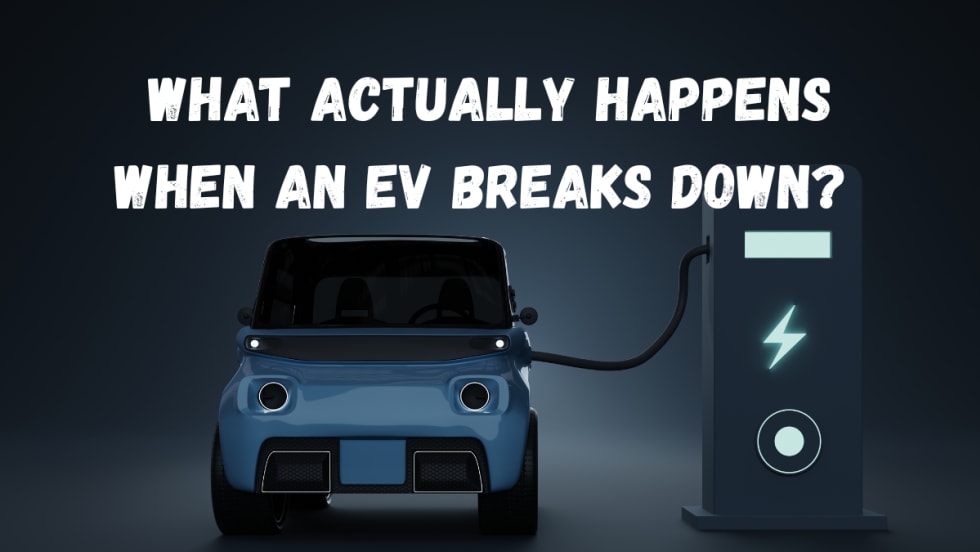
The EV Breakdown Nobody's Talking About: Why Most Electric Vehicle Roadside Calls Aren't Mechanical Failures
Here's why EV breakdowns are widely misunderstood.
Read More →
ChargePoint Now Available in Energy Pass
ChargePoint and additional planned charging network integrations were added to GM's Energy Pass.
Read More →

First Look: Slate Auto's Electric Fleet Pickup
Could an affordable, modular EV pickup make electrification more practical for fleets?
Read More →
Slate Debuts Colorful, Unique EV Models
A recent media and client event, studded with electric vehicles dressed up on platforms, planted a new position for the manufacturer in the wider EV market. Fleets will find cost-saving advantages.
Read More →
Slate Electric SUV, Pickup Switchable Model Aims For Light-Duty Fleets
Everything about this EV is counterintuitive and understated, making it stand out from the crowd.
Read More →
Inspiration Mobility Acquires Key Electrada Assets
Inspiration Mobility Group has acquired select assets of Electrada, adding the fleet electrification provider's team, technology, and charging infrastructure development capabilities to its energy management business.
Read More →
Turning Connected Vehicle Data Into Decisions That Matter
Fleet leaders have more data than ever, but turning that data into clear, actionable decisions remains a challenge. This white paper shows how leading organizations are using connected vehicle data to improve safety, reduce costs, and optimize fleet performance. Learn how to turn insight into action across your fleet.
Read More →
Are You Tracking Your Fleet's True Total Cost of Ownership?
Bobit Business Media surveyed 190 fleet professionals and found that while most fleets are tracking costs, fragmented systems and data gaps are keeping true TCO visibility out of reach. With rising pressure to control spend in an increasingly volatile environment, the gap between what fleets think they know and what the data actually shows is wider than you might expect. See how your peers are managing costs today and where the industry still has room to improve.
Read More →