




Dow Kokam, ZeroTruck Sign Agreement for Electric Medium Duty Trucks
MIDLAND, MI – Dow Kokam has agreed to supply advanced lithium-ion battery systems for electric Class 3-6 work vehicles made by ZeroTruck.
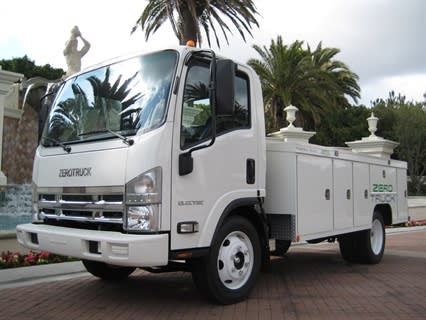
MIDLAND, MI – Dow Kokam announced an agreement to supply advanced lithium-ion battery systems to power zero emission, fully-electric, Class 3-6 work vehicles produced by ZeroTruck Corporation, a developer and producer of commercial electric trucks.
Dow Kokam will supply ZeroTruck with advanced lithium-ion battery systems for the medium duty, all-electric truck design based on the Isuzu N series chassis. ZeroTruck is building one truck for service on a federal campus in Washington D.C., featuring a 18-foot dry freight body for facilities with delivery in early April 2011.
“ZeroTruck selected Dow Kokam because of its proven reliability, 10 years of experience with advanced large-format cells, and easy vehicle integration; which allow us to provide a realistic electric vehicle option for fleet owners looking to lower their carbon emissions and operational costs,” said Richard Serio, CEO of ZeroTruck. “ZeroTruck vehicles meet zero-emissions mandates for fleet operations under a 100 mile range, exceed all power and performance requirements and enable our customers to make meaningful progress towards the ultimate goal of achieving true energy independence and cleaner air.”
The ZeroTruck is available in Class 3-6 chassis and can operate at full highway speeds, with a 70 mile range in city driving and superior torque compared to conventional vehicles. The vehicle has a low cab forward design, a fully automated transmission, regenerative braking and is driven by a U.S.-made electric motor. The flexible chassis design enables ZeroTruck to be modified for utility, dry freight, stake bed, tow, sweeper, and refuse body type applications.
Dow Kokam’s large-format cells are equipped to perform under the rigorous mission-demands of commercial vehicles and its advanced battery and thermal management systems enable optimal performance of the ZeroTruck. The Dow Kokam battery system is able to reliably manage the significant charges that come from the ZeroTruck regenerative braking system, which can impart up to 20 amps per stop for the 14,500 pound vehicle. The battery system can be fully charged from discharge to 100 percent in 3 hours with an optional fast-charging system, or 8 hours with 220V power sources.
“Dow Kokam’s battery technology is a ready answer to fleet and commercial vehicle needs, while also providing a very compelling total cost of ownership scenario to owners,” said Chuck Reardon, vice president of Dow Kokam. “With ZeroTruck, we can offer an electric vehicle option suited for a wide variety of applications in government and commercial fleets.”
Dow Kokam batteries have been proven in more than 1 million kilometers of rigorous, on-the-road testing. Dow Kokam technology has been adopted as the primary source of energy for high performance equipment in industries ranging from transportation, marine, aerospace, defense and high-end industrial products.
More Green Fleet

EV Charging Use Is Outpacing Infrastructure Growth
ChargePoint’s 2026 Charging Forward Report points to rising charger use, higher-powered charging, commercial vehicle electrification, and energy-management technology. Here’s what fleets should know.
Read More →
Merchants Fleet Reports 290M EV Miles as Fleets Navigate Changing Electrification Market
From millions in operating savings to hundreds of millions of EV miles, Merchants Fleet’s latest report reveals what’s working and what’s changing in fleet electrification.
Read More →
The EV Breakdown Nobody's Talking About: Why Most Electric Vehicle Roadside Calls Aren't Mechanical Failures
Here's why EV breakdowns are widely misunderstood.
Read More →
ChargePoint Now Available in Energy Pass
ChargePoint and additional planned charging network integrations were added to GM's Energy Pass.
Read More →

First Look: Slate Auto's Electric Fleet Pickup
Could an affordable, modular EV pickup make electrification more practical for fleets?
Read More →
Slate Debuts Colorful, Unique EV Models
A recent media and client event, studded with electric vehicles dressed up on platforms, planted a new position for the manufacturer in the wider EV market. Fleets will find cost-saving advantages.
Read More →
Slate Electric SUV, Pickup Switchable Model Aims For Light-Duty Fleets
Everything about this EV is counterintuitive and understated, making it stand out from the crowd.
Read More →
Inspiration Mobility Acquires Key Electrada Assets
Inspiration Mobility Group has acquired select assets of Electrada, adding the fleet electrification provider's team, technology, and charging infrastructure development capabilities to its energy management business.
Read More →
Turning Connected Vehicle Data Into Decisions That Matter
Fleet leaders have more data than ever, but turning that data into clear, actionable decisions remains a challenge. This white paper shows how leading organizations are using connected vehicle data to improve safety, reduce costs, and optimize fleet performance. Learn how to turn insight into action across your fleet.
Read More →