




DOT’s Chao Wants Public to Help Cut Infrastructure Red Tape
Secretary of Transportation Elaine Chao has asked the public to comment “on ways to identify and reduce unnecessary regulatory obstacles that too often stand in the way of completing important infrastructure projects across the nation.”

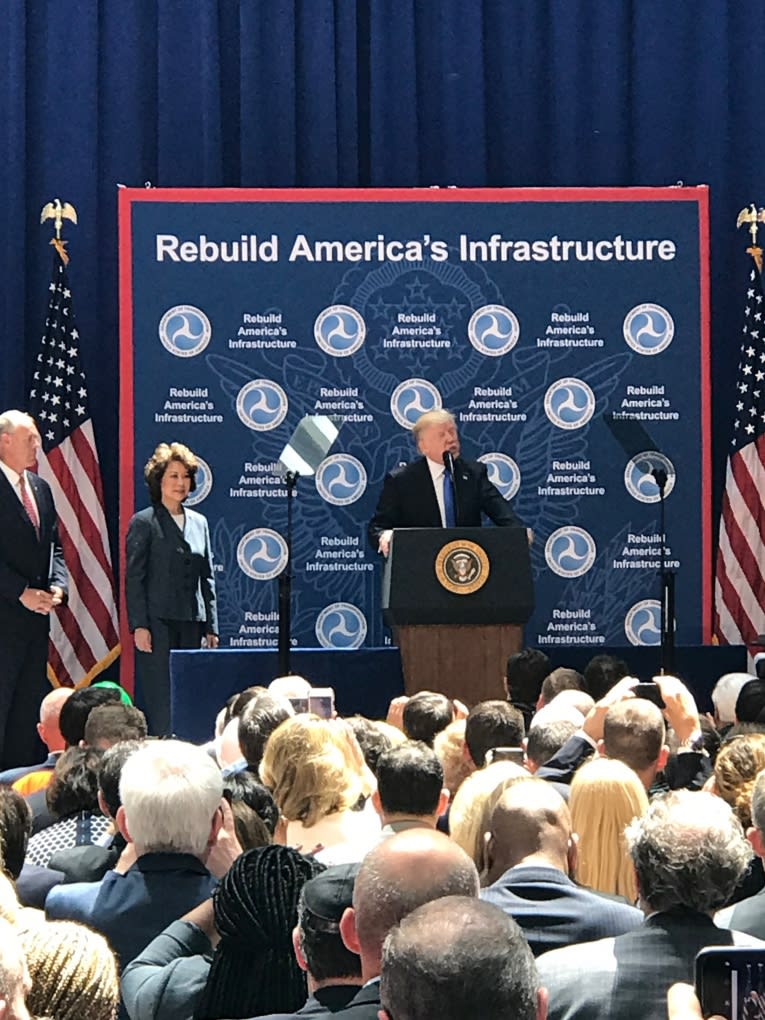
President Trump making remarks at U.S. DOT headquarters on June 9, 2017, as Secretary of Transportation Elaine Chao looks on. Photo: U.S. DOT
President Trump making remarks at U.S. DOT headquarters on June 9, 2017, as Secretary of Transportation Elaine Chao looks on.Photo: U.S. DOT
Secretary of Transportation Elaine Chao has announced via a blog post that she was marking the end of the White House-proclaimed “Infrastructure Week” on June 9 by asking the public to comment “on ways to identify and reduce unnecessary regulatory obstacles that too often stand in the way of completing important infrastructure projects across the nation.”
Chao said the request for public comment, published in the Federal Register, was made “because public and private project sponsors, engineering and construction professionals, related industry organizations, and other transportation stakeholders are likely to have valuable direct experience with the Department’s requirements.
"That experience," she added, "supplements the Department’s employees’ expertise and may help identify when a requirement has become an unnecessary obstacle.”
DOT will accept public comments through July 24 on the red-tape notice, on what it terms “non-statutory requirements that the department imposes and that should be removed or revised."
The department stated in the notice that its “primary focus is on administrative items that it has the authority to change, but if there are critical changes that are achievable only through legislative action, please submit proposed legislative changes. Commenters should make legislative suggestions only if all non-statutory options have been exhausted."
Chao noted that even though DOT’s Regulatory Reform Task Force, chaired by Deputy Secretary Jeff Rosen, “has already acted on what we’ve been hearing and identified dozens of ways to streamline the process, we know you [the public] can help us identify more [rules to cut].
According to Rosen, DOT’s streamlining effort reflects how the Trump administration remains “responsive to the needs of the public and industry, rather than pushing a ‘top down, government knows best’ approach to regulation. We expect this process will help us uncover ways to assist in better deploying infrastructure – ways we hadn’t even thought of.”
Also on June 9, President Donald Trump visited DOT headquarters. His remarks there also touched on streamlining infrastructure projects.
Trump said his administration was “setting up a new council to help project managers navigate the bureaucratic maze,” which would improve transparency by “creating a new online dashboard, allowing everyone to easily track major projects through every stage of the approval process."
Related: DOT Formalizes Regulatory Reform Effort
More Operations

How Fleets Can Recruit and Train Veterans for Technician Roles
Here's how the technician shortage has affected uptime for fleets, and what to do about it.
Read More →
Avis Budget Group Deploys Neology Toll Management Technology Across Major Brands
Neology’s neoFleet platform will manage toll transactions and toll-authority operations for vehicles across Avis, Budget, Payless, Budget Truck and Zipcar.
Read More →
Fleet Personal-Use Charges Edge Higher in 2026
Nearly eight in 10 surveyed fleets allow personal use of company vehicles, while just over half of respondents report charging employees for the privilege.
Read More →
The Future of Fleet + What’s Changing Right Now | AF News Recap
Could developments overseas offer a preview of what’s coming for U.S. fleets? This week, we’re looking at the future of AI, autonomy, and electrification, plus Ford Pro’s new certified pre-owned program, smarter vehicle offboarding, and a new way for fleets to manage toll expenses.
Read More →
How to Handle Vehicle Offboarding
What do fleet managers need to do when a driver leaves?
Read More →
Fleet Manager’s Ultimate Playbook: Navigating the New Standard in OEM Connectivity
Rising operating costs, driver safety concerns, and unplanned downtime are putting unprecedented pressure on modern fleets. Discover how fleet managers use embedded OEM connectivity and real-time vehicle data to cut TCO, prevent downtime, and protect drivers without aftermarket telematics hardware.
Read More →
U.S. Bank Adds Verra Mobility Toll Management to Voyager Fleet Platform
The integration allows U.S. Bank Voyager fleet customers to manage toll payments and violations alongside fuel, EV charging and maintenance expenses.
Read More →
ADAS Prevents Crashes. But Repairs Cost More | AF News Recap
ADAS-equipped vehicles may crash less often, but they can cost more when they do. This week, we’re breaking down what that tradeoff means for fleets, plus Subaru’s first Forester Wilderness Hybrid, Nissan’s new e-POWER Rogue, and why Calstart has become Catalyst Mobility.
Read More →
Moventum Fleet Management Names Mark Iorillo Head of Sales
Iorillo brings nearly 20 years of fleet management and sales experience to the role, including previous positions at Element Fleet Management, CEI, Donlen and Ryder.
Read More →
Fleet Has a Talent Pipeline Problem. What Comes Next? | AF News Recap
Where will fleet’s next generation of leaders come from? This week, we’re looking at the industry’s talent pipeline, what certification can add to a fleet career, how to build an award-worthy track record, and the return of Automotive Fleet’s Personal Use Survey.
Read More →