




DOE Funds Rocky Mountain EV Charging Network
The U.S. Energy Department is giving $4 million to build DC fast chargers and develop smart mobility programs to increase electric car-sharing and the use of electric bikes and buses.
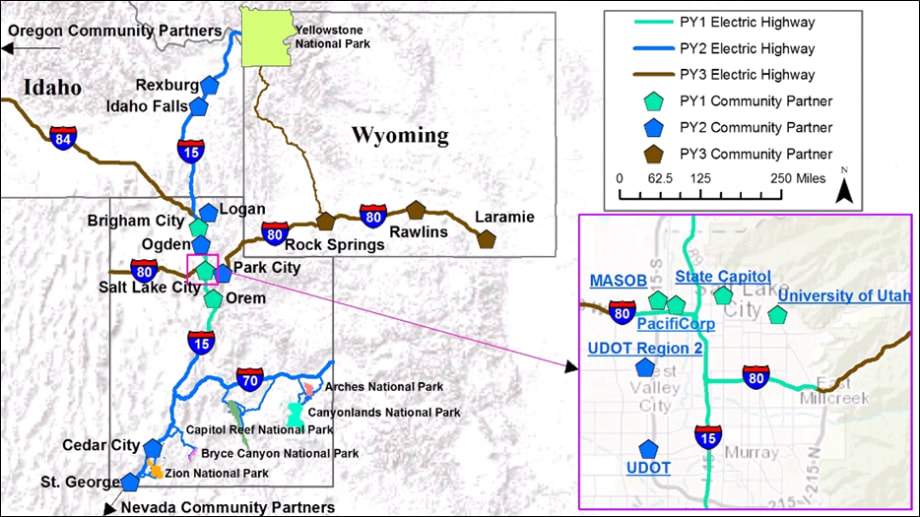
Map of planned electric corridors courtesy of rockymountainpower.net.
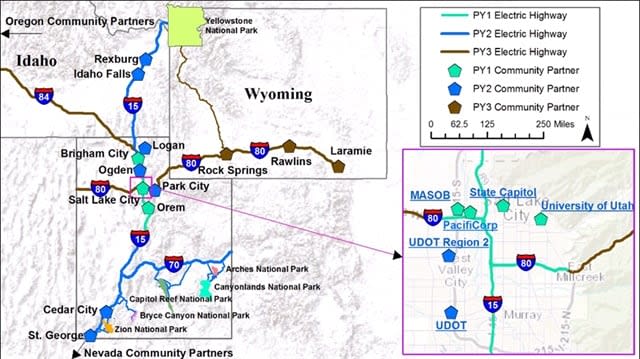
Map of planned electric corridors courtesy of https://www.rockymountainpower.net/.
A $4 million U.S. Department of Energy grant will fund a network of DC fast chargers in three Rocky Mountain states to develop electric highway corridors along the I-15, I-80, I-70 and I-84 in Utah, Wyoming, and Idaho.
The grant will also help develop smart mobility programs to increase electric car-sharing and the use of electric bikes and buses, according to Rocky Mountain Power.
The DC fast chargers will be built every 100 miles along the corridors and AC level 2 chargers in every community in the region. It will also offer incentives to employers to install charging stations; help businesses purchase 200 EVs and more than 13,800 electric rental vehicles; and develop smart mobility programs to use technology, collect data and develop practices to meet long-term transportation plans.
In the next 10 years, the grant would double the region’s number of electrified vehicles to 50,000 cars, which would result in the annual reduction from 251 million pounds of carbon-dioxide emissions and 24.9 million gallons of gasoline, according to Rock Mountain Power.
"Our goal is to have enough charging stations to help electric vehicles go from Disneyland to Yellowstone and everywhere in between," said Cindy Crane, Rocky Mountain Power's president and CEO.
The project partners include the Utah Office of Energy Development, University of Utah, Utah State University, Salt Lake City, Utah Clean Cities Coalition, Breathe Utah, Idaho National Laboratory and others.
More Green Fleet
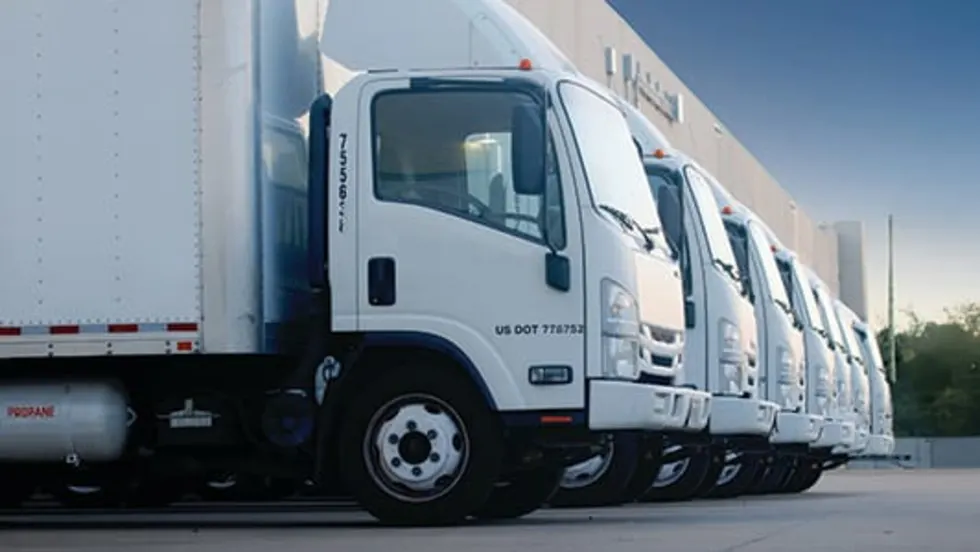
New Propane Autogas Program Offers Fleet Compensation
Qualified commercial fleets can receive $7,500 per eligible propane autogas vehicle and up to $10,000 for new refueling site prep. Learn how the program works and see whether your fleet qualifies.
Read More →
EV Charging Use Is Outpacing Infrastructure Growth
ChargePoint’s 2026 Charging Forward Report points to rising charger use, higher-powered charging, commercial vehicle electrification, and energy-management technology. Here’s what fleets should know.
Read More →
Merchants Fleet Reports 290M EV Miles as Fleets Navigate Changing Electrification Market
From millions in operating savings to hundreds of millions of EV miles, Merchants Fleet’s latest report reveals what’s working and what’s changing in fleet electrification.
Read More →
The EV Breakdown Nobody's Talking About: Why Most Electric Vehicle Roadside Calls Aren't Mechanical Failures
Here's why EV breakdowns are widely misunderstood.
Read More →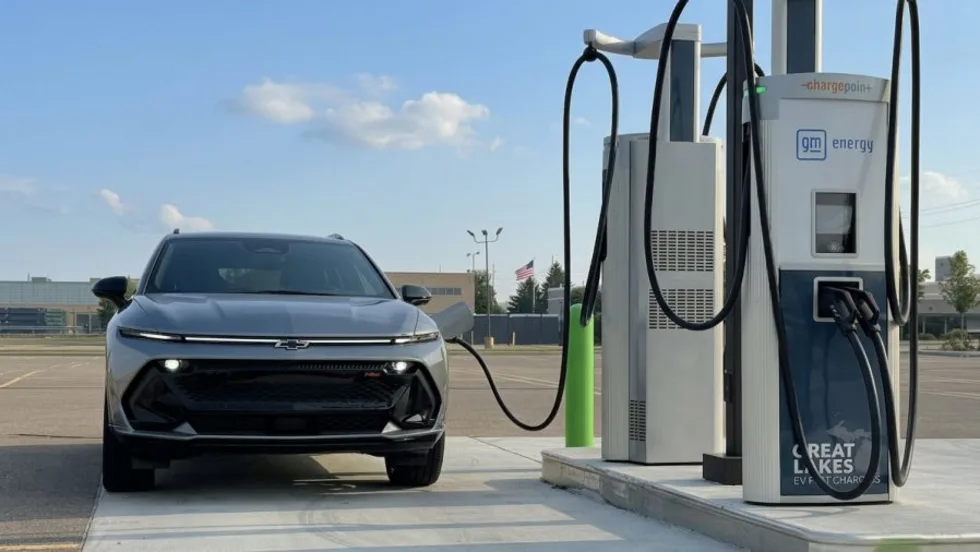
ChargePoint Now Available in Energy Pass
ChargePoint and additional planned charging network integrations were added to GM's Energy Pass.
Read More →

First Look: Slate Auto's Electric Fleet Pickup
Could an affordable, modular EV pickup make electrification more practical for fleets?
Read More →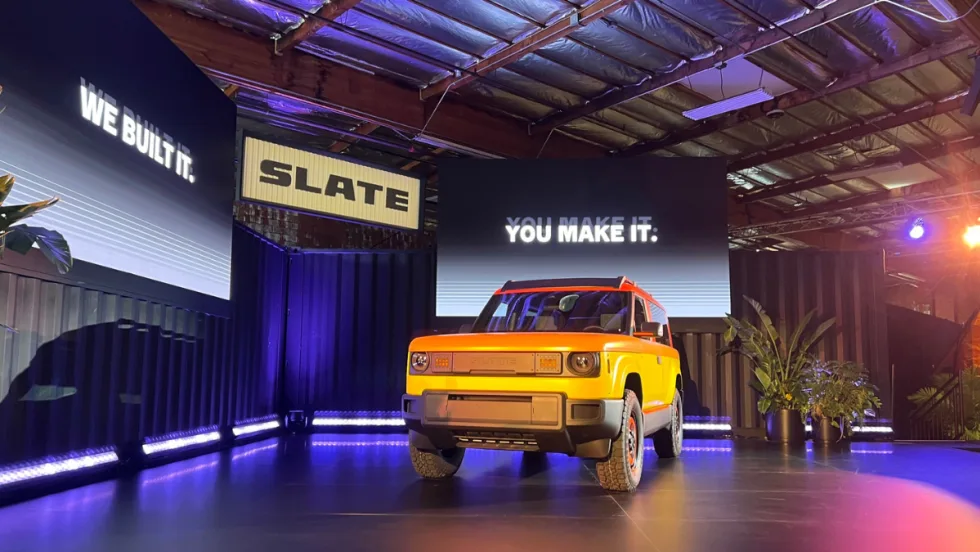
Slate Debuts Colorful, Unique EV Models
A recent media and client event, studded with electric vehicles dressed up on platforms, planted a new position for the manufacturer in the wider EV market. Fleets will find cost-saving advantages.
Read More →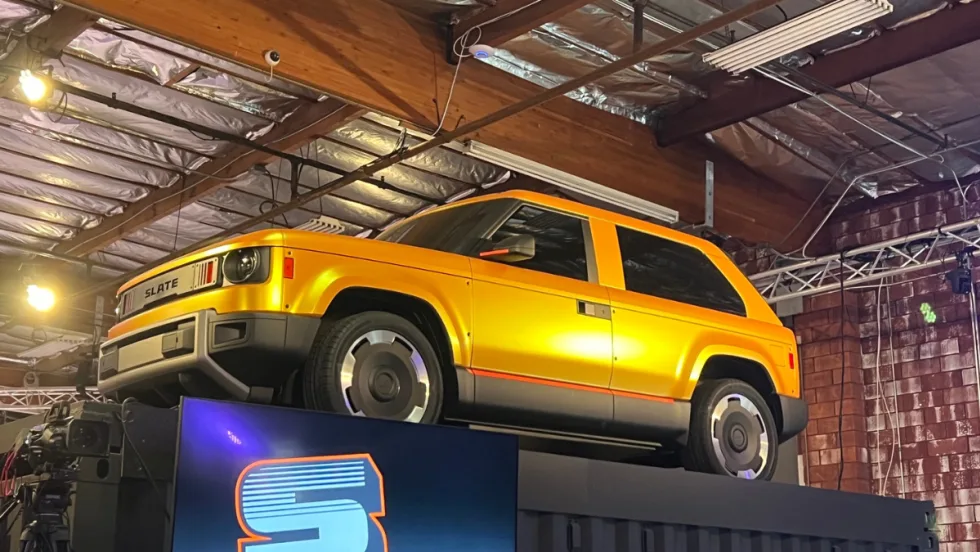
Slate Electric SUV, Pickup Switchable Model Aims For Light-Duty Fleets
Everything about this EV is counterintuitive and understated, making it stand out from the crowd.
Read More →
Inspiration Mobility Acquires Key Electrada Assets
Inspiration Mobility Group has acquired select assets of Electrada, adding the fleet electrification provider's team, technology, and charging infrastructure development capabilities to its energy management business.
Read More →