




Distracted Driving Kicks Off Fleet Safety Conference
SCHAUMBURG, IL -- The annual Fleet Safety Conference kicked off Tuesday with an opening keynote address by Mike Pitcher, president and CEO of LeasePlan USA, took a look at changing corporate safety culture, specifically talking about his company's adoption of a no-cell-phone ban.

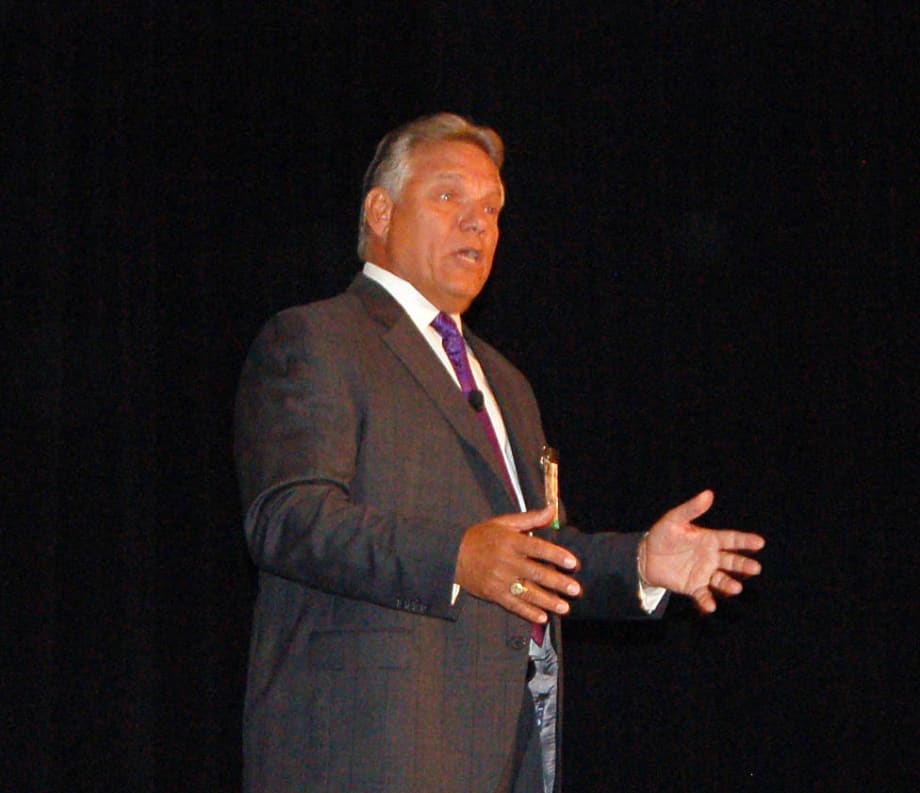
Mike Pitcher talks about how his company, LeasePlan USA, implemented a cell phone policy.
SCHAUMBURG, IL -- The annual Fleet Safety Conference kicked off Tuesday in this Chicago suburb with a keynote speech on corporate safety culture.
In the opening keynote address, Mike Pitcher, president and CEO of LeasePlan USA, took a look at changing corporate safety culture, specifically talking about his company's adoption of a no-cell-phone ban.
He pointed out that distracted driving is universal, whether it's cell phones, eating, reading, putting on your makeup, or other activities.
When states starting making cell phone use illegal, many people started using their phones down by their hip so police couldn't see them breaking the law – but that takes your attention off the road even more than having it by the steering wheel.
Pitcher asked the audience to take out their cell phones, hold them down by their hips and text the simple message, "I'm on my way." It took about 8 to 10 seconds. "If you're on a highway, you've driven about two football fields."
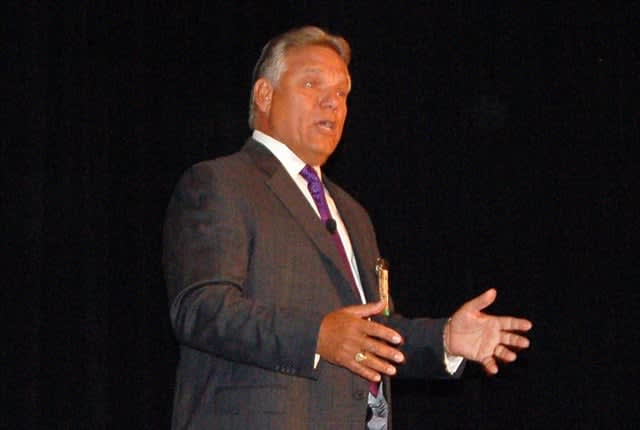
Mike Pitcher talks about how his company, LeasePlan USA, implemented a cell phone policy.
Setting the right example is important. "As a parent, we say it, we say it, we say it. [Don't text and drive]. As an employer, we say it, we say it, and say it. Then we get in the car and do it."
At his company, he said, the corporate culture emphasis on things such as family and teamwork were an important part of the equation.
"I will not stand here and preach and say LeasePlan's way is the right way," Pitcher said. But the culture (the company has been honored as a best company to work for) was a good starting point. In addition, they looked at how to position the message to appeal to the diverse generations working in the company.
One argument sometimes made by companies in not enacting a cell phone ban is a fear of loss of productivity.
"I don't buy it," Pitcher said. "Fortune 500 companies argue they have seen neither increase nor decrease in productivity after enacting cell phone ban." Much of cell phone use, it turns out, was done simply to pass the time.
Has his company's policy resulted in a complete cessation of cell phone use in vehicles? Of course not, Pitcher said. "You will never eliminate risk. You will simply mitigate it."
Technology could solve this situation, he said, "but I'm hoping it becomes personal choice."
Distracted driving was also the topic of a panel discussion at a breakout session immediately following the keynote.
Ken Latzko with CEI Group said research from the Virginia Tech Transportation Institute found that a text message takes at least five seconds, "which is like driving the length of a football field blindfolded. You wouldn't pay me to close my eyes for five seconds going down the Interstate, but people do the same thing voluntarily with texting."
The panelists also stressed the importance of looking beyond the distractions of cell phones and technology. Jodie Varner of Fleet Response said one of its client fleets banned listening to the radio in the vehicle, after in-cab cameras caught drivers singing and dancing right before crashes happened.
For the second year, the conference featured sessions aimed at the heavy-duty truck fleet in addition to the event's traditional focus on automotive and light- to medium-duty fleets.
First-day breakout sessions included:
A panel discussion on helping drivers deal with in-vehicle distractions
Training drivers how to respond at the scene of an accident
Hours of service and electronic logs
How Johnson & Johnson used the NETS benchmark survey process
Fleet safety for vocational vehicles operating in off-road and construction areas
Moving beyond the checklist to a strategic "blueprint for safety"
Emerging trends in fleet safety and accident management
Collision reduction through driver monitoring and incentives
Watch for more in-depth coverage on Truckinginfo.com and in Heavy Duty Trucking of some of these sessions.
The event continues with a full day of sessions on Wednesday. Fleet Safety Conference is put on by Bobit Business Media fleet publications, including Heavy Duty Trucking and Automotive Fleet.
CORRECTION: Jodie Varner with Fleet Response was initially identified incorrectly as Jane Vaner. We apologize for the error.
More Operations
Here's When You Should Make an Exception to Fleet Policy
Fleet policies are designed to create consistency, but not every driver or situation fits neatly within standard rules.
Read More →
AI-Native or AI-Acquired: What Should Fleet Managers Look for in an AI Platform?
Six questions can help fleet managers look beyond AI marketing claims to evaluate integration, data access, and real-world operational performance.
Read More →
A buyer's guide to fleet management software in 2027
Buying fleet management software in 2027 means looking beyond features and price. As fleet operations, technology and expectations evolve, this guide explores what today’s fleet professionals should consider when choosing a system that can deliver value now and adapt to what comes next.
Read More →

What Will Shape the Next Era of Fleet Management?
EVs, AI, and autonomous vehicles are reshaping fleet management. Discover what’s ahead—and how fleet leaders can prepare for the next era.
Read More →
How Fleets Can Recruit and Train Veterans for Technician Roles
Here's how the technician shortage has affected uptime for fleets, and what to do about it.
Read More →
Avis Budget Group Deploys Neology Toll Management Technology Across Major Brands
Neology’s neoFleet platform will manage toll transactions and toll-authority operations for vehicles across Avis, Budget, Payless, Budget Truck and Zipcar.
Read More →
Fleet Personal-Use Charges Edge Higher in 2026
Nearly eight in 10 surveyed fleets allow personal use of company vehicles, while just over half of respondents report charging employees for the privilege.
Read More →
The Future of Fleet + What’s Changing Right Now | AF News Recap
Could developments overseas offer a preview of what’s coming for U.S. fleets? This week, we’re looking at the future of AI, autonomy, and electrification, plus Ford Pro’s new certified pre-owned program, smarter vehicle offboarding, and a new way for fleets to manage toll expenses.
Read More →
How to Handle Vehicle Offboarding
What do fleet managers need to do when a driver leaves?
Read More →
Fleet Manager’s Ultimate Playbook: Navigating the New Standard in OEM Connectivity
Rising operating costs, driver safety concerns, and unplanned downtime are putting unprecedented pressure on modern fleets. Discover how fleet managers use embedded OEM connectivity and real-time vehicle data to cut TCO, prevent downtime, and protect drivers without aftermarket telematics hardware.
Read More →