




Daimler, Partners Test Car-to-X Communication
Over the coming twelve months, the project will focus on matters of data compatibility and cloud-based data processing.
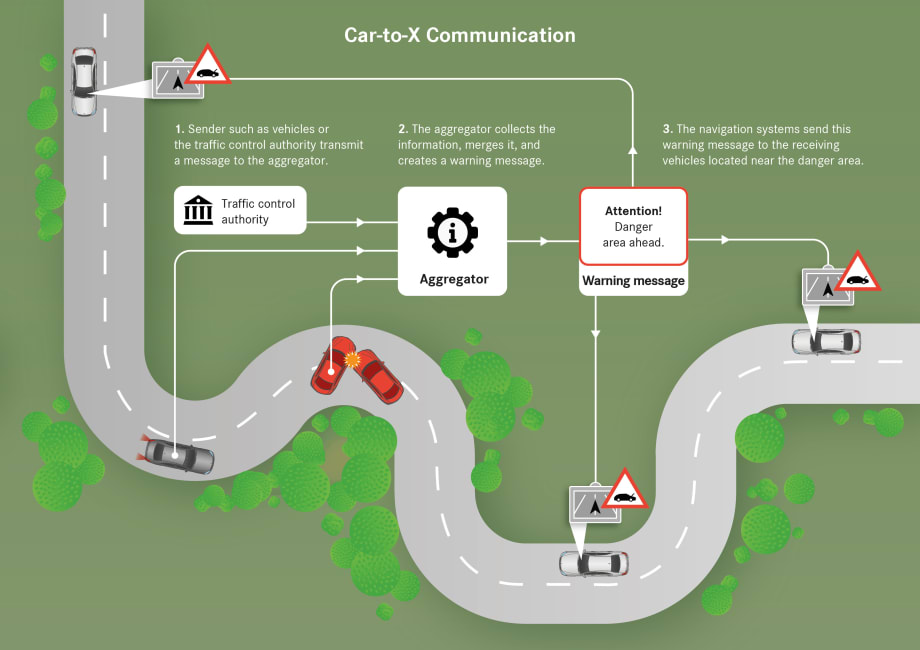
The aim of the pilot project is to conduct research into the technical, economic, and legal aspects of Car-to-X.
Photo courtesy of Daimler.
In cooperation with HERE Technologies, Tom Tom and the transport authorities in six European countries, Daimler, BMW, Ford, and Volvo are testing how information about acutely hazardous situations can be passed on using Car-to-X technology.
The project partners signed a memorandum of understanding in Eindhoven, Netherlands. The test phase is scheduled to last twelve months, starting in the Netherlands.
How can information about a sudden hazard – e.g. slippery conditions or an accident – be passed on to following or approaching traffic as quickly as possible? Daimler has already used mobile networking technologies as standard to send hazard warnings from vehicle to vehicle since 2013. For the first time, leading OEMs and navigation services are now working on a joint, non manufacturer specific and EU-wide solution.
The transport ministries in Germany, Spain, Finland, Luxembourg, the Netherlands, and Sweden are supporting the project. The aim of the pilot project is to conduct research into the technical, economic, and legal aspects of Car-to-X. Car-to-X is the term used to describe communication between vehicles and with the transport infrastructure.
In Line with EU goals
The focus of the project is on the "Safety Related Traffic Information" discussion at EU level. With this initiative, the project partners are supporting the EU Commission in its efforts to promote the development of networked and intelligent transport systems. The long-term objective of the EU is to substantially reduce the number of fatalities and severe injuries in road traffic by 2050. An improved flow of information could make a decisive contribution to this.
EU Directive 866/2013 stipulates that a minimum level of general, road safety related traffic information is to be made available to all users free of charge wherever possible.
The project partners are working on the principle of non technology-specific testing and further development of information flows using Car-to-X technology. Already installed, mobile radio based communication systems will be used for the pilot project. These are tried and tested, and immediately available.
Following signature of the memorandum of understanding as part of the ITS European Congress in Eindhoven, the project partners used examples to demonstrate how information is passed on using Car-to-X communication. Three scenarios were used for this: in each case a "transmitter" simulated a breakdown or other hazardous situation.
Scenario 1: The driver of a Mercedes-Benz vehicle activates the hazard warning system.
Scenario 2: The driver of a BMW sends out an emergency call ("eCall").
Scenario 3: A traffic management centre warns of a sudden hazard in the area, e.g. mobile roadworks.
The two Transmitter vehicles were positioned along a route from the city centre to the Evolution Congress Centre in Eindhoven. The "Receiver" vehicles – test vehicles by Mercedes-Benz, BMW, and Ford – drove along this route to simulate following or oncoming traffic in a critical traffic situation. Immediately after the first impulse by the "Transmitters," the occupants of the Receiver vehicles received a message via their onboard systems.
The data are transferred on the following principle: each action initiates an impulse, and therefore a flow of data. A message is anonymised by the Transmitter – i.e. the vehicle or the traffic authority – and sent to a so-called "Aggregator", usually by mobile radio. This is the role of the experts in navigation systems, in this case Tom Tom and HERE.
Under real conditions the Aggregator collates the information and bundles it until a critical number of messages has been reached. The Aggregator then becomes a Service Creator and compiles a warning message. Via the navigation systems or the communication systems of the automobile manufacturers, this warning is then sent to the Receiver vehicles who are in the vicinity of the hazard. Thanks to the high market penetration of the navigation services involved, a large number of road users are therefore able to prepare for an acute traffic hazard.
Over the coming twelve months, the project will focus on matters of data compatibility and cloud-based data processing. At first the companies taking part will use the currently installed communication technologies and file formats, and where necessary develop them further and harmonise them in the next stage. Cooperation between the project partners will start in the Netherlands, and is to be gradually extended to other EU countries.
Data security has top priority at all times in the project. During the period of the pilot project, the information will flow within a closed "eco-system" to which only the project partners have access. Daimler will only use the test fleet for the project - no customer data will be collected. Moreover, the Mercedes-Benz vehicles involved will send all their data in anonymised form: each message will only contain information about the incident and a time stamp. No reference is made to the Transmitter vehicle.
More Fleet Forward

Chad Edmondson Named 2026 Fleet Safety Award Winner
The VSC Fire & Security fleet director oversees more than 1,100 assets nationwide. His approach to improving driver safety emphasizes collaboration, employee engagement, and building trust with the people behind the wheel.
Read More →
Joseph Lukacs Wins 2026 Global Fleet Manager of the Year
The Sherwin-Williams fleet leader adds another industry honor to his career after being named the 2025 Edward J. Bobit Professional Fleet Manager of the Year.
Read More →
Erin Gilchrist Receives Mike Antich Spirit of Fleet Award
Last week at AFLA in Vegas, Erin Gilchrist received the inaugural, brand-new Spirit of Fleet Award.
Read More →
Dominika Leja Named the 2026 Fleet Manager of the Year
The AstraZeneca associate director of fleet was recognized for her leadership in fleet electrification, cost savings, and operational transformation.
Read More →
Jamie McKay Named the 2026 Fleet Visionary Award Winner
The Aptive Pest Control fleet manager was recognized for her approach to operations, data, lifecycle management, and driver needs.
Read More →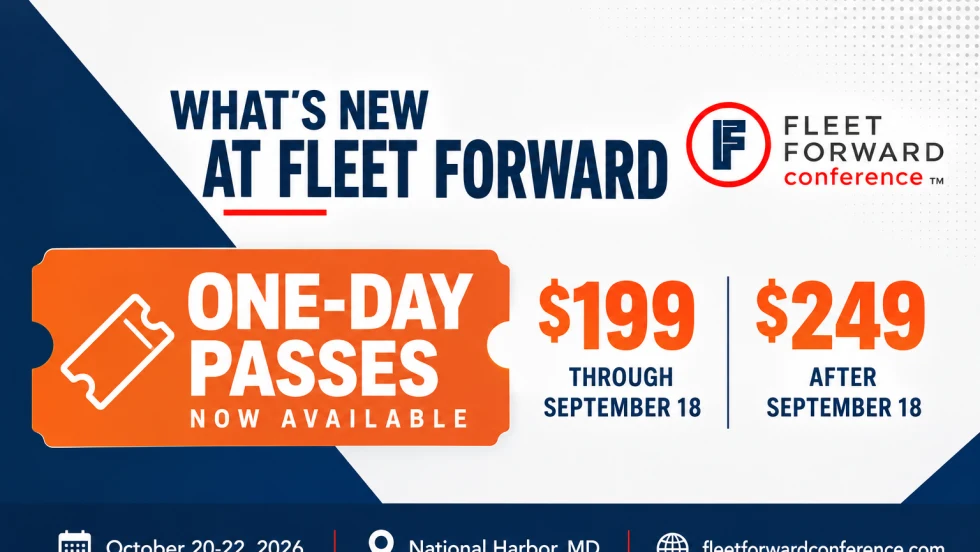
Fleet Forward Conference Introduces One-Day Passes for 2026
New one-day registration gives fleet professionals the flexibility to attend Tuesday, Wednesday, or Thursday, with passes available for $199 through Sept. 18.
Read More →
Vibe Coding: When Fleet Managers Become Software Builders
Five fleet professionals — none with programming skills — discuss how they’re using AI to build fleet solutions in-house and in a fraction of the time.
Read More →
Fleet Forward Conference Tackles Fleet Industry’s Growing Leadership Gap
This session will examine succession planning, knowledge transfer, and the skills the next generation of fleet leaders will need as veteran professionals leave the industry.
Read More →
2026 Fleet Manager of the Year Finalists Announced
Who are the 2026 Fleet Manager of the Year finalists?
Read More →