




Daimler: Electric Delivery Trucks, Vans on the Way for U.S.
Daimler plans to introduce two new electric commercial vehicles into the U.S. in the next few years, it announced at the IAA Commercial Vehicle Show in Hannover, Germany, while also showing off a highly connected and efficient electric concept truck.


The Fuso eCanter shown at IAA displays a little more pizazz for the show, including a redesigned interior showcasing connectivity functions. Photo: Deborah Lockridge
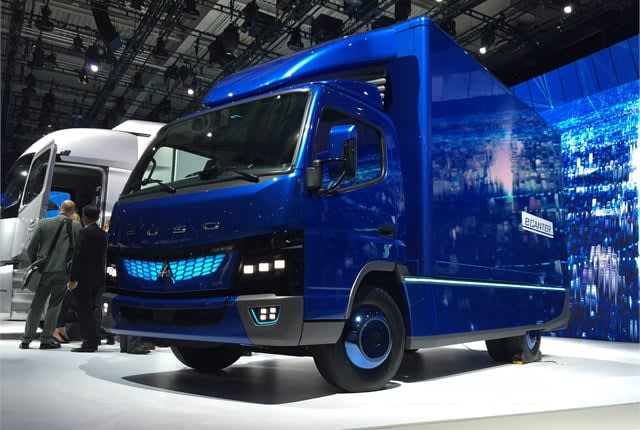
The Fuso eCanter shown at IAA displays a little more pizazz for the show, including a redesigned interior showcasing connectivity functions.Photo: Deborah Lockridge
Daimler plans to introduce two new electric commercial vehicles into the U.S. in the next few years, it announced at the IAA Commercial Vehicle Show in Hannover, Germany, while also showing off a highly connected and efficient electric concept truck.
The Mitsubishi Fuso eCanter will see a “soft launch” in the U.S. next year, most likely in areas such as southern California and New York City, where highly congested and emissions-challenged urban areas make electric delivery vehicles ideal.
In addition, Mercedes Vans says it will introduce an e-van, likely in the 2018 time frame.
In a roundtable with North American trucking reporters at the show, Wolfgang Bernhard, head of Daimler Truck & Bus, explained how rapidly evolving battery technology is making electric commercial trucks available faster than the industry would have expected just a few years ago.
In fact, at the IAA show just two years ago, he said he didn’t see any applications for electric trucks.
“And you ask yourself, what made me change your mind? Honestly, what happened was battery technology changed, more drastically than we ever hoped for. And that change is driven by these guys,” he said, holding out his smartphone. “These guys are very powerful customers and are asking for more powerful batteries.”
The performance of batteries has improved by 2.5 times, he said, and the costs have come down by about the same amount. “Now we’re reaching a tiring point. And that tipping point will be the end of this decade.”
Electric trucks are better than diesel for urban delivery, he said — quieter, less emissions, and they don’t face the challenges that diesel engines do in stop and go traffic where they never get to the kind of steady-state operation and temperatures where they work at peak efficiency.
Marc Llistosella of Daimler Trucks Asia, which announced the Fuso eCanter electric light-duty commercial truck at the show, pointed out that a number of European cities plan to ban diesel, with Paris and London leading the way in 2020.
One challenge in the U.S., noted both Llistosella and Bernhard, is that city operation here has some significant differences from Europe or Japan. Cities are larger, more sprawling, so range will need to be higher, and trucks will need to be able to operate at highway speeds.
But the other thing about the U.S., Llistosella said, is that there is a lot of enthusiasm and interest in electric trucks. “This is unique to America,” he said, “the curiosity, the willingness to change.”
Fuso eCanter
The Fuso Canter E-Cell is now the Fuso eCanter, representing the third generation of the electric-powered light truck. It uses a permanent synchronous electric motor with an output of 185 kW. Power is transferred to the rear axle by standard single-speed transmission. The truck shown at IAA has a battery capacity of 70 kWh, which allows a range of more than 100 km without stationary recharging. A modular approach to the battery packs will allow eCanter to be adapted to customer range requirements, albeit with a tradeoff in weight and price.

A walk-on glass floor in the box body offers a view of the drive unit and batteries to showgoers.Photo: Deborah Lockridge
The trucks can be charged up to 80% capacity within an hour with direct current at a quick charging station, or 100% in seven hours with an AC charger. In the future, rapid charging with 170kW will be possible, meaning 80% battery capacity in only half an hour — although these superchargers will pack a hefty price tag so likely would only be used by larger fleets.
The goal is to aim for a higher range in the U.S., a minimum of 100 miles rather than the 100 kilometers that will work well in other countries. Because battery technology is advancing so rapidly, a battery leasing program is envisioned that will allow owners to lease the batteries rather than buying them, which would allow them to upgrade to the latest technology.
Fuso first showed off a concept electric version of its Canter at the 2011 Tokyo Motor Show.
Earlier this year, a prototype was shown at the National Truck Equipment Association’s Work Truck Show. There was a great deal of interest, and the company is currently talking to customers for a soft launch.
Successful trials have been completed in Lisbon, Portugal, and Stuttgart, Germany. So far, company officials say, concerns have primarily revolved around concerns about charging infrastructure. The trucks themselves have performed well, and the fuel savings and lower maintenance costs can recoup the higher price in less than three years, according to Fuso.

The IAA show version of the eCanter featured LED headlamps, a distinct grille and bumper. Photo: Deborah Lockridge
Electric vans
While the Vision Van shown at IAA was a concept vehicle designed to show off Mercedes’ vision of the future of last-mile delivery, complete with drones, the electric drive technology of the van is proven and the company will offer an all-electric van.
“We will make an e-van for Europe, it will also be for sure for the U.S. market,” said Volker Mornhinweg, head of Mercedes-Benz Vans. He suggested a 2018 time frame for Europe, but a U.S. time frame was more tenuous.
He noted that in 2011 they offered a Metris E-Cell, but the market was not ready. Nevertheless, they did sell about 1,000 units, and those provided a lot of real-world knowledge to work with in designing the next generation of e-vans.
More Green Fleet
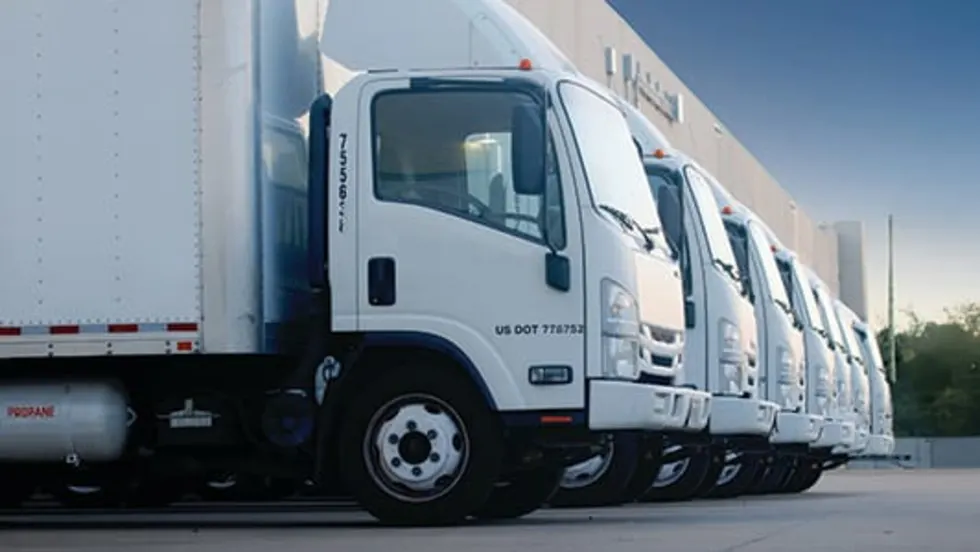
New Propane Autogas Program Offers Fleet Compensation
Qualified commercial fleets can receive $7,500 per eligible propane autogas vehicle and up to $10,000 for new refueling site prep. Learn how the program works and see whether your fleet qualifies.
Read More →
EV Charging Use Is Outpacing Infrastructure Growth
ChargePoint’s 2026 Charging Forward Report points to rising charger use, higher-powered charging, commercial vehicle electrification, and energy-management technology. Here’s what fleets should know.
Read More →
Merchants Fleet Reports 290M EV Miles as Fleets Navigate Changing Electrification Market
From millions in operating savings to hundreds of millions of EV miles, Merchants Fleet’s latest report reveals what’s working and what’s changing in fleet electrification.
Read More →
The EV Breakdown Nobody's Talking About: Why Most Electric Vehicle Roadside Calls Aren't Mechanical Failures
Here's why EV breakdowns are widely misunderstood.
Read More →
ChargePoint Now Available in Energy Pass
ChargePoint and additional planned charging network integrations were added to GM's Energy Pass.
Read More →
First Look: Slate Auto's Electric Fleet Pickup
Could an affordable, modular EV pickup make electrification more practical for fleets?
Read More →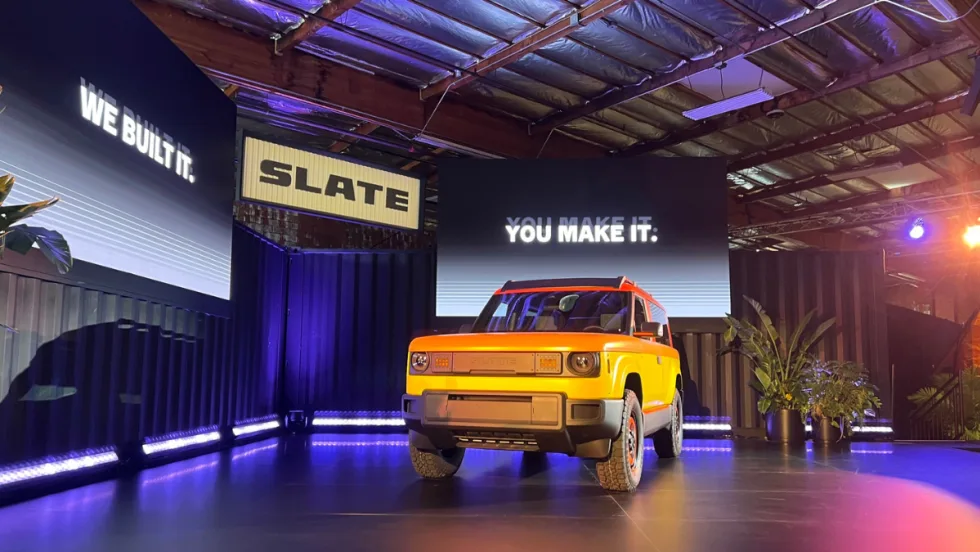
Slate Debuts Colorful, Unique EV Models
A recent media and client event, studded with electric vehicles dressed up on platforms, planted a new position for the manufacturer in the wider EV market. Fleets will find cost-saving advantages.
Read More →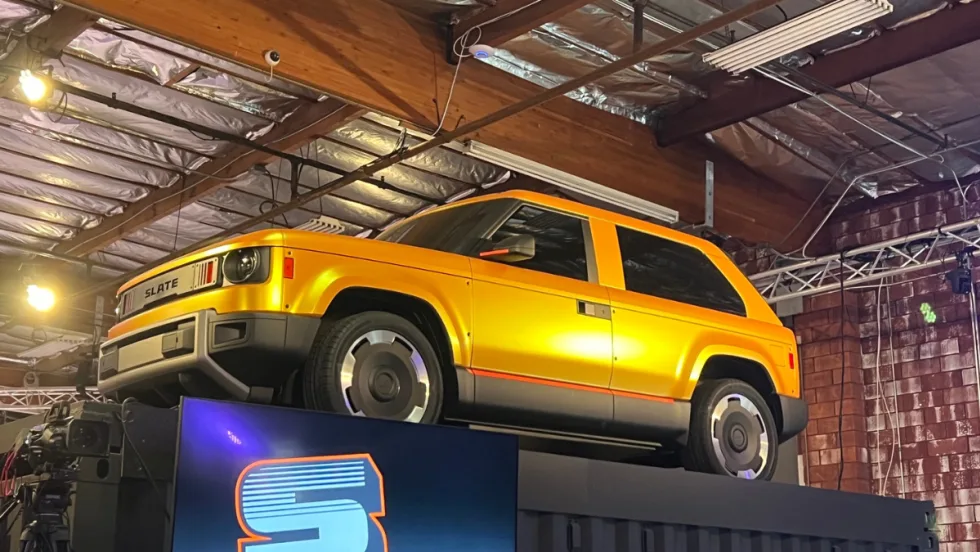
Slate Electric SUV, Pickup Switchable Model Aims For Light-Duty Fleets
Everything about this EV is counterintuitive and understated, making it stand out from the crowd.
Read More →
Inspiration Mobility Acquires Key Electrada Assets
Inspiration Mobility Group has acquired select assets of Electrada, adding the fleet electrification provider's team, technology, and charging infrastructure development capabilities to its energy management business.
Read More →