




Cummins Confirms Support for Greenhouse Gas & Fuel-Efficiency Standards
COLUMBUS, IN - Cummins Inc. further confirmed its support for greenhouse gas and fuel-efficiency standards for heavy- and medium-duty commercial vehicles and engines during its testimony at the Environmental Protection Agency (EPA) and National Highway Traffic Safety Administration (NHTSA) public hearing in Chicago.
COLUMBUS, IN - Cummins Inc. further confirmed its support for greenhouse gas and fuel-efficiency standards for heavy- and medium-duty commercial vehicles and engines during its testimony at the Environmental Protection Agency (EPA) and National Highway Traffic Safety Administration (NHTSA) public hearing in Chicago.
On Oct. 25, 2010, the EPA and the NHTSA proposed rules to establish a comprehensive Heavy-Duty National Program, which from 2014 to 2018 would reduce greenhouse gas emissions and increase fuel efficiency for on-road heavy-duty engines and vehicles. The EPA has proposed greenhouse gas emissions standards under the Clean Air Act, and the NHTSA has proposed equivalent fuel consumption standards under the Energy Independence and Security Act of 2007.
Dr. Stephen Charlton, chief technical officer - engine business and vice president - Cummins Inc., testified on behalf of Cummins and stated, "While we are still working through the details of the proposal and are preparing written comments on specific aspects, we support the time line laid out by President Barack Obama to finalize this rule by July 30, 2011, and deliver improvements over the 2014-to-2018 time frame. The rule and these benefits can be delivered in this short time frame because many of the building blocks already exist."
Over the last 30 years, the industry and government have partnered together to advance clean, efficient technologies. Under the Clean Air Act, heavy-duty diesel engine emissions of Nitrogen Oxides (NOx) and Particulate Matter (PM) have been reduced by 99 percent. The U.S. Department of Energy (DOE) has fostered public-private partnerships to develop the heavy-duty technologies needed to meet stringent emissions standards and improve efficiency.
Additionally, the SmartWay (SM) partnership, launched by the EPA in 2004, has attracted thousands of partners focused on reducing greenhouse gas emissions and fuel consumption.
"Cummins partnership with the DOE over the past 20 years has allowed us to bring evolutionary and breakthrough engine technologies to the market faster and at a lower cost than we could have done going it alone," stated Charlton. "Complying with the stringent 2010 NOx limits under the EPA's Heavy-Duty Highway Rule has put Cummins well along the path of meeting future greenhouse gas and fuel-efficiency requirements."
The company's Selective Catalytic Reduction (SCR) technology not only reduces NOx to the near-zero levels required but also enables greater fuel efficiency. As a result, Cummins 2010 Heavy-Duty and MidRange engines deliver up to 6 percent improved fuel efficiency compared with the previous models. The 2010 engines and SCR technology provide the foundation to meet the new regulations.
The EPA and NHTSA proposal establishes three regulatory categories of heavy-duty vehicles: (1) combination tractors; (2) heavy-duty pickup trucks and vans; and (3) vocational vehicles. For combination tractors and vocational vehicles, the agencies have proposed separate engine and vehicle standards.
"We strongly support this regulatory structure," continued Charlton. "By building on our long history of working together, and by utilizing existing programs where possible, we can together deliver the greenhouse gas and fuel-consumption benefits envisioned in this rulemaking. We appreciate the open and collaborative process that the EPA and NHTSA have used in proposing this historic regulation. We look forward to continuing to work with the agencies over the coming months to develop a final rule."
The complete transcript of Cummins comments can be found at
http://cumminsengines.com/assets/pdf/cummins_statement.pdf.
More Green Fleet

EV Charging Use Is Outpacing Infrastructure Growth
ChargePoint’s 2026 Charging Forward Report points to rising charger use, higher-powered charging, commercial vehicle electrification, and energy-management technology. Here’s what fleets should know.
Read More →
Merchants Fleet Reports 290M EV Miles as Fleets Navigate Changing Electrification Market
From millions in operating savings to hundreds of millions of EV miles, Merchants Fleet’s latest report reveals what’s working and what’s changing in fleet electrification.
Read More →
The EV Breakdown Nobody's Talking About: Why Most Electric Vehicle Roadside Calls Aren't Mechanical Failures
Here's why EV breakdowns are widely misunderstood.
Read More →
ChargePoint Now Available in Energy Pass
ChargePoint and additional planned charging network integrations were added to GM's Energy Pass.
Read More →

First Look: Slate Auto's Electric Fleet Pickup
Could an affordable, modular EV pickup make electrification more practical for fleets?
Read More →
Slate Debuts Colorful, Unique EV Models
A recent media and client event, studded with electric vehicles dressed up on platforms, planted a new position for the manufacturer in the wider EV market. Fleets will find cost-saving advantages.
Read More →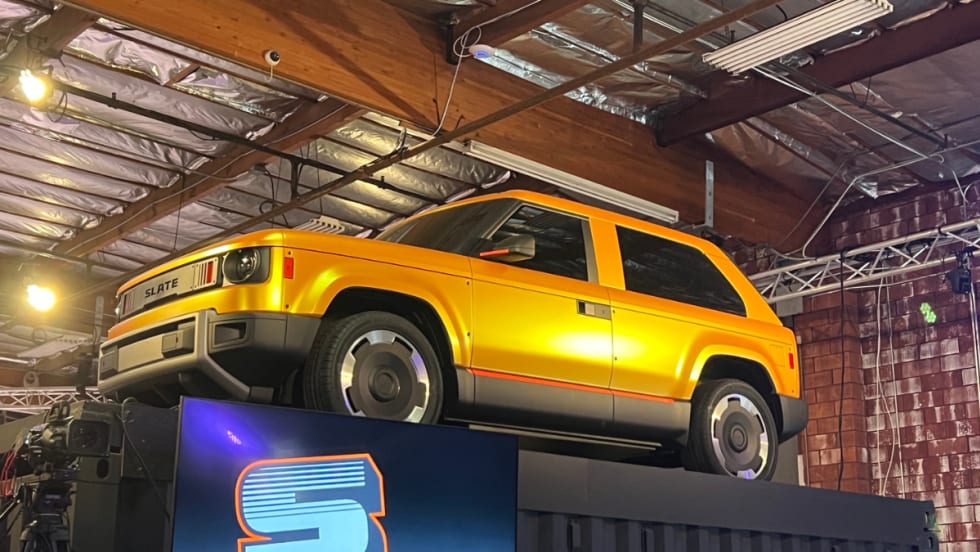
Slate Electric SUV, Pickup Switchable Model Aims For Light-Duty Fleets
Everything about this EV is counterintuitive and understated, making it stand out from the crowd.
Read More →
Inspiration Mobility Acquires Key Electrada Assets
Inspiration Mobility Group has acquired select assets of Electrada, adding the fleet electrification provider's team, technology, and charging infrastructure development capabilities to its energy management business.
Read More →
Turning Connected Vehicle Data Into Decisions That Matter
Fleet leaders have more data than ever, but turning that data into clear, actionable decisions remains a challenge. This white paper shows how leading organizations are using connected vehicle data to improve safety, reduce costs, and optimize fleet performance. Learn how to turn insight into action across your fleet.
Read More →