




Clean Cities Colorado’s Alt Fuel Driving Experience: Driving the Nissan LEAF
The City of Loveland, Colo.’s Fleet Manager, Steve Kibler, participated in the organization’s Alternative Fuel Vehicle Driving Experience, driving the Nissan LEAF to the meeting and recording his experiences.
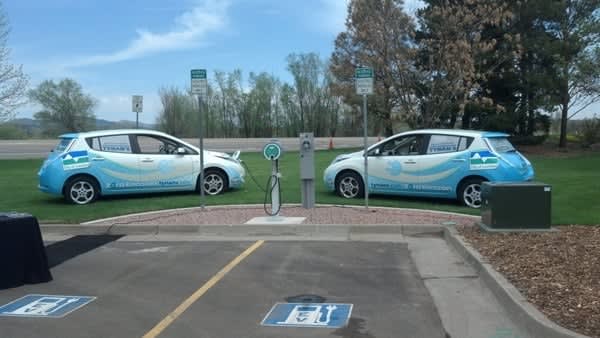
Two Nissan LEAFs owned by the City of Loveland, Colo. Fleet manager Steve Kibler and his co-worker Gus Brown drove one of them to the Clean Cities Colorado chapter's annual meeting.
On the way to the Colorado Clean Cities annual meeting, the City of Loveland, Colo.’s Fleet Manager, Steve Kibler, participated in the organization’s Alternative Fuel Vehicle Driving Experience, driving the Nissan LEAF to the meeting and recording his experiences. Kibler wrote a humorous, detailed account of his trip, which we’ve posted below, along with photos from the journey.
Boldly go Where No Man [or Woman] Has Gone Before!
By Steve Kibler
Even Captain James T. Kirk, from the original Star Trek television series, was little nervous when traveling to a faraway galaxy. How are we going to prove people’s range anxiety about plug-in electric vehicles is unfounded unless we trust the infrastructure and “Engage?”
The City of Loveland purchased two Nissan LEAFs in 2012, three in 2013, and the City plans to purchase three more in 2014. In the 10 months since we’ve owned and operated them, electric vehicle charging station infrastructure has been growing steadily. We are extremely happy with the electric vehicle’s performance but before today, we never had the courage to travel further than 35 miles one way of the 105 mile maximum distance a LEAF was rated to be able to travel.
When Colorado Clean Cities announced that its annual meeting would be held at the National Renewable Energy Lab (NREL) in Golden, Colo., I Googled the distance between Loveland and NREL It was 60 miles. “Uh Oh… the dilithium crystals may need recharging before engaging the warp drive home,” I thought.
Editor's Note: For those readers unfamiliar with Star Trek, the Nissan LEAF doesn't have any "dilithium crystals" in it. This is a reference to a fictional power source from the Star Trek television series.
I immediately went to the Department of Energy’s website to see if NREL was listed in the EV charger infrastructure. (If anyone had EV chargers it should be NREL - right?) Guess what, of the 6,218 EV charging sites registered NREL’s weren’t listed. So I called NREL, and they do have several level 2 EV chargers, but since they’re a federal facility, by law, they can’t sell electricity to the public. However, if I signed a waiver, they would allow me to recharge our little green shuttlecraft.
As the meeting day approached, I made sure the LEAF was fully charged and checked the weather to make sure we weren’t expecting a winter cold-snap that would necessitate the use of heated steering wheel or heated seats. All looked good, and we decided to commit to our 125-mile mission with a single charge range of 105 miles. Just in-case, my helmsman Gus “Zulu” Brown and I had comfortable shoes – and a credit card.
Most people don’t realize how efficient the regenerative braking is. If you can plan your route to include town stop-and-go driving, you will increase your net efficiency. If you take interstate and use the cruise control, you are less efficient and burn miles at about a 60 percent efficiency rate. We elected to drive highway 287 from Loveland through Longmont, Broomfield, and Arvada and then take I-70 to NREL.
Here’s the play-by-play:
Range read-out at the start in Loveland – 116 miles.
In the first half mile the range dropped 10 miles, and then we gained two miles in the next 5.
The (electron) burn-rate: 45 mile range-drop while traveling 21 miles of highway to Longmont.
We gained 10 miles of range through Longmont; the range increased to 77 miles.
The range dropped 30 miles over the next 25 miles of highway, (“Okay, time to turn on the A/C,” I thought), and the range was 41 miles at Wadsworth and I-76. “Wow,” I thought. “We’re going to make it!”
We pulled into NREL and I showed the gate guard our waiver. He said, “Yeah, we heard about you,” and directed us to the parking garage and their charging stations. We pulled up to a bank of about 18-20 level 2 chargers. There were Volts, plug-in Priuses, and a couple of LEAFs already there. “Hmmm, maybe we’re not the only brave EV travelers,” I thought. The range read-out at the charger said 17 miles left. “Piece of cake,” I thought.
The EVSE digital read-out read: “Dilithium crystal charge time 4.7 hours” (Not really; it displayed the amount of electric charge left..) Unfortunately, we’d planned to start back home in 2.5 hours.
The Colorado Clean Cities meeting was well-planned, well-executed, and with the NREL site tour, took about 3.5 hours. Since we arrived 30 minutes early, our total charge time was 4 hours.
We unplugged the charger and there was 84 miles on the range meter, so we were confident and decided to turn the A/C on high and take I-25 home. Well, we looked like George Jetson merging into traffic on I-70 at 4PM on a Friday afternoon. By the time we reached I-25, we had gained 4 miles of range. It was time to engage the warp drive. Gus drove 75MPH while I mimicked the drum of warp factor 4. (EVs are stone quiet, ya know!)
I-25 burned way more electrons than Highway 287. We space-docked the Enterprise (the Nissan LEAF) with only 9 miles of range left. FYI, the LEAF's computer sounded the warning “battery is low” at 10 miles left in the bank.
We learned something about the LEAF we didn’t know before. The more energy you regenerate from braking, the more trees that grow on the dash (small images of trees on the display, actually). Gus was able to grow three whole trees on the trip home.
The Total trip distance was 122 miles; any range-anxiety? Nah, we wouldn’t hesitate to take another trip 60-70 miles one-way. But you need access to a dilithium charger at the other end.
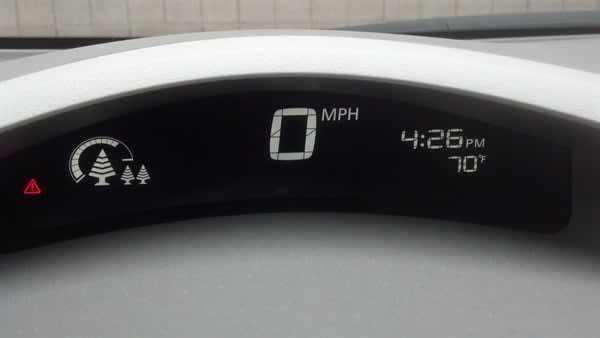
This display shows the "trees" (representing how much energy was recaptured from regenerative braking) Kibler described in his account of the journey to the meeting.
Next week, we'll post the next write-up from the Alternative Fuel Driving Experience.
More Green Fleet
EV Charging Use Is Outpacing Infrastructure Growth
ChargePoint’s 2026 Charging Forward Report points to rising charger use, higher-powered charging, commercial vehicle electrification, and energy-management technology. Here’s what fleets should know.
Read More →
Merchants Fleet Reports 290M EV Miles as Fleets Navigate Changing Electrification Market
From millions in operating savings to hundreds of millions of EV miles, Merchants Fleet’s latest report reveals what’s working and what’s changing in fleet electrification.
Read More →
The EV Breakdown Nobody's Talking About: Why Most Electric Vehicle Roadside Calls Aren't Mechanical Failures
Here's why EV breakdowns are widely misunderstood.
Read More →
ChargePoint Now Available in Energy Pass
ChargePoint and additional planned charging network integrations were added to GM's Energy Pass.
Read More →

First Look: Slate Auto's Electric Fleet Pickup
Could an affordable, modular EV pickup make electrification more practical for fleets?
Read More →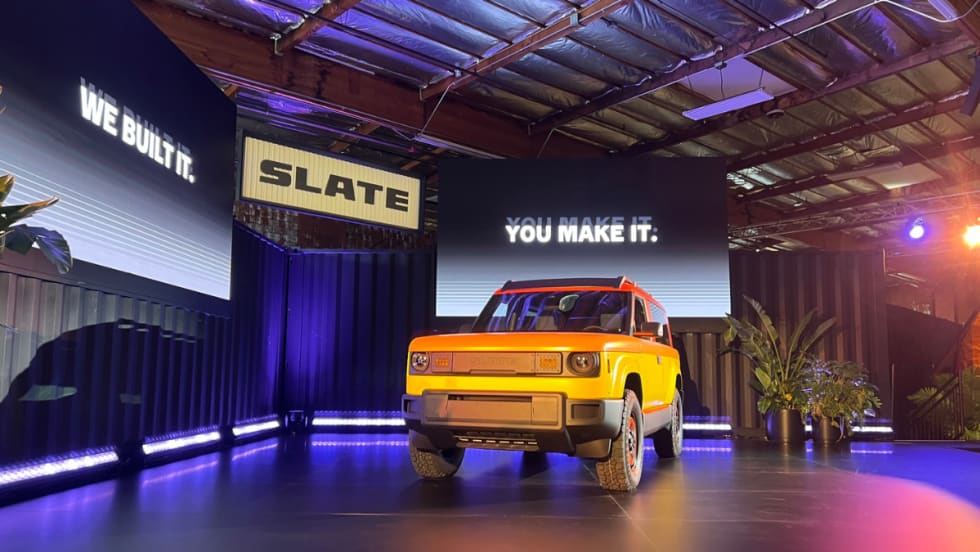
Slate Debuts Colorful, Unique EV Models
A recent media and client event, studded with electric vehicles dressed up on platforms, planted a new position for the manufacturer in the wider EV market. Fleets will find cost-saving advantages.
Read More →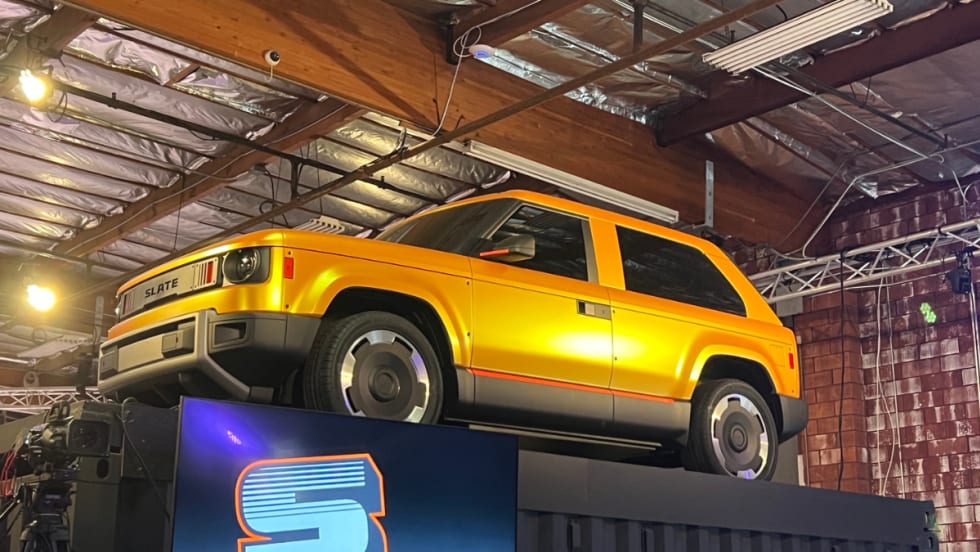
Slate Electric SUV, Pickup Switchable Model Aims For Light-Duty Fleets
Everything about this EV is counterintuitive and understated, making it stand out from the crowd.
Read More →
Inspiration Mobility Acquires Key Electrada Assets
Inspiration Mobility Group has acquired select assets of Electrada, adding the fleet electrification provider's team, technology, and charging infrastructure development capabilities to its energy management business.
Read More →
Turning Connected Vehicle Data Into Decisions That Matter
Fleet leaders have more data than ever, but turning that data into clear, actionable decisions remains a challenge. This white paper shows how leading organizations are using connected vehicle data to improve safety, reduce costs, and optimize fleet performance. Learn how to turn insight into action across your fleet.
Read More →