




Clean Cities Colorado’s Alt-Fuel Driving Experience: Driving a Ford E-450 With Hydraulic Hybrid System
This entry is from Brian Johnston, systems and testing engineer at Lightning Hybrids. His account explains what the company’s hydraulic hybrid technology was able to achieve in the Ford E-450 passenger shuttle bus he drove to the event.
Part of this year’s Colorado Clean Cities meeting involved attendees driving alt-fuel vehicles and reporting on their experience, including fuel economy and overall vehicle performance during the trip. This entry is from Brian Johnston, systems and testing engineer at Lightning Hybrids. His account explains what the company’s hydraulic hybrid technology was able to achieve in the Ford E-450 passenger shuttle bus he drove to the event.
I am Brian Johnston of Lightning Hybrids in City of Loveland, Colo. I drove a Ford E-450 based, 25 passenger shuttle bus with a 6.8L V-10 engine to the statewide meeting at the National Renewable Energy Laboratory (NREL). This bus employs our company’s hydraulic hybrid drive system which captures regenerative brake energy in a hydraulic accumulator, then uses it to propel the vehicle from a standing start to about 35 mph. This technology is ideal for heavy vehicles which drive on intensive stop and go drive cycles such as city transit buses, delivery vehicles, or refuse haulers.
My route to NREL consisted of 56 miles of almost exclusively highway style driving. This is not the sweet spot for a hydraulic hybrid which has outstanding power and torque, but limited energy storage. The vehicle used its stored hydraulic energy to initially accelerate to highway speed, and then spent most of the trip operating like a conventional vehicle. Had I been forced to take a local route, the benefits of hydraulic hybridization would have been far more significant (up to 20% improvement over the conventional equivalent). This highlights the need for our technology to be paired with specific drive cycles. A fleet of intercity buses or airport shuttles could see major fuel economy improvements, while an Over-The Road trucking company would not see significant gains.
There was negligible planning or adaption required to drive this trip. The vehicle’s engine operates on regular gasoline available anywhere. Our system displaces, but does not replace petroleum fuels. The 56 mile trip is only 10% of the available vehicle range with a 55 gallon tank and 11 mpg average observed on the highway. It was hot, so I ran the air conditioning with the windows up. While 11 mpg may not sound very impressive, customer vehicles in this class usually only achieve 7-8 mpg on some of the worst drive cycles in terms of fuel economy. Also remember that with 25 seats, this vehicle has the potential to displace 5-25 sedans if it is driven with a full load of passengers. With that in mind its performance is far more impressive. To truly demonstrate the performance of this vehicle, I should have given all the stakeholders a ride home!
I would also like to mention a few of the benefits of the hydraulic hybrid technology in addition to improved fuel economy. These include increased brake performance and component life, improved acceleration, and a three year return on investment. The parallel hybrid architecture also allows the user to disable the system in the event of a malfunction and continue with its assigned mission. Our vehicles have never required a tow home in the company’s history. This allows the fleet manager to schedule maintenance during off shift hours and maintain higher reliability ratings.
Thanks for your interest in this green transportation alternative. When applied to the right style of driving, hydraulic hybrids provide an excellent choice to save gas without sacrificing vehicle performance. Feel free to contact me with any additional questions at Lightning Hybrids! BJ
More Green Fleet

Merchants Fleet Reports 290M EV Miles as Fleets Navigate Changing Electrification Market
From millions in operating savings to hundreds of millions of EV miles, Merchants Fleet’s latest report reveals what’s working and what’s changing in fleet electrification.
Read More →
The EV Breakdown Nobody's Talking About: Why Most Electric Vehicle Roadside Calls Aren't Mechanical Failures
Here's why EV breakdowns are widely misunderstood.
Read More →
ChargePoint Now Available in Energy Pass
ChargePoint and additional planned charging network integrations were added to GM's Energy Pass.
Read More →

First Look: Slate Auto's Electric Fleet Pickup
Could an affordable, modular EV pickup make electrification more practical for fleets?
Read More →
Slate Debuts Colorful, Unique EV Models
A recent media and client event, studded with electric vehicles dressed up on platforms, planted a new position for the manufacturer in the wider EV market. Fleets will find cost-saving advantages.
Read More →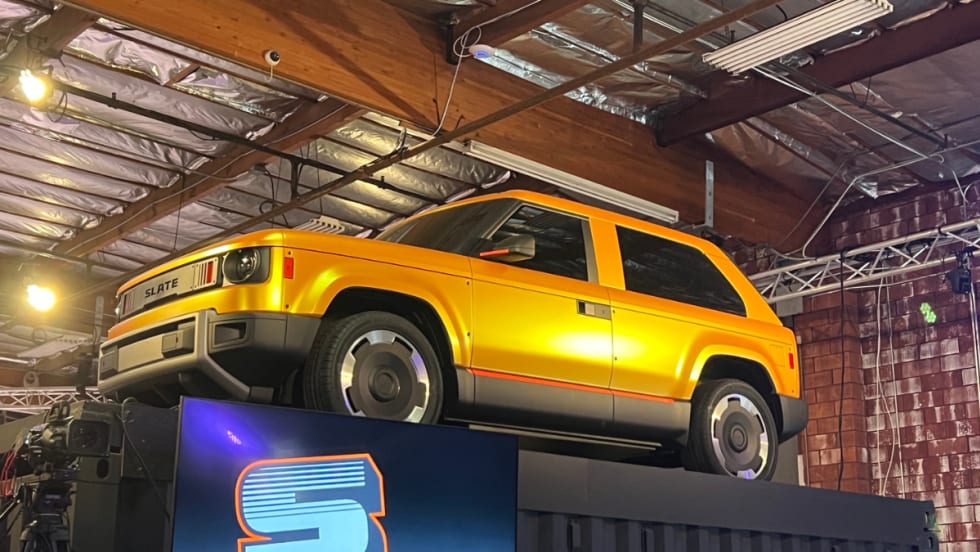
Slate Electric SUV, Pickup Switchable Model Aims For Light-Duty Fleets
Everything about this EV is counterintuitive and understated, making it stand out from the crowd.
Read More →
Inspiration Mobility Acquires Key Electrada Assets
Inspiration Mobility Group has acquired select assets of Electrada, adding the fleet electrification provider's team, technology, and charging infrastructure development capabilities to its energy management business.
Read More →
Turning Connected Vehicle Data Into Decisions That Matter
Fleet leaders have more data than ever, but turning that data into clear, actionable decisions remains a challenge. This white paper shows how leading organizations are using connected vehicle data to improve safety, reduce costs, and optimize fleet performance. Learn how to turn insight into action across your fleet.
Read More →
Are You Tracking Your Fleet's True Total Cost of Ownership?
Bobit Business Media surveyed 190 fleet professionals and found that while most fleets are tracking costs, fragmented systems and data gaps are keeping true TCO visibility out of reach. With rising pressure to control spend in an increasingly volatile environment, the gap between what fleets think they know and what the data actually shows is wider than you might expect. See how your peers are managing costs today and where the industry still has room to improve.
Read More →