




Clean-Air Standard Powers Upheld
The Supreme Court has upheld the way the federal government sets clean-air standards. In so doing, the high court unanimously rejected industry arguments that officials must balance compliance costs against the health benefits of cleaner air. The ruling was a major boost for the federal Clean Air Act. It said the law does not require the government to consider the financial cost of reducing harmful emissions when it sets air-quality standards. The justices also ruled against industry arguments that the Environmental Protection Agency (EPA) took too much lawmaking power from Congress when it set tougher standards for ozone and soot in 1997. The court ruled unlawful the EPA’s policy for implementing new ozone rules, saying the agency’s interpretation of a section of the Clean Air Act was unreasonable. The Clean Air Act, enacted in 1970, is the nation’s premier environmental law, and the industry challenge was viewed as the most significant environmental case in years. The Clinton administration had told the justices the dispute had profound implications for Americans’ health. The law requires the EPA to set national air-quality standards to “protect the public health.'' The agency is to use criteria that “accurately reflect the latest scientific knowledge” for identifying pollution's effects on health. Business groups that long have chafed under the clean-air law argued that the EPA was setting standards without clear criteria and without considering the financial costs of complying with them. The Clinton administration argued that the nation’s air is cleaner than when the Clean Air Act was adopted. Government lawyers said the EPA considers compliance costs in deciding how states will try to meet the clean-air standards, and the law is intended to drive the creation of new technology for doing so. A federal appeals court had ruled that the EPA went too far in adopting new standards in 1997 to reduce smog and soot. The court said the government interpreted the federal law so loosely that it usurped Congress' authority. However, the U.S. Circuit Court of Appeals for the District of Columbia rejected industry's argument that the government must weigh financial costs against health benefits. It relied on a 1980 appeals court ruling that barred the EPA from considering costs when it set air-quality standards. The Supreme Court decided the appeals court was right in ruling the EPA could not consider costs in setting air-quality standards, but wrong in saying the agency unlawfully usurped Congress' authority. On the ozone issue, the justices ruled against the EPA’s implementation of revised ozone standards in areas whose ozone levels exceed the maximum allowable amount. The 1997 air standards limited ozone, a major component of smog, to 0.08 parts per million instead of .12 parts per million under the old requirement. States also were required to limit soot from power plants, cars and other sources to 2.5 microns, or 28 times smaller than the width of a human hair. Industry groups that challenged the clean-air rules included the American Trucking Associations, the U.S. Chamber of Commerce, the National Association of Manufacturers and three states - Michigan, Ohio and West Virginia. A friend-of-the-court brief supporting the clean-air rules was filed by New York, California, Connecticut, Maine, Maryland, New Hampshire, Pennsylvania, Rhode Island and Vermont.
More Operations

Top 50 Executive Fleets
It is that time of year again! Time for the 2026 list of the Top 50 Executive Fleets, presented by Automotive Fleet and Volvo as part of its annual Fleet 500. Download now to see this year's list of companies!
Read More →
Gary Van Orden Retires After Nearly Four Decades in Commercial Fleet
From answering customer calls at Ford Motor Company to leading fleet sales across multiple OEMs and a fleet management company, Gary Van Orden's career reflects nearly four decades of leadership in commercial fleet.
Read More →
How Stellantis Plans to Get Ahead of Fleet Downtime
Vehicle acquisition may grab the headlines, but fleet uptime increasingly determines operating success. Darren Bradshaw of Mopar North America gives the details.
Read More →
Hyundai Releases 2027 Commercial Program Incentives
The 2027 Model Year "Fleet Street Incentives" are available to commercial and government fleets.
Read More →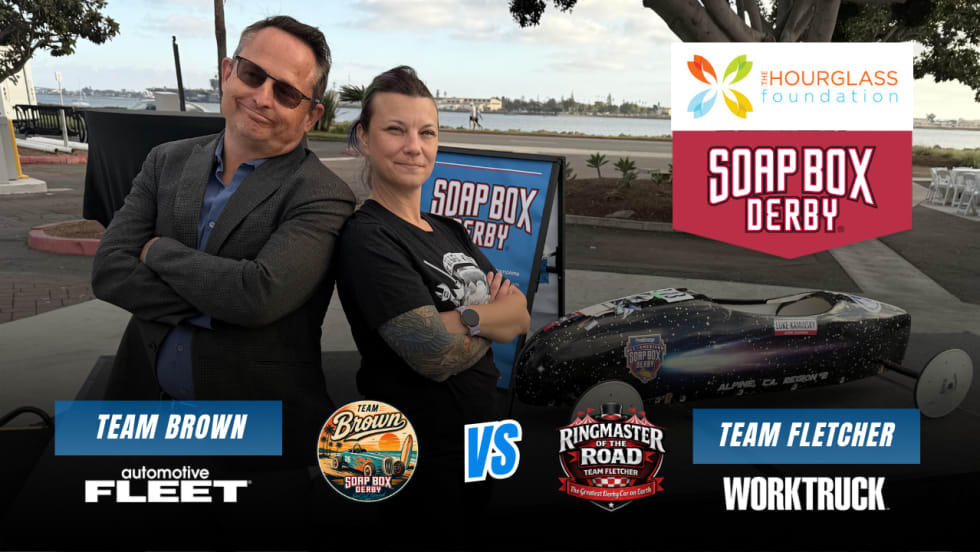
It's All Downhill from Here! Fleet Industry Raises $22,000 for Skilled Trades Scholarships
Work Truck’s Lauren Fletcher and Automotive Fleet’s Chris Brown turned a friendly racing rivalry into $22,000 for automotive technology and skilled trades scholarships.
Read More →
The Top 300 Commercial Fleets
The Top 300 Commercial Fleets: See the List
Read More →

Your Local Dealer Knows More Than You Think
Your local dealer can provide an information advantage that extends well beyond courtesy deliveries.
Read More →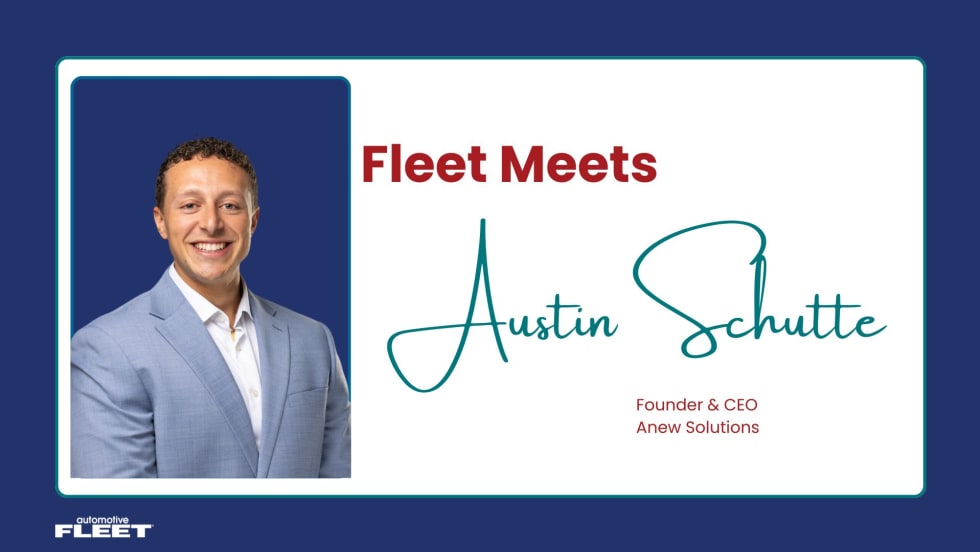
Fleet Meets: Austin Schutte
Here are some industry insights, personal touches, and words of advice from the CEO and Founder of Anew Solutions.
Read More →
Soap Box Derby Challenge: What’s Powering Team Brown
The car is coming together, the students are solving real build problems, and the fleet industry is helping push Team Brown toward the starting line.
Read More →