




Chrysler LLC Introduces Entire 2009 Dodge Challenger Model Lineup at New York International Auto Show
NEW YORK – At the recent New York International Auto Show, Chrysler LLC unveiled its full 2009 Dodge Challenger model lineup.
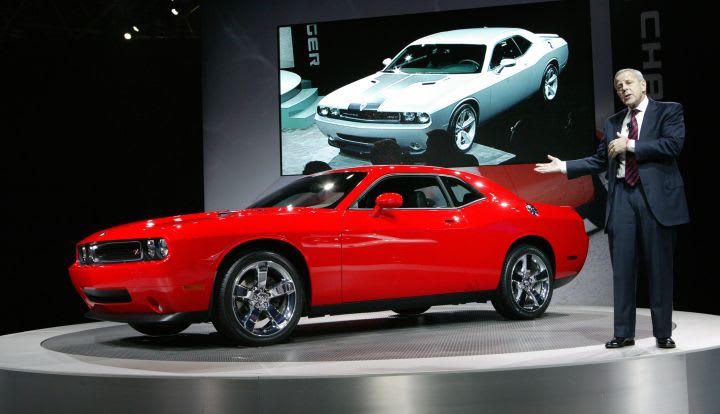
NEW YORK – At the recent New York International Auto Show, Chrysler LLC unveiled its full 2009 Dodge Challenger model lineup. Pricing will start in the low $20s. The Dodge Challenger is the first five-passenger, two-door coupe produced from Chrysler’s proven rear-wheel-drive platform that delivers the Chrysler 300 and Dodge Charger. Three models will be offered in North America: Dodge Challenger SRT8, Dodge Challenger R/T, and Dodge Challenger SE.
The Dodge Challenger R/T features the new-generation 5.7L HEMI V-8 engine with a five-speed automatic transmission that produces an estimated 370 horsepower (276 kW) and 398 lb.-ft. of torque (540 Nm). For 2009, the HEMI engine is upgraded to get an estimated five percent improvement in fuel economy as well as an increase of 30 horsepower (9 percent) and 8 lb.-ft. improved torque (two percent) over a greater range of engine speeds. The automatic transmission features fuel-saving multi-displacement (MDS) technology, which increases fuel economy by as much as 20 percent depending on driving conditions without sacrificing vehicle performance.
The Dodge Challenger R/T also offers a precision-shift six-speed manual transmission — the first for a new-generation HEMI-powered car — that produces 375 horsepower (280 kW) and 404 lb.-ft. of torque (548 Nm) when running on premium fuel. The Dodge Challenger R/T can go from zero to 60 mph in less than six seconds.
The 2009 Dodge Challenger SRT8 features an SRT-exclusive 6.1L HEMI V-8 engine mated with a new-for-2009 six-speed manual transmission or a five-speed automatic transmission with Auto Stick that generates a blistering 425 horsepower (317 kW) and 420 lb.-ft. of torque (569 Nm). The vehicle can go from zero to 60 mph in less than five seconds.
The Dodge Challenger SE powered by the 3.5L High Output V-6 with a four-speed automatic transmission produces 250 horsepower (186 kW) and 250 lb.-ft. of torque (339 Nm). Patterned off the Dodge Charger architecture, the front suspension and five-link independent rear suspension system on all Dodge Challenger models provide excellent ride and handling characteristics.
On the exterior, the long, raised performance hood with scoops and recessed grille with round dual headlamps are reminiscent of the original Dodge Challenger. The bold A-line, or character line, that runs from stem to stern gives the all-new 2009 Dodge Challenger an instantly recognizable muscle-car profile. Retro dual rectangular exhaust outlets complete the look from the rear.
On the
interior, the trapezoidal theme of the door-panel cove and gauge cluster, dark
headliner, and slanted shifter console are inspired by the original Dodge
Challenger. The modern interpretation of the Dodge Challenger offers
exceptional rear seating for a two-door coupe, achieving best-in-class rear
head (37.4 inches) and leg (32.6 inches) room. Coupled with best-in-class cargo
space (16.2 cu. ft.) — equal to the Dodge Charger — the all-new 2009 Dodge
Challenger offers added comfort and functionality.
Scroll down for more...
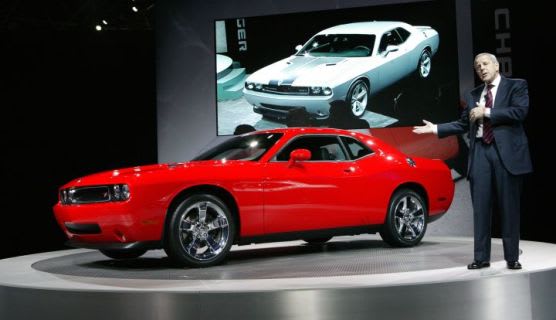
The all-new 2009 Dodge Challenger offers customers a full range of innovative technologies including:
MyGIG provides a cutting-edge multimedia audio and entertainment system, with built-in navigation.
UConnect Hands-free Communication System provides convenient, voice-activated communication with Bluetooth cellular phones.
SIRIUS Digital Satellite Radio offers a variety of commercial-free radio programs and music.
Keyless Go allows the driver to start the vehicle with the simple push of a button.
Remote Start starts a secured vehicle with the key fob.
Dodge Challenger offers more than 25 safety and security features including:
Supplemental side-curtain airbags extend protection to all outboard front- and rear-seat passengers.
Anti-lock Brakes (ABS) modulate the brakes for the driver to provide steering control while braking.
Electronic Stability Program (ESP) applies selective braking or throttle reduction to control oversteer and understeer.
Brake Assist ensures maximum braking action during panic stops.
Traction Control reduces the throttle and/or applies selective braking to optimize traction during acceleration.
Hill Start Assist (HSA) for Manual Transmission application assists the driver in launching the vehicle on an incline.
Automatic Headlamps turn headlamps on at dusk and off in the daylight without driver intervention.
Tire Pressure Monitoring (TPM) alerts driver about low tire pressure(s) in order to facilitate safe handling.
More Operations

Fleet Has a Talent Pipeline Problem. What Comes Next? | AF News Recap
Where will fleet’s next generation of leaders come from? This week, we’re looking at the industry’s talent pipeline, what certification can add to a fleet career, how to build an award-worthy track record, and the return of Automotive Fleet’s Personal Use Survey.
Read More →
Smith System Launches Driver Risk Management Program
Fleets have more driver data than ever, but identifying risky behavior doesn't necessarily correct it. Smith System's new Driver Risk Management program combines monitoring, training, and follow-up coaching to help fleets connect risk signals with driver intervention.
Read More →
Automotive Fleet Opens 2026 Personal Use Survey for Commercial Fleet Managers
Less than two weeks left! Commercial and corporate fleet managers are invited to share how their organizations handle company vehicle personal-use policies, charges, and driver eligibility.
Read More →
From AI Prompts to AI-Generated Safety Songs | AF News Recap
Can better prompts make AI more useful for fleet managers? This week, we’re breaking down smarter fleet analysis, an AI-assisted experiment that turned safety training into music, and what happened to fuel prices in August.
Read More →
How to Write Better AI Prompts for Fleet Analysis
Include these six elements in your fleet prompts to generate more relevant analysis and accurate answers.
Read More →
Fleet Meets: Eric Kilgore
This edition of the Fleet Meets series features one of the industry's best leaders driving multi-market and national operations.
Read More →
Why Reactive Fleet Management Is Becoming Too Expensive to Sustain
Research highlights a growing need for proactive management strategies to address rising costs in fleet operations effectively.
Read More →
What Your Fleet KPIs Aren’t Telling You
Tracking fleet metrics is only useful when the data leads to better decisions. This guide helps fleet leaders assess cost, utilization, and downtime more accurately, identify performance gaps, and prioritize the actions that can improve operational results.
Read More →
Hidden in Plain Sight: Fleet Compliance Risks
Fleet compliance isn't just about having policies — it's about consistently enforcing them. This practical guide reveals six hidden compliance risks common in public sector and shared fleet operations and outlines proven strategies to improve visibility, accountability, and audit readiness
Read More →
Turning Fleet Payment Data into Executive Insights
Does data alone drive results in operations?
Read More →