




Chrysler Launches Production of the All-New 2007 Jeep Compass at Belvidere Assembly Plant
AUBURN HILLS, MI – The Chrysler Group has announced the manufacturing launch of the all-new Jeep Compass at its Belvidere (Ill.) Assembly Plant.
AUBURN HILLS, MI – The Chrysler Group has announced the manufacturing launch of the all-new Jeep Compass at its Belvidere (Ill.) Assembly Plant. The plant, which was extensively retooled in 2005, has become a flagship for Chrysler Group’s adoption of flexible manufacturing. Flexible manufacturing is allowing the company to bring its new vehicles to market more quickly and the Belvidere Assembly Plant to manufacture multiple products on one assembly line. Production of the all-new 2007 Dodge Caliber began there in Jan. 2006, while the 2007 Jeep Patriot is scheduled to begin later this fall.
“We are now starting to see the results of the new flexible manufacturing process that we believe is a competitive advantage for the Chrysler Group,” said Frank Ewasyshyn, executive vice president – manufacturing. “Thanks to Belvidere’s ability to build multiple models off one assembly line, we expect the Jeep Compass production to cost significantly less than the initial investment we made in the plant to build the Dodge Caliber.”
At the core of the new manufacturing process is a body shop comprised of robots instead of the dedicated tooling that was previously used. Belvidere is Chrysler Group’s first assembly plant to use a body shop comprised entirely of robotics. Only the robots’ end affectors, or “hands,” need to change in order to build the different models. That tool change is done automatically, within the time it takes to cycle from one vehicle to the next. In addition, the Belvidere plant is flexible enough to vary the production mix between three products anywhere from 0 to 100 percent of each model. A fourth model can also be piloted, or test-built at the same time, helping reduce the time needed to make new-model changeovers. The new body shop and other upgrades are part of a $419 million total Belvidere investment announced in 2005.
Many other changes are also taking place within the Chrysler Group manufacturing process to accommodate the multiple models. For example, new ways to make the required amount of stamping dies are saving the company up to 60 percent on the cost of those dies.
New methods of material handling are being implemented to manage the complexity of three models being built on one assembly line. The inbound parts sequencing center manages more than 1,800 different parts that are used in the Jeep Compass and Dodge Caliber build process. In addition to sequencing, this center provides parts metering, kitting, and container management to the Belvidere Assembly Plant and delivers complete subassemblies just-in-time to the manufacturing floor.
A tunnel connects the 500,000 square-foot sequencing center to the Belvidere Assembly Plant. This facility, operated by TDS/US — one of Chrysler Group’s largest minority-owned suppliers — represents the highest level of integration within a Chrysler Group plant. TDS/US organizes parts, puts them in “kits” for individual work stations and delivers them to the end of a connecting tunnel for Belvidere employees to transport to the manufacturing floor. This process maintains in-plant stocks at optimal levels, minimizes delivery time, and reduces costs an estimated 12 percent a year compared with the previous process. By carefully managing the material flow at the plant, the sequencing center helps workers focus on manufacturing quality and allows Belvidere to remain one of the most efficient manufacturing examples in the Chrysler Group family. These pre-assembled modules reduce the number of components required to assemble the Jeep Compass and Dodge Caliber, improving quality, productivity, and worker ergonomics.
A new workplace organizational model, coined SMART manufacturing, is increasing the flexibility of the Belvidere workforce, while fostering greater creativity and innovation from plant employees. This model is being implemented throughout Chrysler Group’s Manufacturing organization. In addition to extensive training, the new workplace model lets employees design their own work stations. These changes provide a better work environment for employees and give increased support to assembly line team members.
The 2007 Jeep Compass is an all-new modern-styled compact Jeep vehicle that delivers utility, excellent fuel efficiency, and Jeep 4x4 capability. With a starting U.S. Manufacturer’s Suggested Retail Price (MSRP) of $15,985, including a $560 destination charge, Jeep Compass is designed to appeal to new buyers who might not have previously considered a Jeep vehicle.
More Operations

Turn Fleet Data Into Smarter Decisions
Fleet leaders have access to more operational data than ever, but disconnected systems and unclear metrics often slow decision-making instead of improving it. This article outlines five practical steps fleets can take to transform fragmented data into actionable insights that improve planning, safety, utilization, and long-term performance.
Read More →
Hybrids: Electrification Without the Challenges
For fleet managers, fuel is one of the biggest line items in the budget — and it's one hybrids can shrink without changing how your people work. Download the eBook to see the numbers, understand the technology, and get a step-by-step guide to making the switch.
Read More →
How NOV Uses Telematics to Improve Fleet Safety Across 160 Locations
James Victory of NOV discusses how the company manages fleet safety, maintenance, and telematics across more than 150 locations supporting oilfield operations throughout the U.S.
Read More →
Fleet Meets: Steven Santostasi
This edition of the Fleet Meets series features Steven Santostasi, the current TSP channel manager for Ford Pro.
Read More →
Why Fleet Managers Are Replacing Departmental Vehicles with Shared Motor Pools
Departmentally assigned vehicles often create hidden costs through underutilization, poor visibility, and increased administrative burden. This white paper explores how shared motor pool strategies help fleets reduce costs, improve accountability, and optimize vehicle utilization.
Read More →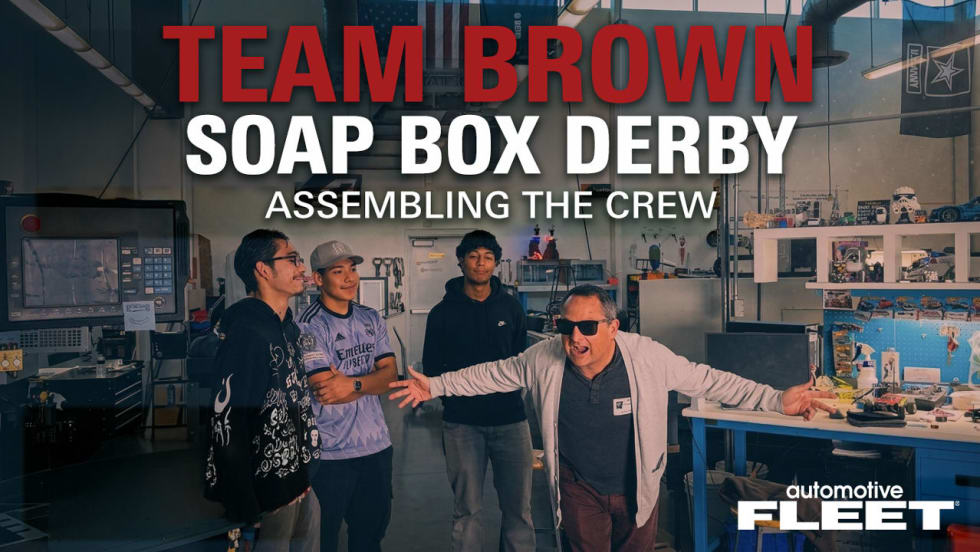
Soap Box Derby Challenge: Assembling the Crew
Meet Gabriel, Matthew, and Angel — the team helping bring this soap box derby build to life.
Read More →
BBL Fleet Acquires Velcor Leasing Corporation
BBL Fleet expanded its footprint in the fleet management industry with the acquisition of Velcor Leasing Corporation of Madison through a stock purchase agreement finalized Feb. 27, 2026.
Read More →
Lytx Introduces New AI Fleet Technologies at Protect 2026
The company introduced new AI-driven fleet safety and operations technologies during its annual user conference.
Read More →
Fleet Costs Are Rising: Here’s How Leaders Are Responding
Fleet leaders are under pressure to reduce costs, adapt to economic uncertainty, and make smarter decisions. See how peers across North America are responding with real data, proven strategies, and forward-looking insights. Download the 2026 Market Pulse Report to benchmark your strategy and uncover where you can gain an edge.
Read More →
From Waffle House to AI: Fleet Trends You Need to Know
In this AF news recap, host Faith Howell covers how Waffle House stepped up during disaster response and new AI tech on the market.
Read More →