




Chrysler Brand Marks 90th Anniversary
Fiat Chrysler Automobiles is celebrating the 90th anniversary of the Chrysler nameplate in 2015, a year after CEO Sergio Marchionne rolled it into the FCA US umbrella.
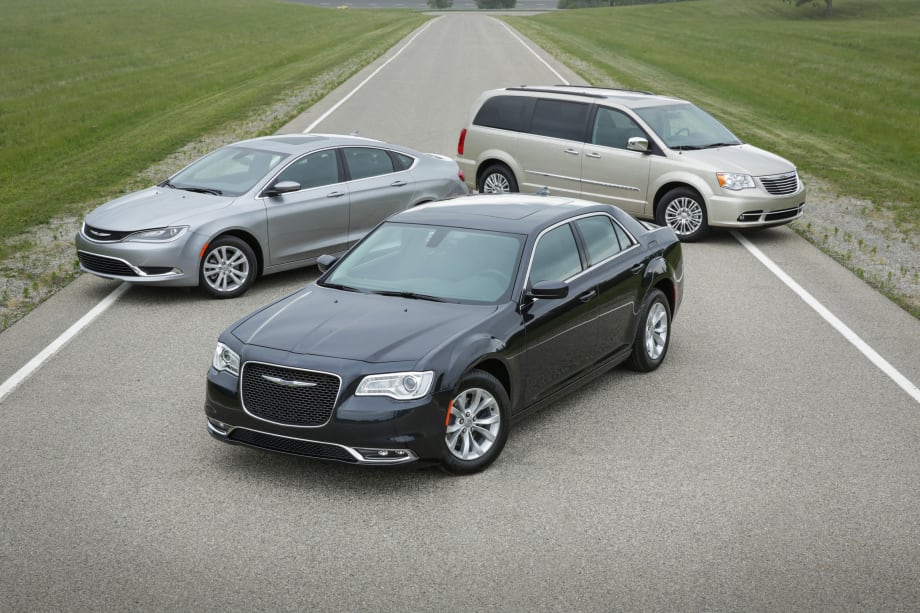
(From left to right) 200, 300 (front), Town and Country. Photo courtesy of FCA.
(From left to right) 200, 300 (front), Town and Country. Photo courtesy of FCA.
Fiat Chrysler Automobiles is celebrating the 90th anniversary of the Chrysler nameplate in 2015, a year after CEO Sergio Marchionne rolled it into the FCA US umbrella.
Walter P. Chrysler founded the brand on June 6, 1925. The influence of its founder can still be felt today with a legacy of Chrysler vehicles that were known for innovative engineering, groundbreaking style and "looking more expensive than they were," the forerunner to affordable luxury, according to the company.
After Walter Chrysler realized his dream of creating his own company, he dedicated the company’s efforts to excellence in engineering, while building affordable, luxurious cars at a price consumers could afford. The company would eventually roll out the Chrysler Six, Airflow, Imperial, New Yorker, 300 and Town & Country among its nameplates.
Here's a closer look at Chrysler milestones through the decades.
The 1920s marked the creation of the first Chrysler branded car, known as the Chrysler Six, which was priced at $1,565.
The 1930s brought about the Great Depression and the Chrysler Airflow, which was introduced in 1934. The Airflow was an "engineer's" car with innovations such as a beam-and-truss body that increased strength but weighed less than expected due to a tighter interlocking method of blending body and chassis, according to FCA. The 1934 Imperial Airflow set 72 national speed records and recorded 95.7 mph in the flying mile at Bonneville.
In the late 1930s, Chrysler made significant steps in transmissions with the introduction of Fluid Drive, which used a hydraulic coupling instead of a flywheel, and performed the same function as a modern torque converter.
The 1940s saw the Chrysler Thurderbolt and the death of Walter P. Chrysler. By the end of the decade, Chrysler introduced its Town & Country sedans and convertibles.
The first muscle car, the Chrysler 300, was introduced by the automaker in 1955.
In 1963, Chrysler began offering a 100,000-mile powertrain warranty, which was the first of its kind in the industry.
In the 1970s, due in part to fuel shortages and an oil embargo, Chrysler shifted its focus and began creating mid-size and small vehicles.
Chrysler introduced the minivan segment in 1984 and later acquired Lamborghini.
By the 1990s, Chrysler offered only front-wheel-drive vehicles. The 1990 models included a driver's side airbag as standard equipment. The first luxury van, the Chrysler Town & Country, was introduced in the 1990 model year.
The 2000s were marked by the merger of the Daimler and Chrysler companies. In 2001, the PT Cruiser arrived to the lineup. In 2010, after overcoming bankruptcy, Chrysler became part of Fiat Chrysler.
In 2014, FCA debuted the Chrysler 200. The Chrysler 200 was the first mid-size sedan to offer a nine-speed automatic transmission as standard equipment.
The Chrysler story continues in the second half of the decade with the introduction of an next-generation Chrysler Town & Country minivan that will make its debut in the first quarter of 2016.
More Operations

Fleet Has a Talent Pipeline Problem. What Comes Next? | AF News Recap
Where will fleet’s next generation of leaders come from? This week, we’re looking at the industry’s talent pipeline, what certification can add to a fleet career, how to build an award-worthy track record, and the return of Automotive Fleet’s Personal Use Survey.
Read More →
Smith System Launches Driver Risk Management Program
Fleets have more driver data than ever, but identifying risky behavior doesn't necessarily correct it. Smith System's new Driver Risk Management program combines monitoring, training, and follow-up coaching to help fleets connect risk signals with driver intervention.
Read More →
Automotive Fleet Opens 2026 Personal Use Survey for Commercial Fleet Managers
Less than two weeks left! Commercial and corporate fleet managers are invited to share how their organizations handle company vehicle personal-use policies, charges, and driver eligibility.
Read More →
From AI Prompts to AI-Generated Safety Songs | AF News Recap
Can better prompts make AI more useful for fleet managers? This week, we’re breaking down smarter fleet analysis, an AI-assisted experiment that turned safety training into music, and what happened to fuel prices in August.
Read More →
How to Write Better AI Prompts for Fleet Analysis
Include these six elements in your fleet prompts to generate more relevant analysis and accurate answers.
Read More →
Fleet Meets: Eric Kilgore
This edition of the Fleet Meets series features one of the industry's best leaders driving multi-market and national operations.
Read More →
Why Reactive Fleet Management Is Becoming Too Expensive to Sustain
Research highlights a growing need for proactive management strategies to address rising costs in fleet operations effectively.
Read More →
What Your Fleet KPIs Aren’t Telling You
Tracking fleet metrics is only useful when the data leads to better decisions. This guide helps fleet leaders assess cost, utilization, and downtime more accurately, identify performance gaps, and prioritize the actions that can improve operational results.
Read More →
Hidden in Plain Sight: Fleet Compliance Risks
Fleet compliance isn't just about having policies — it's about consistently enforcing them. This practical guide reveals six hidden compliance risks common in public sector and shared fleet operations and outlines proven strategies to improve visibility, accountability, and audit readiness
Read More →
Turning Fleet Payment Data into Executive Insights
Does data alone drive results in operations?
Read More →