




Chinese Tire Recall Spurs Calls for Reforms
REHOBOTH, Mass. --- In the wake of a June recall of allegedly defective Chinese-made light truck tires, safety advocates and an attorney representing the families of three men involved in a deadly crash have asked members of Congress to make automotive defect information public.
REHOBOTH, Mass. --- In the wake of a June recall of allegedly defective Chinese-made light truck tires, safety advocates and an attorney representing the families of three men involved in a deadly crash have asked members of Congress to make automotive defect information public. Last month, Foreign Tire Sales of Union, N.J., appealed to the National Highway Traffic Safety Administration for help in recalling an estimated 450,000 light truck tires after the company allegedly learned that the manufacturer, the Hangzhou Zhongce Rubber Company, had left a critical component out of the tire. The steel-belted radial light truck tires, sold under the names Westlake, Telluride, Compass and YKS, were implicated in the August 2006 deaths of Rafael B. Melo and Claudeir Jose Figueiredo in a rollover crash, and Carlos Souza, who was seriously injured. The Melo, Figueiredo and Souza families sued FTS and Hangzhou Zhongce in May, which sparked the recall. FTS reported to the federal agency that the company suspected that something was wrong with the tires as early as October 2005, when it examined a tire involved in a property damage claim and found that the gum strip, a feature designed to keep the belts from separating, was missing. FTS said it was further alarmed by a sharp increase in the number of warranty adjustments on the tires. According to FTS' defect report, additional testing and evaluations continued to confirm their concerns about the safety of the tires. Initially, FTS said that it lacked the financial resources to collect, dispose of and replace the allegedly defective tires. But after NHTSA ordered the company to conduct a recall, FTS announced a consumer-remedy plan. Safety Research & Strategies, a vehicle safety consulting firm in Rehoboth, Mass., along with Jeffrey Killino, a Philadelphia product safety attorney representing the families of the men who were killed and injured in the August 2006 crash, are urging Congress to push for greater transparency in NHTSA's Early Warning Reporting data. They argue that such transparency is required under a provision of the Transportation Recall Enhancement, Accountability and Documentation (TREAD) Act. The TREAD Act was passed in October 2000. Since 2003, auto, tire and other equipment manufacturers have been required to submit certain types of data warranty claims, production numbers, property damage claims, injury-causing and fatal incidents, consumer complaints and field reports as part of an early warning system to alert regulators to defects. The rules themselves have been contentious, and manufacturers and safety advocates have fought in federal court over the data's accessibility. The recall also brings to light a gap in the regulations that allows an importer to sell an automotive component in the U.S. without having the financial capability to launch a recall if needed. According to NHTSA, FTS isn't the first importer to discover a major defect and then claim that a recall would bankrupt the company.
More Safety

NAFA Fleet Safety Symposium to Collocate With 2026 Fleet Forward Conference
The daylong certificate program will precede the Fleet Forward Conference at the Gaylord National Harbor in Maryland.
Read More →
The Distractions You Can’t Turn Off: What Drivers Face Outside the Vehicle
Fleet drivers face constant visual, cognitive, and environmental interruptions the moment they hit the road. From roadside chaos to mental fatigue and digital overload, today’s biggest driving risks often come from outside the vehicle itself.
Read More →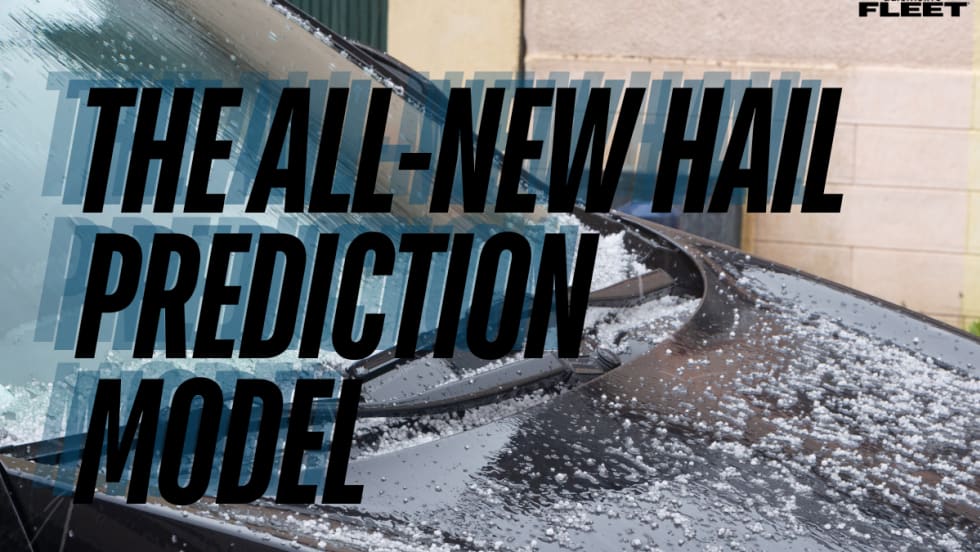
FLASH Weather AI Launches First Deep-Learning Hail Prediction Model With High-Resolution Forecasting
FLASH Weather AI has launched a first-of-its-kind hail prediction model capable of forecasting hail size and arrival time at 1-kilometer resolution up to 55 minutes ahead, giving fleets and insurers critical time to prepare for severe storms.
Read More →
How Coca-Cola United Protects Its Fleet from Growing Legal Risk
As litigation risk rises, vehicles are increasingly targeted. This Coca-Cola bottler shares how it’s reducing exposure through driver training, technology, and a proactive risk management approach.
Read More →
How to Speak the Same Language on Fleet Safety
Drivers, supervisors, and data often speak different safety “languages.” Getting on the same page will drive better results.
Read More →
Fleet Cybersecurity 101: What You Need from Your Technology Vendors
From identity management to third-party certifications, the right technology partner should make security easier to manage. Here are the three building blocks that fleet managers need to stay in control as connected systems scale.
Read More →
Reducing Risk by Eliminating Phone Use Behind the Wheel
Distracted driving remains one of the most persistent risks in fleet operations. New approaches focus on removing mobile device use entirely while adding real-time safety support.
Read More →
Distracted Driving in the Age of Smart Tech – Part 2
As distraction risks evolve, fleets are turning to smarter, more connected technologies to better understand what’s happening behind the wheel. Part 2 explores how these tools are helping identify risky behaviors and improve visibility across operations.
Read More →
Data Rights, Risks, and Responsibilities After a Crash
What fleets capture to improve safety can also expose them in litigation, forcing leaders to rethink how data is managed, stored, and shared.
Read More →
From Distraction to Detection: Strengthening Awareness in Fleet Drivers
Distracted driving is often measured by what we can see—phones in hand, eyes off the road. But what about the distractions we can’t? A recent incident raises a bigger question about awareness, attention, and why subtle risks so often go unnoticed.
Read More →