





ChargePoint and CBRE Report Shows Increase in Workplace EV Charger Demand
ChargePoint Eliminates EV Charging Connector Confusion with Adaptable Omni Port
Omni Port eliminates the need to carry an adapter for drivers and negates dedicating parking spaces exclusively for a select connector type.
August 14, 2024
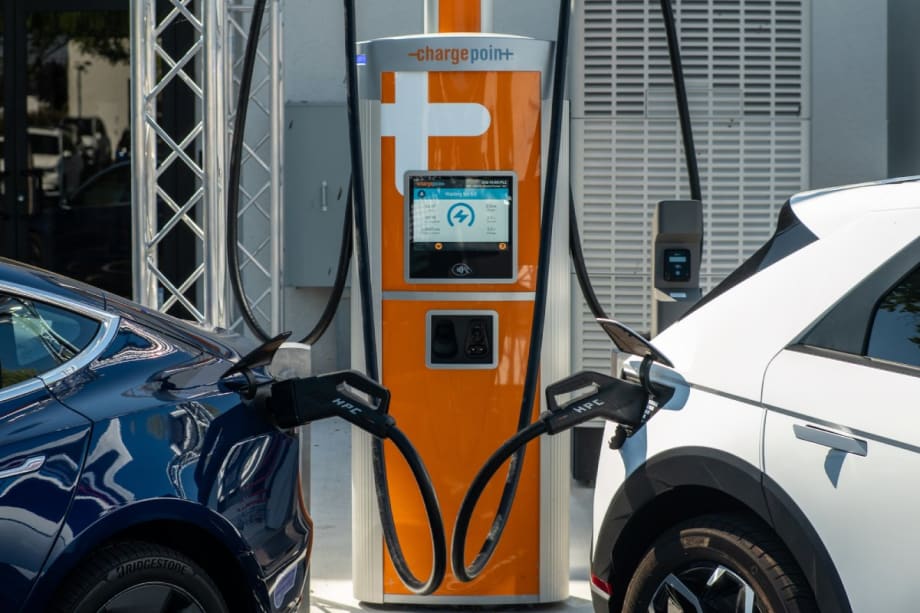
The Omni Port connector provides access to AC and DC charging, allowing drivers of all EV vehicles to charge at the same station by combining the most common connector types into each charging port.
Photo: ChargePoint
3 min to read
ChargePoint has announced ChargePoint Omni Port, an electric vehicle (EV) connector that ensures any EV can charge in any parking space, regardless of its connector type, without an additional cable.
More than 5.5 million EVs are on North American roads, more than half of which are equipped with J1772 or CCS1 charging ports, according to ChargePoint.
Omni Port eliminates the need to carry an adapter for drivers, negates dedicating parking spaces exclusively for a select connector type, and is available at no extra cost as a standard feature of ChargePoint's applicable chargers, making it ideal for fleets that will be operating in a multiple charging connector environment.
The connector provides access to AC and DC charging, allowing drivers of all EV vehicles to charge at the same station by combining the most common connector types into each charging port.
"With Omni Port, ChargePoint solved the challenges associated with a multiple connector environment, ensuring Tesla and non-Tesla drivers can continue to expect a world-class driver experience. We are giving drivers and site hosts assurance that ChargePoint will continue to meet all their charging needs now and in the future," Rick Wilmer, CEO of ChargePoint, said.
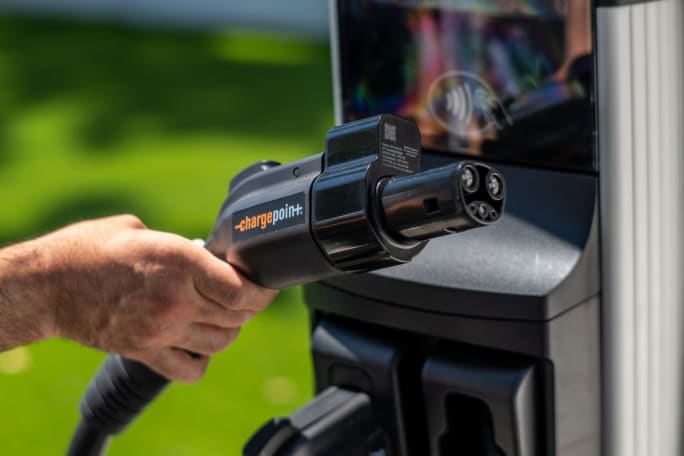
Drivers can expect a digitally supported charging experience when using Omni Port by entering their vehicle's make and model into the ChargePoint app, tapping to charge, and allowing the charging station to release the correct connector type automatically.
Photo: ChargePoint
Exploring Omni Port's Adaptable EV Charging and Compatibility
Omni Port is built into ChargePoint AC and DC charging architecture featuring cable management that reaches a charge port regardless of its location on the vehicle. Additionally, Omni Port enables full support for vehicles with 800V architecture to produce maximum charging speeds for sustained periods.
Omni Port public charging ports are designed to support vehicles already on the road and EVs coming to market. Drivers can expect a digitally supported charging experience when using Omni Port by entering their vehicle's make and model into the ChargePoint app, tapping to charge, and allowing the charging station to release the correct connector type automatically. For fleets and drivers who do not use the ChargePoint app, a driver would select the proper connector on the charger screen.
Although fleets have multiple payment options available when using public charging, there is no need to download any dedicated app for credit card payments when using Omni Port.
"[Fleets] can choose to tap to charge just as a typical EV driver would do or opt for a more integrated solution that streamlines backend operations and increases a fleet operator's visibility and control. ChargePoint software also integrates with leading fuel card providers like WEX to enable seamless charging for fleets, delivering a single payment solution for an entire fleet," AJ Gosselin, Director of Corporate Communications at ChargePoint, said.
In addition to the availability of new chargers, Omni Port will begin shipping by the end of the year and can be retrofitted onto ChargePoint CP6000 and Express Plus Power Link 2000 models. ChargePoint allows station owners to upgrade instead of replacing their chargers, swapping minimal components as quickly as possible.
More Operations

Avis Budget Group Deploys Neology Toll Management Technology Across Major Brands
Neology’s neoFleet platform will manage toll transactions and toll-authority operations for vehicles across Avis, Budget, Payless, Budget Truck and Zipcar.
Read More →
Fleet Personal-Use Charges Edge Higher in 2026
Nearly eight in 10 surveyed fleets allow personal use of company vehicles, while just over half of respondents report charging employees for the privilege.
Read More →
The Future of Fleet + What’s Changing Right Now | AF News Recap
Could developments overseas offer a preview of what’s coming for U.S. fleets? This week, we’re looking at the future of AI, autonomy, and electrification, plus Ford Pro’s new certified pre-owned program, smarter vehicle offboarding, and a new way for fleets to manage toll expenses.
Read More →
How to Handle Vehicle Offboarding
What do fleet managers need to do when a driver leaves?
Read More →
Sponsored•October 1, 2026
Fleet Manager’s Ultimate Playbook: Navigating the New Standard in OEM Connectivity
Rising operating costs, driver safety concerns, and unplanned downtime are putting unprecedented pressure on modern fleets. Discover how fleet managers use embedded OEM connectivity and real-time vehicle data to cut TCO, prevent downtime, and protect drivers without aftermarket telematics hardware.
Read More →
U.S. Bank Adds Verra Mobility Toll Management to Voyager Fleet Platform
The integration allows U.S. Bank Voyager fleet customers to manage toll payments and violations alongside fuel, EV charging and maintenance expenses.
Read More →
ADAS Prevents Crashes. But Repairs Cost More | AF News Recap
ADAS-equipped vehicles may crash less often, but they can cost more when they do. This week, we’re breaking down what that tradeoff means for fleets, plus Subaru’s first Forester Wilderness Hybrid, Nissan’s new e-POWER Rogue, and why Calstart has become Catalyst Mobility.
Read More →
Moventum Fleet Management Names Mark Iorillo Head of Sales
Iorillo brings nearly 20 years of fleet management and sales experience to the role, including previous positions at Element Fleet Management, CEI, Donlen and Ryder.
Read More →
Fleet Has a Talent Pipeline Problem. What Comes Next? | AF News Recap
Where will fleet’s next generation of leaders come from? This week, we’re looking at the industry’s talent pipeline, what certification can add to a fleet career, how to build an award-worthy track record, and the return of Automotive Fleet’s Personal Use Survey.
Read More →
Smith System Launches Driver Risk Management Program
Fleets have more driver data than ever, but identifying risky behavior doesn't necessarily correct it. Smith System's new Driver Risk Management program combines monitoring, training, and follow-up coaching to help fleets connect risk signals with driver intervention.
Read More →