




Cars.com Offers Tax Credit Information for Hybrid Buyers
CHICAGO --- Cars.com has taken the guesswork out of tax credits for green vehicle buyers by offering consumers information about cars that qualify for a credit and explaining how and when credits for popular hybrid vehicles are expected to be phased out.
CHICAGO --- Cars.com has taken the guesswork out of tax credits for green vehicle buyers by offering consumers information about cars that qualify for a credit and explaining how and when credits for popular hybrid vehicles are expected to be phased out. Because of the Energy Policy Act of 2005, certain cars purchased in 2006 can earn credits of up to $4,000, and there is still time for buyers to take advantage of these credits in their 2006 filing. To be eligible for the credits, vehicles have to fall into one of four categories: fuel cell, advance lean burn technology, hybrid or alternative fuel. Currently, the only mass-market cars that qualify are hybrids and one natural-gas-powered car, the Honda Civic GX. The IRS offers credits on a total of 14 cars, ranging from $250 to $4,000. Here is a list of those cars and their corresponding credits: Chevrolet: -- 2006 - 07 Silverado Hybrid: $250 (2WD) or $650 (4WD) Ford: -- 2005 - 07 Escape Hybrid: $2,600 (FWD) or $1,950 (AWD) -- 2008 Escape Hybrid: $3,000 (FWD or AWD) GMC: -- 2006 - 07 Sierra Hybrid: $250 (2WD) or $650 (4WD) Honda: -- 2005 Accord Hybrid: $650 -- 2006 - 07 Accord Hybrid: $1,300* -- 2005 Civic Hybrid: $1,700 -- 2006 - 07 Civic Hybrid: $2,100 -- 2007 Civic GX: $4,000** -- 2005 - 06 Insight: $1,450 Lexus: -- 2007 GS 450h: $1,550*** -- 2006 - 07 RX 400h: $2,200*** (FWD and AWD) Mercury: -- 2006 - 07 Mariner Hybrid: $1,950 (AWD only) -- 2008 Mariner Hybrid: $2,200 (FWD and AWD) Nissan: -- 2007 Altima Hybrid: $2,350 Toyota: -- 2007 Camry Hybrid: $2,600*** -- 2006 - 07 Highlander Hybrid: $2,600*** (FWD and AWD) -- 2005 - 07 Prius: $3,150*** *2006 Accord without updated engine calibration eligible for $650 credit. **Natural-gas powered Civic GX available in California and New York. ***Cars purchased by Sept. 30, 2006, earn the full credit. Those purchased from Oct. 1, 2006, through the end of the year earn 50 percent of the credit. "For some cars, the amount you can claim depends on exactly when you bought the car," said Cars.com Managing Editor Patrick Olsen. "That's because federal rules say that when a manufacturer sells 60,000 of its eligible cars -- as reported to the government each quarter -- the credits will start to be phased out." The counter began ticking on Jan. 1, 2006. So far, Toyota is the only automaker to have reached the mark, selling its 60,000th hybrid car in the summer of 2006. As stipulated by the Energy Policy Act of 2005, consumers who purchased a Toyota or Lexus hybrid after Oct. 1, 2006, can claim 50 percent of the credit on their 2006 taxes -- for example, $1,575 on a Prius instead of the original $3,150. The IRS phases out the credits in 50, 25 and zero percent steps over the course of a year. Toyota credits, for example, will fall to just 25 percent of the original amount starting April 1, 2007. Honda is expected to exceed the 60,000 mark this year, and other automakers will likely follow. Under current legislation, the 60,000 quota is not scheduled to be raised. "There is still an opportunity for car buyers in the market today to earn credits on their 2007 taxes. For those seriously considering alternative fuel models, we recommend that they check with each manufacturer as some of the credits on more popular alternative fuel vehicles will be changing," added Olsen.
More Fuel
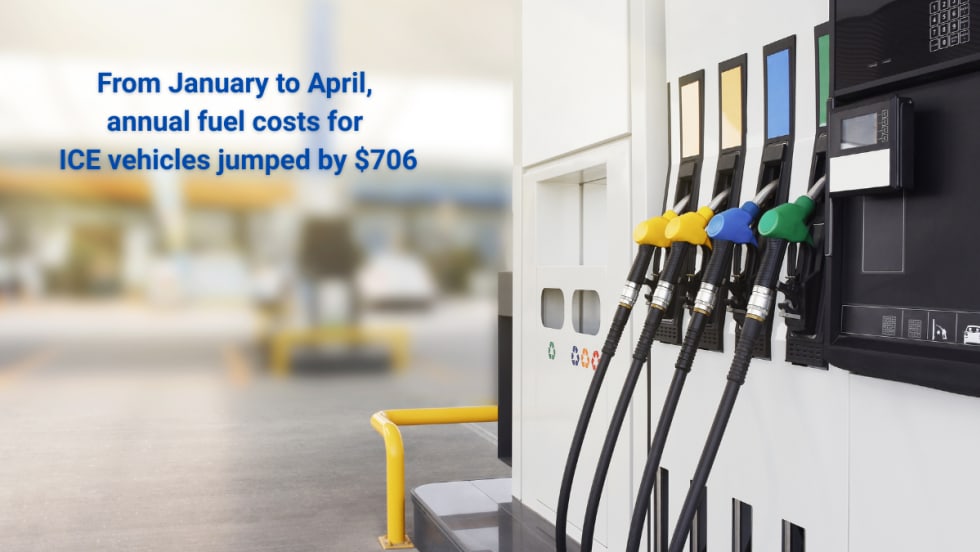
Study: How 2026's Gas Price Hikes Affect Different Vehicle Types
New data from iSeeCars reveals how rising fuel costs have affected different vehicle segments as gasoline prices climbed nearly 46% over the past four months.
Read More →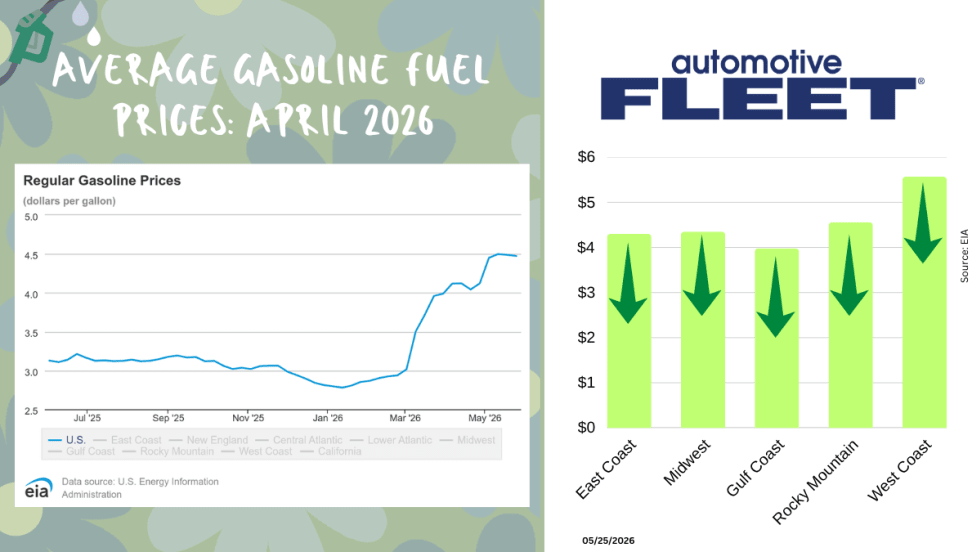
May Fuel Update: All Regions Experience Declines
Gas prices are finally easing in much of the country, but experts warn global tensions could quickly reverse the trend as the national average remains well above last month’s levels.
Read More →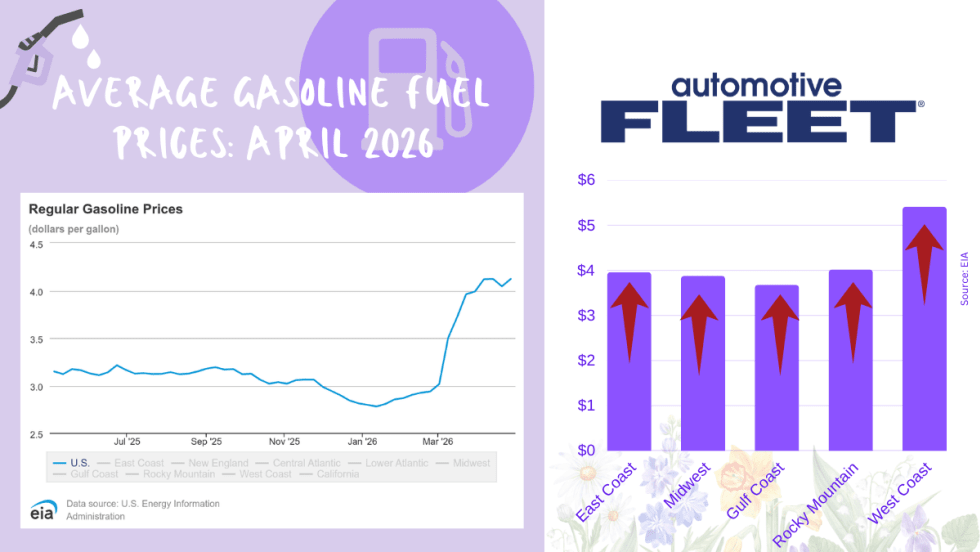
April Fuel Update: Prices Climb Above $4 as Spring Surge Accelerates
National average jumps to $4.04 per gallon, up sharply from last year, with West Coast prices topping $5 and further increases expected amid rising oil tensions.
Read More →
Tips from Fleet Managers on Saving Fuel Costs
Fleet leaders share practical strategies to reduce fuel spend through smarter policy, routing, and driver guidance.
Read More →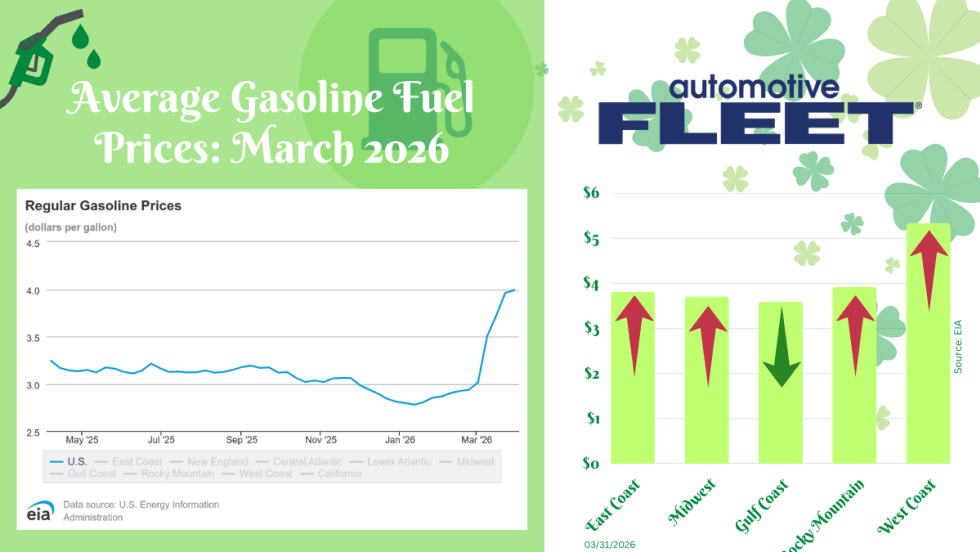
March Fuel Update: Prices Settle With a $4 Average
Fuel prices significantly slowed this week, but a $4 national average is still expected.
Read More →
Bob Adamsky on Fuel Volatility: “Don’t Panic — Have a Plan”
With oil prices rising again, AWP Safety’s fleet manager shares how to respond to rising fuel costs and how the right strategy can turn fuel spikes into cost-saving opportunities.
Read More →
Oil Market Turbulence Is Complicating Fleet Cost Planning
Rapid swings in crude oil prices driven by the conflict in the Middle East could create longer-term cost pressures for fleets, affecting fuel prices, supply chains, and vehicle strategy, says NTEA’s Andrew Wrobel.
Read More →
Report: How AI Is Reshaping Fleet and Field Service Operations
AI is rapidly transforming fleet and field service operations, from predictive maintenance and intelligent scheduling to customer self-service and real-time diagnostics. But while organizations are seeing measurable gains in uptime, productivity, and efficiency, many are still navigating workforce adoption, cybersecurity concerns, and data readiness challenges. Explore the latest trends, investment priorities, and emerging AI use cases shaping the future of fleet operations.
Read More →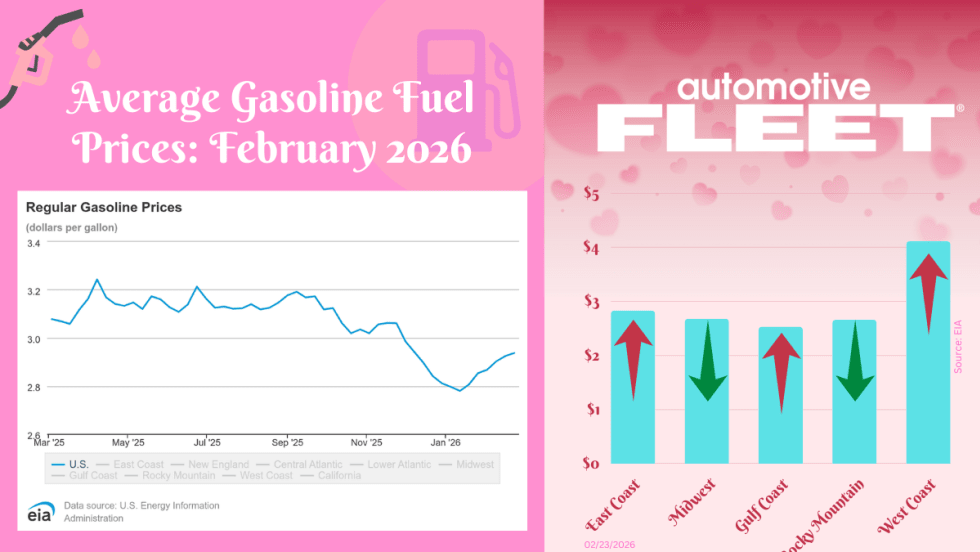
February Fuel Update: Prices Inch Higher for Third Week in a Row
The final February fuel update reveals prices continuing to inch higher for the third week in a row.
Read More →
The 2026 Fuel Economy Guide: Updated Cost and Efficiency Benchmarks for Fleets
Fleet managers can use the DOE’s 2026 Fuel Economy Guide to benchmark MPG across powertrain types using side-by-side vehicle ratings and compare new model-year options.
Read More →