




Caltrans Offers Driving Advice for the Snow Season
SACRAMENTO, CA --- Winter driving on roads and highways in the snowcapped mountains of California can be a pleasant adventure or it can be frustrating, tiring and sometimes even hazardous.
SACRAMENTO, CA --- Winter driving on roads and highways in the snowcapped mountains of California can be a pleasant adventure or it can be frustrating, tiring and sometimes even hazardous. The California Department of Transportation provides the following tips to help drivers make their mountain driving safer.
Before Heading for Snow Country:
-- Make sure your brakes, windshield wipers, defroster, heater and exhaust system are in top condition.
-- Check your antifreeze and be ready for colder temperatures. You may want to add special solvent to your windshield washer reservoir to prevent ice from forming.
-- Check your tires. Make sure they are properly inflated and the tread is in good condition.
-- Always carry chains. Make sure they are the proper size for your tires and are in working order. You might want to take along a flashlight and chain repair links. Chains must be installed on the drive wheels. Make sure you know if your vehicle is front or rear wheel drive.
-- Other suggested items to carry in your car are an ice scraper or commercial de-icer, a broom for brushing snow off your car, a shovel to free your car if it is "snowed in," sand or burlap for traction if your wheels should become mired in snow, and an old towel to clean your hands.
-- It is also a good idea to take along water, food, warm blankets and extra clothing. A lengthy delay will make you glad you have them.
-- Weather conditions may warrant detouring traffic from the main roadway. It is strongly suggested that drivers always keep an updated map containing the areas of travel.
-- If you have a cellular telephone, pre-load the Caltrans Highway Information Network (CHIN) phone numbers for convenient, updated road conditions.
-- Put an extra car key in your pocket. A number of motorists have locked themselves out of their cars when putting on chains and at ski areas.
Driving Tips:
-- Allow enough time. Trips to the mountains can take longer during winter than other times of the year, especially if you encounter storm conditions or icy roads. Get an early start and allow plenty of time to reach your destination.
-- Keep your gas tank full. It may be necessary to change routes or turn back during a bad storm or you may be caught in a traffic delay.
-- Keep the windshield and windows clear. You may want to stop at a safe turnout to use a snow brush or scraper. Use the car defroster and a clean cloth to keep the windows free of fog.
-- Slow down. A highway speed of 65 miles per hour may be safe in dry weather, but an invitation for trouble on snow and ice. Snow and ice make stopping distances much longer, so keep your seat belt buckled and leave more distance between your vehicle and the vehicle ahead. Bridge decks and shady spots can be icy when other areas are not. Remember to avoid sudden stops and quick direction changes.
-- Be more observant. Visibility is often limited in winter by weather conditions. Slow down and watch for other vehicles that have flashing lights. Visibility may be so restricted during a storm that it is difficult to see the slow-moving equipment.
-- When stalled, stay with your vehicle and try to conserve fuel while maintaining warmth. Be alert to any possible exhaust or monoxide problems.
Chain Requirements:
R1: Chains, traction devices or snow tires are required on the drive axle of all vehicles except four wheel/all wheel drive vehicles.
R2: Chains or traction devices are required on all vehicles except four wheel/all wheel drive vehicles with snow-tread tires on all four wheels.(NOTE: Four wheel/all wheel drive vehicles must carry traction devices in chain control areas.)
R3: Chains or traction devices are required on all vehicles, no exceptions.
Chain Controls:
-- You must stop and put on chains when highway signs indicate chains are required. You can be cited by the California Highway Patrol and fined if you don't. You will usually have about a mile between "Chains Required" signs and the checkpoint to install your chains.
-- Control areas can change rapidly from place to place because of changing weather and road conditions.
-- The speed limit when chains are required is 25 or 30 miles an hour.
-- When you put on chains, wait until you can pull completely off the roadway to the right. Do not stop in a traffic lane where you will endanger yourself and block traffic.
-- If you use the services of a chain installer, be sure to get a receipt and jot the installer's badge number on it. Remember, chain installers are independent business people, not Caltrans employees. Having the badge number may help with any misunderstandings later. Chain installers are not allowed to sell or rent chains.
-- When removing chains, drive beyond the signs reading "End of Chain Control" to a pull-off area where you can safely remove them.
Caltrans officials urge drivers to check road conditions often. To help keep abreast of changing conditions, Caltrans operates the Caltrans Highway Information Network that motorists may call at (800) 427-7623 for up-to-the-minute information in California and Western Nevada (Lake Tahoe/Reno Area). The network is updated as conditions change, and is voice-activated for safety and convenience.
More Safety

From Driver Well-Being to EV Charging | AF News Recap
Mental health belongs in the fleet safety conversation. This week, we’re looking at five ways fleets can support employee well-being before a crisis, plus Holman’s expansion in Mexico, new one-day Fleet Forward passes, and why EV charging demand is outpacing infrastructure growth.
Read More →
Nexar-Nauto Merger Aims to Give Fleets Better Safety Intelligence Through Larger Driving Dataset
Stefan Heck tells Automotive Fleet that combining more than 10 billion miles of driving history with Nexar's AI models will give fleets deeper insights into driver risk and roadway conditions than either company could provide independently.
Read More →
Don't Wait for a Crisis: 5 Ways to Build Mental Health Into Your Fleet Safety Program
For Suicide Prevention Month, fleet and safety leaders have an opportunity to put mental health where it belongs: at the center of workplace safety.
Read More →
How Camera Data Can Strengthen a Fleet’s Insurance Renewal
Insights from a commercial insurance carrier and a broker show how fleets can turn video telematic data, driver coaching, and improved claims results into a stronger case at insurance renewal.
Read More →
The Safest Fleets Aren’t the Ones with the Most Technology
You’ve made the telematics investment. Here’s how to capture the other half of its value and build the safest fleet on the road.
Read More →
Hidden in Plain Sight: Fleet Compliance Risks
Fleet compliance isn't just about having policies — it's about consistently enforcing them. This practical guide reveals six hidden compliance risks common in public sector and shared fleet operations and outlines proven strategies to improve visibility, accountability, and audit readiness
Read More →
NETS Sets 2026 Fleet Safety Benchmark Conference for Indianapolis
The Sept. 15–17 program will feature fleet benchmarking data, case studies, emerging technologies, and implementation strategies while running alongside the NSC Safety Congress & Expo.
Read More →
Off-the-Job Crashes Account for 43% of Employers’ $61.7 Billion Crash Burden
NETS quantifies costs dispersed across fleet, risk, HR, and other departments while providing new per-crash benchmarks for employers.
Read More →
Ram Recalls More Than 1.27 Million 1500 Pickups for Seat Belt Anchor Issue
The recall affects certain 2019-2026 Ram 1500 pickups that may have improperly attached second-row seat belt buckle anchors.
Read More →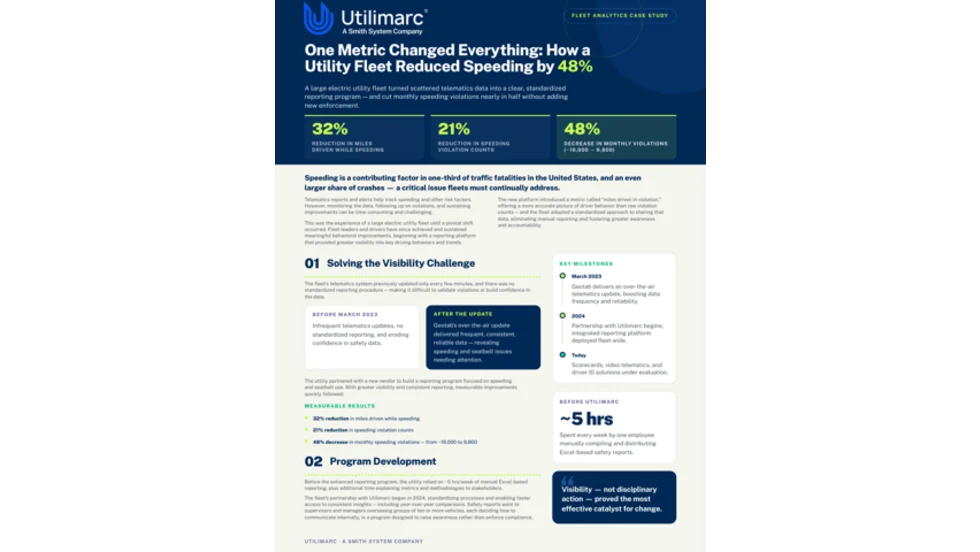
How Better Visibility Cut Speeding Violations by 48%
Fleet leaders don't need more data, they need clearer visibility into what the data is saying. This case study explores how one utility replaced speeding-event counts with a single metric — miles driven in violation — to strengthen safety and significantly reduce speeding violations.
Read More →