




A bill designed to prevent older, Mexican trucks that are more likely to cause pollution from operating in California is on its way to Gov. Arnold Schwarzenegger’s desk. The bill, AB1009, introduced by Assemblywoman Fran Pavley, would require all trucks entering California — including those entering from other parts of the United States or from Mexico under NAFTA — to meet the U.S. emissions standards in effect for the truck’s model year. The bill received final approval from the California Senate Aug. 26 on a vote of 27-10; the Assembly okayed the Senate’s amendments Aug. 28 by a vote of 56-23. Environmental groups across the country — concerned that older, Mexican trucks would mean more pollution here — opposed allowing the trucks to enter the United States. Assemblywoman Pavley’s office said the bill, which was written as a public health measure, was introduced in response to a recent U.S. Supreme Court decision. Mexican-based trucks have been limited to a slim commercial border zone since 1982. But with NAFTA, signed in 1993 by the United States, Mexico and Canada, Mexican trucks and buses were supposed to be given full access to U.S. roads beginning in 2000. However, court challenges — involving an unusual combination of trucking and environmental groups — stalled the entry of Mexican trucks. On June 7 this year, the Supreme Court ruled unanimously that the Federal Motor Carrier Safety Administration was not required to study the environmental impact of Mexican trucks operating within the United States — thereby paving the way for those trucks to enter the country. Pavley said it was her understanding that the court’s decision would prevent federal officials from enforcing U.S. emissions laws on the trucks crossing the border. So she hopes to give California officials the power. An official with Pavley’s office said the bill not only targeted Mexican trucks, but any trucks that enter California. Pavley chose that course of action, her office staff said, because it was a consistent application of the rules and was consistent with the terms of NAFTA, the North American Free Trade Agreement. However, the bill will not require the out-of-state — or out-of-U.S. — trucks to follow California’s more stringent environmental regulations, Pavley said, because likely that would not stand up under the international trade agreement or other laws. “We believe there may be a legal challenge” if the California rules were applied, she said. “But federal emissions standards — which are, I admit, not as stringent as California laws — will meet legal scrutiny.”
California State Bill Passes to Compel Mexican Trucks to Follow U.S. Emissions Rules While in California
A bill designed to prevent older, Mexican trucks that are more likely to cause pollution from operating in California is on its way to Gov. Arnold Schwarzenegger’s desk.
More Operations

BBL Fleet Acquires Velcor Leasing Corporation
BBL Fleet expanded its footprint in the fleet management industry with the acquisition of Velcor Leasing Corporation of Madison through a stock purchase agreement finalized Feb. 27, 2026.
Read More →
Lytx Introduces New AI Fleet Technologies at Protect 2026
The company introduced new AI-driven fleet safety and operations technologies during its annual user conference.
Read More →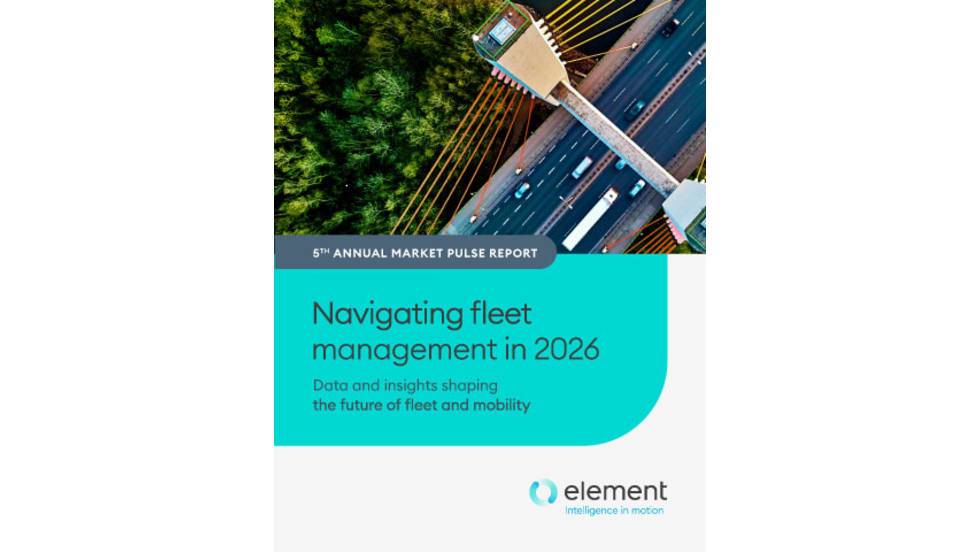
Fleet Costs Are Rising: Here’s How Leaders Are Responding
Fleet leaders are under pressure to reduce costs, adapt to economic uncertainty, and make smarter decisions. See how peers across North America are responding with real data, proven strategies, and forward-looking insights. Download the 2026 Market Pulse Report to benchmark your strategy and uncover where you can gain an edge.
Read More →
From Waffle House to AI: Fleet Trends You Need to Know
In this AF news recap, host Faith Howell covers how Waffle House stepped up during disaster response and new AI tech on the market.
Read More →
Fleet Operations in the Age of AI: Navigating Ethical and Legal Challenges
AI is no longer a future concept for fleets—it’s already embedded in the tools, data, and decisions that operators rely on every day. In this episode of the Fleet Forward Podcast, recorded live at Fleet Forward, industry leaders take the conversation beyond hype to examine what responsible AI adoption really looks like in fleet operations.
Read More →
Factory Installed vs. Aftermarket: Choosing the Right Telematics Path & Managing the Data
As fleets rethink how they capture, manage, and act on vehicle data, telematics is at a major inflection point. In this episode of the Fleet Forward Podcast, we dive deep into one of the most pressing questions facing fleet leaders today: Should you rely on OEM factory-installed connectivity, aftermarket devices, or a hybrid of both?
Read More →
What Real-Time Data Reveals About EV Cost, Performance, and Scalability
Experts from telematics analytics, fleet-as-a-service operations, and national EV benchmarking share how real-time data is reshaping fleet strategy—dispelling assumptions, validating best practices, and exposing costly missteps.
Read More →
Planning Through Policy Shifts: What Fleets Must Track in 2026
A powerhouse panel featuring experts from the American Automotive Leasing Association, CalSTART, and municipal fleet leadership dives into the realities of navigating shifting emissions rules, regulatory waivers, federal agency actions, the future of the EPA’s endangerment finding, and the push for unified standards. They also examine the impacts of tariffs, autonomous vehicle policy, battery innovation, and the accelerating global EV market.
Read More →
Managing Market Turbulence with Strategic Fleet Insights
This episode kicks off with a deep dive into the technologies and market forces reshaping today’s fleet landscape. Host Chris Brown is joined by Laolu Adeola (Leke Services), Tyson Jomini (J.D. Power), and Richard Hall (ZappiRide) to break down real-world data, shifting incentives, and practical strategies fleet leaders can use right now.
Read More →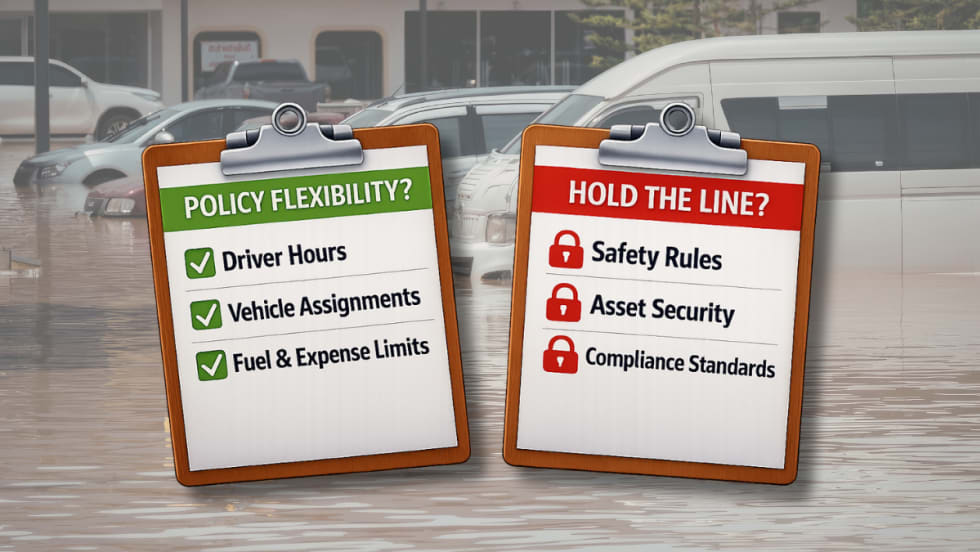
Adapting Fleet Policy When Disasters Strike
In the middle of natural disasters fleet managers must shift priorities to protect people and assets. What policy items should be loosened, and when should the line be held?
Read More →