




Under an Executive Order from the State of California Environmental Protection Agency, advanced automotive technology company ZAP announced on September 21 that the state's Air Resources Board has certified its ZAP WORLDCAR as a "Zero-Emission Vehicle." A 10-year-old, publicly owned California company, ZAP expanded its business in 2002 beyond electric bikes and scooters to establish an automotive division and a dealer network that focuses on advanced automotive technologies that are more efficient and environmentally friendly. In 2002, ZAP began offering new and used electric cars as well as neighborhood electric vehicles. In 2003 ZAP announced that it has signed a distribution agreement to begin importing and final assembly of its new WORLDCAR, which would be one of the first full-performance electric cars in history assembled in China for export to the United States. In May, ZAP entered into a distribution agreement for the 60-MPG Smart city coupe imported from Europe and is waiting for final approval from the U.S. EPA to begin distribution of the car. ZAP recently announced a new venture to develop zero-emission cars using Alkaline Fuel Cells powered by ammonia. The Air Resources Board has certified the 2005-model year ZAP WORLDCAR (NEV) and the ZAP WORLDCAR (Utility EV). The certification allows ZAP vehicles to be licensed and sold in California. The certification also gives the purchaser access to incentives created for drivers of Zero-Emission vehicles (ZEVs). Drivers can qualify for a special ZEV parking decals that allow them to park and refuel at designated recharging parking spaces, as well as preferred locations at airports, shopping malls, mass transit hubs and more. The vehicles now qualify for grants for public agencies to purchase them and there is a 10 percent federal tax credit for consumer purchases. ZAP CEO Steve Schneider says ZAP's manufacturing partners for the electric cars in China have the ability to deliver thousands of units into North America by next year. He added that the base models are priced under $10,000 and include features and options that surpass the expectations of many American consumers-power windows, power door locks, CD players, air-conditioning, computer controlled instrumentation, tilt steering wheel, deluxe interior, alloy wheels, and tinted windows. ZAP introduced the WORLDCAR in 2003 at the Michelin Challenge Bibendum in Sonoma, California, where the car received the highest scores in five performance criteria. While the event hosted advanced transportation technologies from 83 automotive groups around the world, Schneider says that ZAP had the only production electric automobile available for sale.
California EPA Board Rules ZAP Cars Certified Legal For Sale
Under an Executive Order from the State of California Environmental Protection Agency, advanced automotive technology company ZAP announced on September 21 that the state's Air Resources Board has certified its ZAP WORLDCAR as a "Zero-Emission Vehicle."
More Operations

Why Fleet Managers Are Replacing Departmental Vehicles with Shared Motor Pools
Departmentally assigned vehicles often create hidden costs through underutilization, poor visibility, and increased administrative burden. This white paper explores how shared motor pool strategies help fleets reduce costs, improve accountability, and optimize vehicle utilization.
Read More →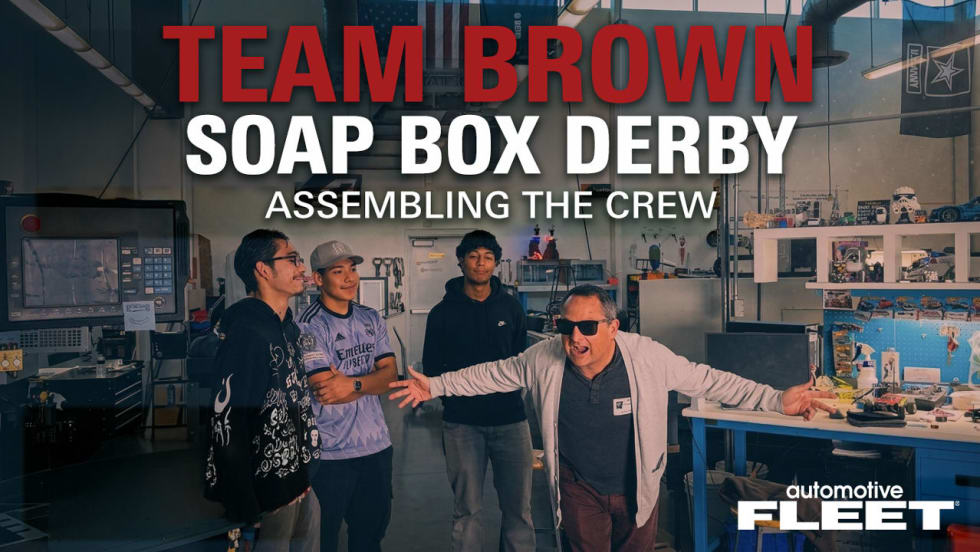
Soap Box Derby Challenge: Assembling the Crew
Meet Gabriel, Matthew, and Angel — the team helping bring this soap box derby build to life.
Read More →
BBL Fleet Acquires Velcor Leasing Corporation
BBL Fleet expanded its footprint in the fleet management industry with the acquisition of Velcor Leasing Corporation of Madison through a stock purchase agreement finalized Feb. 27, 2026.
Read More →
Lytx Introduces New AI Fleet Technologies at Protect 2026
The company introduced new AI-driven fleet safety and operations technologies during its annual user conference.
Read More →
Fleet Costs Are Rising: Here’s How Leaders Are Responding
Fleet leaders are under pressure to reduce costs, adapt to economic uncertainty, and make smarter decisions. See how peers across North America are responding with real data, proven strategies, and forward-looking insights. Download the 2026 Market Pulse Report to benchmark your strategy and uncover where you can gain an edge.
Read More →
From Waffle House to AI: Fleet Trends You Need to Know
In this AF news recap, host Faith Howell covers how Waffle House stepped up during disaster response and new AI tech on the market.
Read More →
Fleet Operations in the Age of AI: Navigating Ethical and Legal Challenges
AI is no longer a future concept for fleets—it’s already embedded in the tools, data, and decisions that operators rely on every day. In this episode of the Fleet Forward Podcast, recorded live at Fleet Forward, industry leaders take the conversation beyond hype to examine what responsible AI adoption really looks like in fleet operations.
Read More →
Factory Installed vs. Aftermarket: Choosing the Right Telematics Path & Managing the Data
As fleets rethink how they capture, manage, and act on vehicle data, telematics is at a major inflection point. In this episode of the Fleet Forward Podcast, we dive deep into one of the most pressing questions facing fleet leaders today: Should you rely on OEM factory-installed connectivity, aftermarket devices, or a hybrid of both?
Read More →
What Real-Time Data Reveals About EV Cost, Performance, and Scalability
Experts from telematics analytics, fleet-as-a-service operations, and national EV benchmarking share how real-time data is reshaping fleet strategy—dispelling assumptions, validating best practices, and exposing costly missteps.
Read More →
Planning Through Policy Shifts: What Fleets Must Track in 2026
A powerhouse panel featuring experts from the American Automotive Leasing Association, CalSTART, and municipal fleet leadership dives into the realities of navigating shifting emissions rules, regulatory waivers, federal agency actions, the future of the EPA’s endangerment finding, and the push for unified standards. They also examine the impacts of tariffs, autonomous vehicle policy, battery innovation, and the accelerating global EV market.
Read More →