




Cadillac XTS Safety Seat Alerts Drivers to Crash Threats
DETROIT -- The all-new Cadillac XTS luxury sedan will introduce directional tactile sensation – vibrations of the driver’s seat bottom – to warn of crash threats while driving and parking.
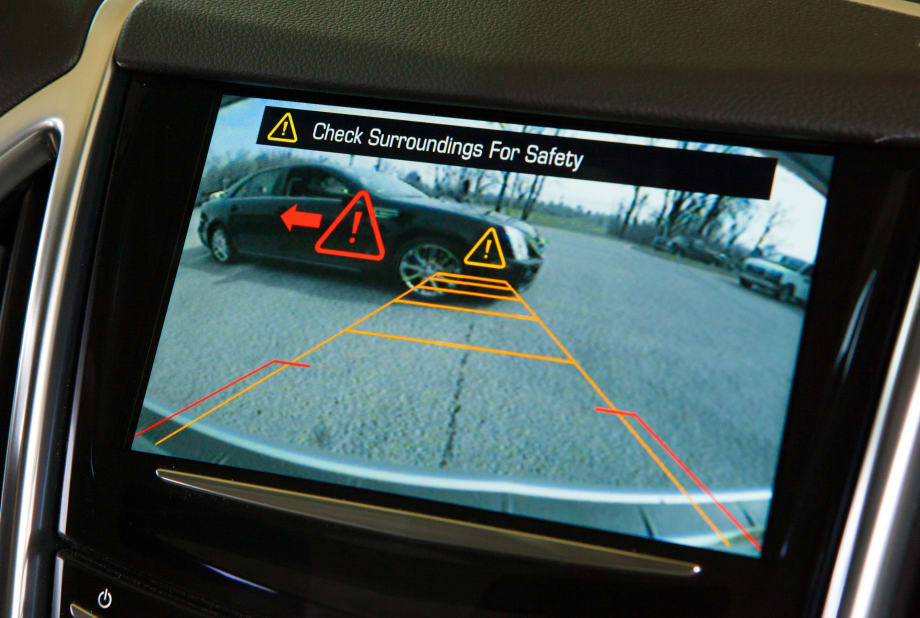
Cadillac Rear Cross Traffic Alert technology uses radar sensors that alert the driver of approaching cross traffic when backing out of a parking spot. Left or right-side vibrations in the driver's seat are triggered if vehicles are detected. (Photo by John F. Martin for Cadillac)
DETROIT -- When the all-new Cadillac XTS luxury sedan begins production this spring, it will be the industry’s first car to use directional tactile sensation – vibrations of the driver’s seat bottom – to warn of crash threats while driving and parking.
The patented Cadillac Safety Alert Seat generates vibrating pulse patterns on the left and/or right side of the lower bolster to alert the driver of potential dangers, such as drifting from a traffic lane or toward nearby objects while parking. Threats from the front and rear trigger pulses on both sides of the seat.
“It’s good to see automakers experimenting with new technology to help communicate to drivers when their driving is about to get them into trouble,” said Adrian Lund, president of the Insurance Institute for Highway Safety. “We commend GM for their innovative use of haptic feedback and hope that drivers find it helpful.”
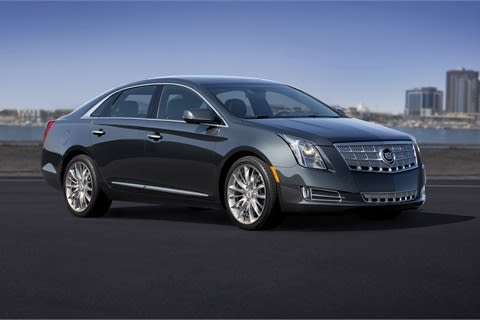
2013-MY Cadillac XTS
The system works in tandem with other visual alerts, and research shows that it can quickly and accurately focus driver attention to the direction of potential dangers.
“It’s akin to someone tapping on your shoulder in a crowd to get your attention,” said General Motors Active Safety Technical Fellow Raymond Kiefer. “Using the tactile sense to communicate crash threat direction provides an effective and intuitive way to cut through the clutter of visual and auditory sensory information that drivers routinely experience.”
The seats are part of the Cadillac Driver Awareness and Driver Assist packages, a combination of active safety systems designed to help drivers avoid crashes. The Driver Awareness Package, available for the launch of the Cadillac XTS this spring, includes Forward Collision Alert, Lane Departure Warning, Side Blind Zone Alert and Rear Cross Traffic Alert.
Cadillac Rear Cross Traffic Alert technology uses radar sensors that alert the driver of approaching cross traffic when backing out of a parking spot. Left or right-side vibrations in the driver's seat are triggered if vehicles are detected. (Photo by John F. Martin for Cadillac)
The Driver Assist Package, available this fall, also uses the Safety Alert Seat and features Adaptive Cruise Control, Automatic Collision Preparation, and Front and Rear Automatic Braking Systems.
The Drive Assist Awareness and Driver Assist packages will also be available this year in the Cadillac ATS luxury sedan and SRX luxury crossover.
Kiefer noted that GM research shows that the seat may direct driver attention to the location of a crash threat more quickly and accurately than beeping alerts.
“Vibrating alerts also may help drivers who do not hear beeping alerts due to hearing loss or competing noises, and may be preferred by drivers and passengers who might be annoyed by beeps and shut crash avoidance features off,” Kiefer said. “The last thing we want is for drivers to turn off features with safety benefits.”
The Safety Alert Seat works with a variety of sensors and cameras installed in the car that help “intelligently” decide when to activate warnings. For example, if a turn signal is on, lane departure warnings are not presented.
Safety Alert Seat vibrations can be selected by the driver, via an in-vehicle menu, to replace the audible beeping alerts used across much of the industry. The seats also will be connected to the XTS Park Assist system and Rear Cross Traffic Alert system to help make parking in tight spaces easier.
Using exterior cameras, drivers can see the outside of the car along with dynamic parking guides on the eight-inch LCD screen, located on the center instrument panel. As the car backs up, the seat provides a few quick pulses to both sides of the seat when an object is first detected directly behind the car, and then provides repeated pulses when an object is closer. Meanwhile, the Rear Cross Traffic Alert system looks for approaching cross traffic behind the vehicle that is signaled with either left or right pulses to the driver.
“We feel customers will appreciate the intuitive elegance of the Safety Alert Seat, and more importantly, will appreciate the ‘good vibrations’ afforded by the features linked to this seat,” Kiefer said.
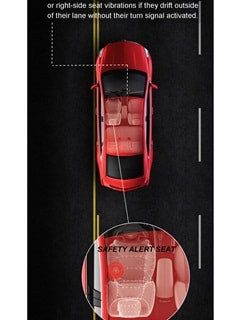
Drivers can receive left or right-side seat vibrations if they drift outside of their lane without their turn signal activated.
More Safety
What’s Next for Fleet? Safety, AI & Industry Recognition | AF News Recap
Could your company's culture be encouraging distracted driving? This week, we're exploring how workplace expectations affect driver safety, what AI, EVs, and autonomous vehicles could mean for the future of fleet management, and how fleet professionals can strengthen their award nominations.
Read More →
Does Your Fleet's Culture Encourage Distracted Driving?
What happens when the people responsible for enforcing safety rules are the ones setting the wrong example? The answer may reveal why some of the biggest risks to fleet drivers have little to do with what's written in the employee handbook.
Read More →
Fleet Manager’s Ultimate Playbook: Navigating the New Standard in OEM Connectivity
Rising operating costs, driver safety concerns, and unplanned downtime are putting unprecedented pressure on modern fleets. Discover how fleet managers use embedded OEM connectivity and real-time vehicle data to cut TCO, prevent downtime, and protect drivers without aftermarket telematics hardware.
Read More →
From Driver Well-Being to EV Charging | AF News Recap
Mental health belongs in the fleet safety conversation. This week, we’re looking at five ways fleets can support employee well-being before a crisis, plus Holman’s expansion in Mexico, new one-day Fleet Forward passes, and why EV charging demand is outpacing infrastructure growth.
Read More →
Nexar-Nauto Merger Aims to Give Fleets Better Safety Intelligence Through Larger Driving Dataset
Stefan Heck tells Automotive Fleet that combining more than 10 billion miles of driving history with Nexar's AI models will give fleets deeper insights into driver risk and roadway conditions than either company could provide independently.
Read More →
Don't Wait for a Crisis: 5 Ways to Build Mental Health Into Your Fleet Safety Program
For Suicide Prevention Month, fleet and safety leaders have an opportunity to put mental health where it belongs: at the center of workplace safety.
Read More →
How Camera Data Can Strengthen a Fleet’s Insurance Renewal
Insights from a commercial insurance carrier and a broker show how fleets can turn video telematic data, driver coaching, and improved claims results into a stronger case at insurance renewal.
Read More →
The Safest Fleets Aren’t the Ones with the Most Technology
You’ve made the telematics investment. Here’s how to capture the other half of its value and build the safest fleet on the road.
Read More →
Hidden in Plain Sight: Fleet Compliance Risks
Fleet compliance isn't just about having policies — it's about consistently enforcing them. This practical guide reveals six hidden compliance risks common in public sector and shared fleet operations and outlines proven strategies to improve visibility, accountability, and audit readiness
Read More →
NETS Sets 2026 Fleet Safety Benchmark Conference for Indianapolis
The Sept. 15–17 program will feature fleet benchmarking data, case studies, emerging technologies, and implementation strategies while running alongside the NSC Safety Congress & Expo.
Read More →