




BP Finances Major Clean Energy Research Project
BERKELEY, Calif. --- Energy giant BP announced it is giving $500 million to a research partnership, headed by the University of California at Berkeley, to produce cleaner energy and develop biofuels.
BERKELEY, Calif. --- Energy giant BP announced it is giving $500 million to a research partnership, headed by the University of California at Berkeley, to produce cleaner energy and develop biofuels. UC Berkeley's project partners are the University of Illinois Urbana-Champaign and the Lawrence Berkeley National Laboratory. This partnership, called the Energy Biosciences Institute, will also conduct research focusing on three key areas: conversion of heavy hydrocarbons to clean fuels, improved recovery from existing oil and gas reservoirs, and carbon sequestration. Dedicated facilities on the campuses of UC Berkeley and the University of Illinois will house the institute's research labs and staff. The Lawrence Berkeley National Laboratory will carry out supporting research. "This program will further both basic and applied biological research relevant to energy," said BP Group Chief Executive John Browne. "In short, it will create the discipline of energy biosciences. The institute will be unique in both its scale and its partnership between BP, academia and others in the private sector."
More Fuel
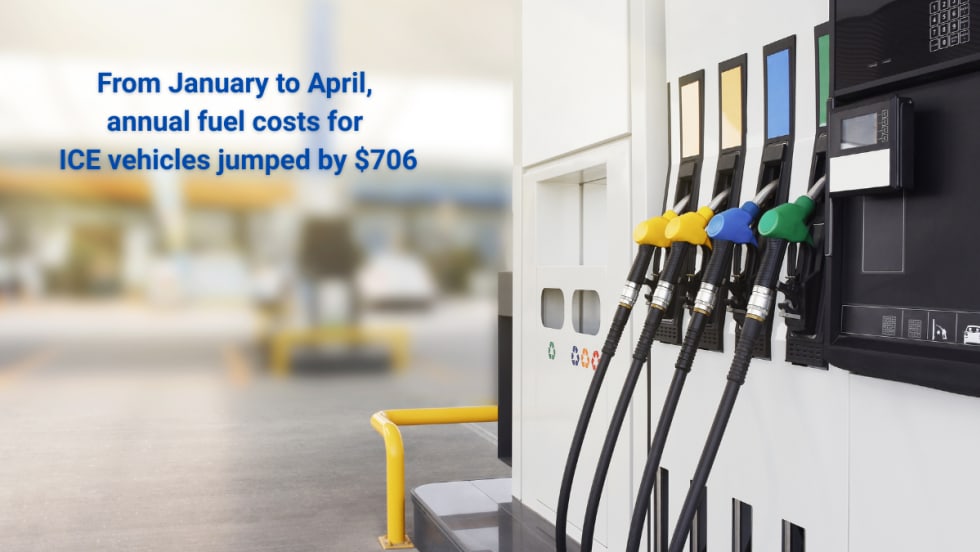
Study: How 2026's Gas Price Hikes Affect Different Vehicle Types
New data from iSeeCars reveals how rising fuel costs have affected different vehicle segments as gasoline prices climbed nearly 46% over the past four months.
Read More →
Are You Tracking Your Fleet's True Total Cost of Ownership?
Bobit Business Media surveyed 190 fleet professionals and found that while most fleets are tracking costs, fragmented systems and data gaps are keeping true TCO visibility out of reach. With rising pressure to control spend in an increasingly volatile environment, the gap between what fleets think they know and what the data actually shows is wider than you might expect. See how your peers are managing costs today and where the industry still has room to improve.
Read More →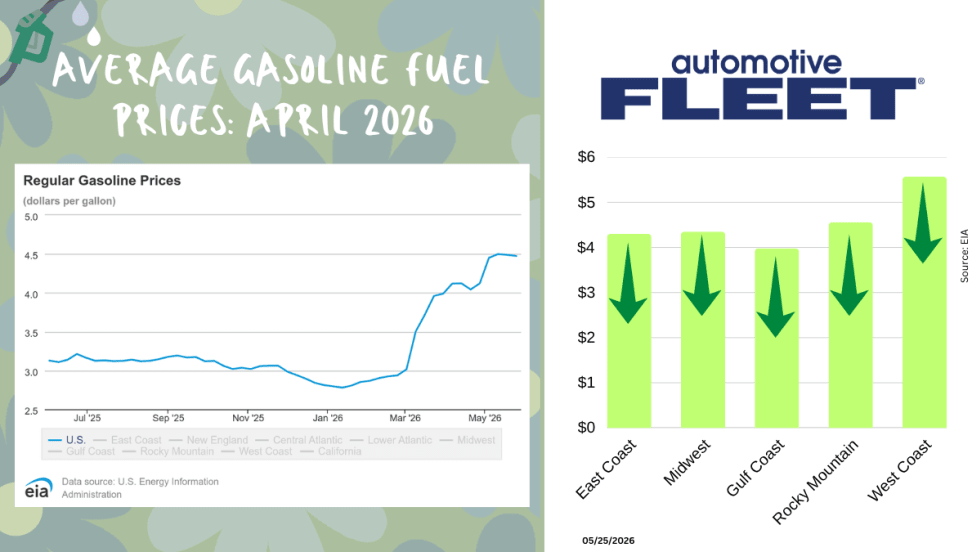
May Fuel Update: All Regions Experience Declines
Gas prices are finally easing in much of the country, but experts warn global tensions could quickly reverse the trend as the national average remains well above last month’s levels.
Read More →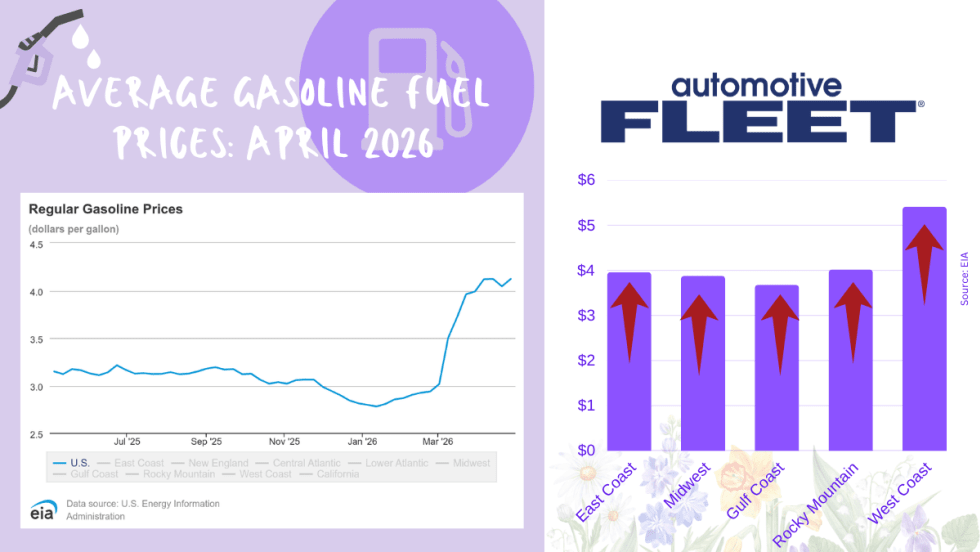
April Fuel Update: Prices Climb Above $4 as Spring Surge Accelerates
National average jumps to $4.04 per gallon, up sharply from last year, with West Coast prices topping $5 and further increases expected amid rising oil tensions.
Read More →
Tips from Fleet Managers on Saving Fuel Costs
Fleet leaders share practical strategies to reduce fuel spend through smarter policy, routing, and driver guidance.
Read More →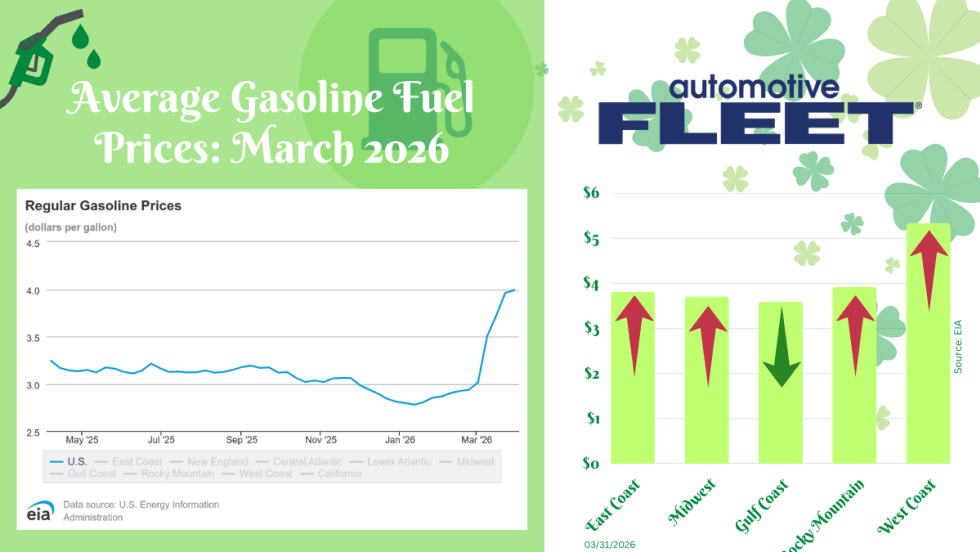
March Fuel Update: Prices Settle With a $4 Average
Fuel prices significantly slowed this week, but a $4 national average is still expected.
Read More →
Bob Adamsky on Fuel Volatility: “Don’t Panic — Have a Plan”
With oil prices rising again, AWP Safety’s fleet manager shares how to respond to rising fuel costs and how the right strategy can turn fuel spikes into cost-saving opportunities.
Read More →
Oil Market Turbulence Is Complicating Fleet Cost Planning
Rapid swings in crude oil prices driven by the conflict in the Middle East could create longer-term cost pressures for fleets, affecting fuel prices, supply chains, and vehicle strategy, says NTEA’s Andrew Wrobel.
Read More →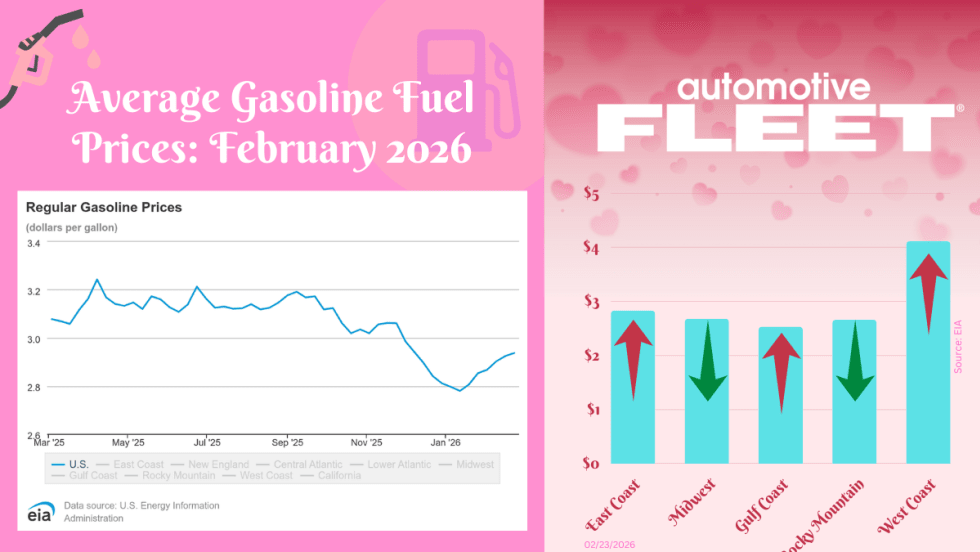
February Fuel Update: Prices Inch Higher for Third Week in a Row
The final February fuel update reveals prices continuing to inch higher for the third week in a row.
Read More →
The 2026 Fuel Economy Guide: Updated Cost and Efficiency Benchmarks for Fleets
Fleet managers can use the DOE’s 2026 Fuel Economy Guide to benchmark MPG across powertrain types using side-by-side vehicle ratings and compare new model-year options.
Read More →