




BMW Recharges 5-Series
MUNICH, GERMANY – German automaker BMW is at it again, changing the name of its six-cylinder-powered, mid-size, luxury 5-Series cars for 2008 to reflect larger, more powerful engines.
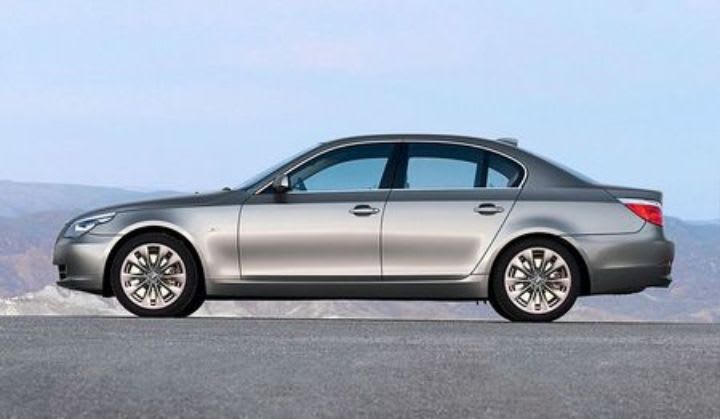
MUNICH, GERMANY – German automaker BMW is at it again, changing the name of its six-cylinder-powered, mid-size, luxury 5-Series cars for 2008 to reflect larger, more powerful engines, according to The Cincinnati Enquirer.
So, the 525i becomes the 528i, now with 230 horsepower, while the old 530i becomes the 535i with 300 hp. The addition of the twin-turbocharged, 300-hp six-cylinder to the 2008 BMW 535xi Sports Wagon makes it more powerful than the predecessor 540i wagon with a 290-horsepower V-8, according to The Cincinnati Enquirer.
BMW also updated the interiors of its 5-Series sedans and wagons and added an optional lane departure warning system that subtly vibrates the steering wheel when it detects a driver might be wandering out of his or her lane.
For 2008, the five-passenger 5-Series manufacturers suggested retail prices, including destination charge, start at $45,075 for the base 528i. This is up $880 from 2007.
Buyers of the 5-Series sedan like the image that the BMW badge conveys — of a four-door car that has a performance heritage, a good bit of technology and is anything but stodgy.
It's worth mentioning that BMW owners also receive four years/50,000 miles of free maintenance that includes scheduled oil changes and even replacement of worn wiper blades. This is in addition to a four-year/50,000-mile limited, bumper-to-bumper warranty.
It is easy to notice the newfound power in the 2008 BMWs. The test 535xi could zoom forward after just a hint of a lag when the gas pedal was slammed down. I found the car moving aggressively to claim openings in traffic and bound up hills.
The 3.0L, twin-turbocharged, DOHC, I-6-cylinder with variable valve timing for both intake and exhaust functions is the same one put into the BMW 335i and adds a significant 45 hp and 80 foot-pounds of torque to the 5-Series.
It was mated in the test car to an updated, Steptronic automatic transmission that could be shifted manually, if I wanted, without clutch pedal. Best of all, for 2008, the Steptronic is a no-cost option on all 5-Series cars, so drivers don't incur a charge to get it instead of a manual transmission, according to The Cincinnati Enquirer. And BMW has finally dropped its confounding and difficult-to-operate Sequential Manual Gearbox.
Power is increased — to its highest ever — in the base 5-Series car for 2008. Now called the 528i, it gets a 230-hp, 3.0L, DOHC, I-6-cylinder with variable valve timing and no turbocharging. Peak torque is 200 ft.-lb. at 2,750 rpm. The top 550i sedan retains its 360-hp, 4.8L V-8.
Fuel economy isn't a highly touted characteristic of BMWs, but the tester performed within the government's ratings of 17 miles a gallon in city driving and 25 mpg on the highway.
Handling, as expected in a BMW, was exceptional, according to The Cincinnati Enquirer. The car body was well-controlled in all maneuvers, giving the feeling of it hunkering down securely over the wheels even over some busy road surfaces.
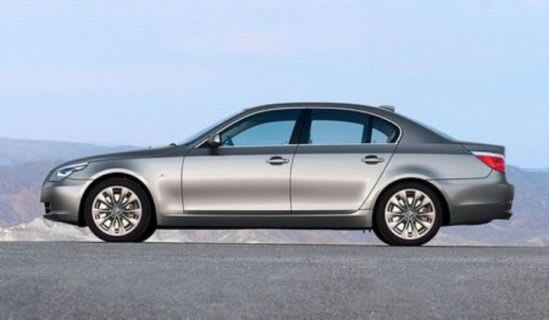
With all-wheel drive, I never lacked traction, even on dirt-strewn pavement. Even non-all-wheel drive 5-Series cars come with standard traction control and stability control as well as frontal, curtain and front-seat, side-mounted airbags.
More Operations

Company Vehicle or Reimbursement? How Fleets Are Rethinking Assignments
As fleet costs and insurance pressures rise, fleet managers are taking a closer look at which employees need company-provided vehicles and when a reimbursement program may make more sense.

Fleetio, ASE Launch Scholarship Program for Automotive Technicians
The second annual program will award 15 scholarships totaling $35,000 to support ASE certification, testing fees, and equipment costs.

Reading the Global Signals: What AI and the Energy Transition Mean for Fleets Now
In this opening keynote of the 2026 Fleet Forward Conference, John Rossant, founder of CoMotion, How can fleet managers navigate a never-ending, changing industry landscape?

90% Use Telematics. Are Fleets Getting Safer? | AF News Recap
This week, we're breaking down which industries have the highest rates, how Jamie McKay manages 2,400 vehicles, what's happening with the 2027 fleet awards, and why software-defined vehicles could introduce new costs.

What's Best Handled by an FMC, and What's Better Done Directly?
Fleet managers continue to rely on FMCs for essential services but are taking a closer look at where working directly with suppliers can improve efficiency and responsiveness.

Fleet Meets: Erin Gilchrist
Meet Erin Gilchrist, the inaugural Mike Antich Spirit of Fleet Award winner, as she shares insights on leadership, mentorship, the power of industry connections, and why people remain at the heart of fleet's future.

How 2026 Fleet Visionary Jamie McKay Manages 2,400 Vehicles Across 37 States
How do you keep 2,400 vehicles running across 37 states? Fleet Visionary Award winner Jamie McKay shares how collaboration, flexibility, and a few simple strategies help her tackle fleet management challenges at Aptive Pest Control.

Managing Fleet Costs in an Era of Permanent Volatility
Fleet operating costs have risen more than 20% since 2020, raising a key question: When does extending a vehicle's service life stop making financial sense?

The Next Evolution of Fleet Management: Autonomous Operations
This opening keynote session at the Fleet Forward Conference highlights the future of autonomous driving for fleets.

How to Reduce the Total Cost of Risk From Catalytic Converter Theft
A stolen catalytic converter can cost fleets far more in downtime and lost productivity than in repairs. A total-cost-of-risk approach can help fleet managers quantify their exposure and prioritize theft prevention.