




BMW Introduces Entry-Level 3 Series 320i Luxury Sedan
BMW launched the sixth generation of its 3 Series Sedan in 2012, and this year it launched its new 2013-MY BMW 320i Sedan for the U.S. market.

The 2013-MY BMW 320i will achieve fuel economy of up to 23 city, 33 highway, when equipped with the eight-speed automatic transmission, based on BMW's current estimates.

The 2013-MY BMW 320i will achieve fuel economy of up to 23 city, 33 highway, when equipped with the eight-speed automatic transmission, based on BMW's current estimates.
BMW launched the sixth generation of its 3 Series Sedan in 2012, and this year it launched its new 2013-MY BMW 320i Sedan for the U.S. market. The automaker is pricing the new model at an MSRP of starting at $33,445 (including the $895 destination and handling charge). BMW offers a range of option packages, including Cold Weather, Premium, Driver Assistance, and Lighting, plus a number of standalone options, for this model. The automaker said the new model will go on sale in spring, 2013.
Performance
The new BMW 320i comes equipped with a TwinPower Turbo four-cylinder engine. This engine is rated at 180 hp at 5,000 rpm and 200 lb.-ft. of torque between 1,250 rpm and 4,500 rpm. BMW estimates that fuel economy for the 320i with the six-speed manual transmission will be 22 city, 34 highway The company is expecting 23 city, 33 highway for the 320i when it's equipped with the eight-speed automatic transmission. Lastly, the automaker expects the 320i xDrive model to achieve 22 city, 33 highway.
The BMW 320i features a number of technologies designed to improve fuel economy, such as auto start-stop and regenerative braking. The vehicle also features selectable driving modes, including Comfort, Sport, Eco Pro, where Eco Pro helps a drive maximize fuel economy through their driving style.
Beyond the powertrain, BMW is offering the previously mentioned xDrive model, which features BMW’s all-wheel drive system.
Exterior
On the outside, BMW offers the same color palette available on the 328i Sedan save for Estoril Blue Metallic. BMW said 17-inch BMW light alloy wheels are standard on the 320i and 320i xDrive. The company is offering two different styles of 18-inch light alloy wheels with the available Sport Package.
The vehicle has a wheelbase of 110.6 inches for a stance that hugs the road, according to BMW. Other exterior features aerodynamic improvements at the rear axle, optional xenon adaptive headlights, and an optional moonroof (both part of the Premium package).
Interior
Inside, the 320i Sedan offers buyers standard Leatherette or available Dakota Leather upholstery in Venetian Beige or black. The vehicle also features optional heated front and rear seats and heated steering wheel (both part of the Cold Weather package), a split-folding rear seat (a standalone Convenience option), and BMW’s Navigation system (another standalone option). Connectivity features include a standard iDrive system with 6.5-inch full color flat-screen display controller and eight programmable memory buttons.
The automaker offers a number of optional connectivity features, including BMW’s Assist telematics service (which uses BMW’s Automatic Collision Notification system to notify emergency responders of the crash, including vehicle position and type) with Bluetooth hands-free phone connectivity and a USB connection, all part of a single standalone option, and BMW Apps (which allows select iPhone apps to be controlled via the vehicle’s display), also as a standalone option.
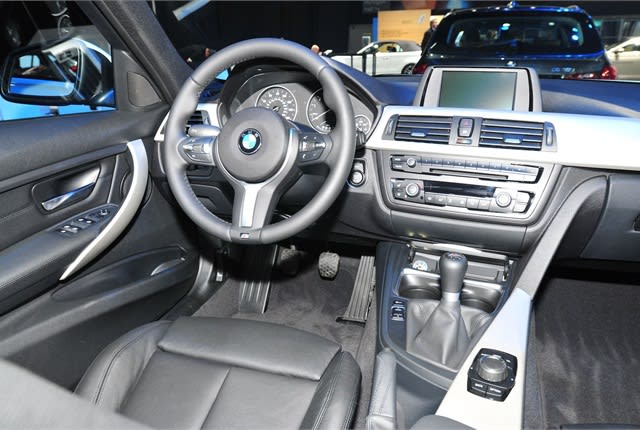
Leatherette seating is standad. Dakota Leather is optional. Front and rear seated heats are optional as well.
Safety
The BMW 320i features new lightweight floating caliper vented disc brakes. The braking system is supported by BMW’s dynamic stability control system, which incorporates a number of safety features. Those features include anti-lock braking, automatic stability control, dynamic traction control, dynamic brake control and cornering brake control, plus brake drying and an electronic limited slip function for the rear differential (which the driver can activate using a “DSC Off” button). The automaker also offers a rear-view camera with park distance control as a single option on the 320i.
More Operations

Fleet Has a Talent Pipeline Problem. What Comes Next? | AF News Recap
Where will fleet’s next generation of leaders come from? This week, we’re looking at the industry’s talent pipeline, what certification can add to a fleet career, how to build an award-worthy track record, and the return of Automotive Fleet’s Personal Use Survey.
Read More →
Smith System Launches Driver Risk Management Program
Fleets have more driver data than ever, but identifying risky behavior doesn't necessarily correct it. Smith System's new Driver Risk Management program combines monitoring, training, and follow-up coaching to help fleets connect risk signals with driver intervention.
Read More →
Automotive Fleet Opens 2026 Personal Use Survey for Commercial Fleet Managers
Less than two weeks left! Commercial and corporate fleet managers are invited to share how their organizations handle company vehicle personal-use policies, charges, and driver eligibility.
Read More →
From AI Prompts to AI-Generated Safety Songs | AF News Recap
Can better prompts make AI more useful for fleet managers? This week, we’re breaking down smarter fleet analysis, an AI-assisted experiment that turned safety training into music, and what happened to fuel prices in August.
Read More →
How to Write Better AI Prompts for Fleet Analysis
Include these six elements in your fleet prompts to generate more relevant analysis and accurate answers.
Read More →
Fleet Meets: Eric Kilgore
This edition of the Fleet Meets series features one of the industry's best leaders driving multi-market and national operations.
Read More →
Why Reactive Fleet Management Is Becoming Too Expensive to Sustain
Research highlights a growing need for proactive management strategies to address rising costs in fleet operations effectively.
Read More →
What Your Fleet KPIs Aren’t Telling You
Tracking fleet metrics is only useful when the data leads to better decisions. This guide helps fleet leaders assess cost, utilization, and downtime more accurately, identify performance gaps, and prioritize the actions that can improve operational results.
Read More →
Hidden in Plain Sight: Fleet Compliance Risks
Fleet compliance isn't just about having policies — it's about consistently enforcing them. This practical guide reveals six hidden compliance risks common in public sector and shared fleet operations and outlines proven strategies to improve visibility, accountability, and audit readiness
Read More →
Turning Fleet Payment Data into Executive Insights
Does data alone drive results in operations?
Read More →