




Audi Models Now Network With Other Brands
HERNDON, VA – Along with other European vehicle manufacturers at the second CAR2CAR Forum in Dudenhofen, Germany, Audi demonstrated how it will be possible in the future for data to be exchanged between vehicles of different brands.
HERNDON, VA – Along with other European vehicle manufacturers at the second CAR2CAR Forum in Dudenhofen, Germany, Audi demonstrated how it will be possible in the future for data to be exchanged between vehicles of different brands.
Communication between vehicles, as well as between vehicles and infrastructure, will pave the way for further improvements in traffic flow and safety. The system assists and alerts a driver to any number of dangerous situations on any road. It can notify the driver of an icy patch ahead on a rural route, of a broken-down vehicle in front, or of an unexpected traffic jam on a highway. In addition, a networked and consequently “intelligent” vehicle boosts driving comfort.
If this technology is to realize its full potential, all vehicles and other road users must utilize a uniform standard to communicate with one another.
The demonstration on the testing ground allowed nine vehicle manufacturers and five development partners to prove — even in the preliminary phase of development — that communication between vehicles of different brands is already fast, precise, and reliable.
Communication units were installed in an Audi Q7 and an Audi A6 allroad quattro to facilitate the transmission of radio signals in accordance with the CAR2CAR standard. The system warned of an approaching emergency vehicle and prevented an accident with a motorcycle at an intersection. Similarly, a construction site hidden around a corner quickly triggered an alert in the driver’s direct field of view.
The central driver information system and the Audi MMI — the Multi Media Interface — are designed to present data to the driver in a clear and logical manner. Easily understandable audible instructions round out the warning system.
Audi will continue to implement this technology not only in the “CAR2CAR Communication Consortium,” but also in other national and international projects. A core pursuit at Audi lies in traffic-efficiency applications such as the Travolution project, which allows urban traffic to flow far more freely thanks to communication between traffic signals and vehicles.
During the pilot experiment in Ingolstadt, the timing of 46 traffic lights was optimized. Three of them were also equipped with WLAN-based communications technology. Calculations provided by the Technical University of Munich, a venture partner, hint at the potential for remarkable efficiency. A 20-percent reduction in stops at traffic lights and correspondingly improved fuel efficiency — assuming an hourly volume of 1,000 vehicles in Ingolstadt — will save more than 700,000 liters (around 185,000 U.S. gallons) of fuel annually.
More Operations
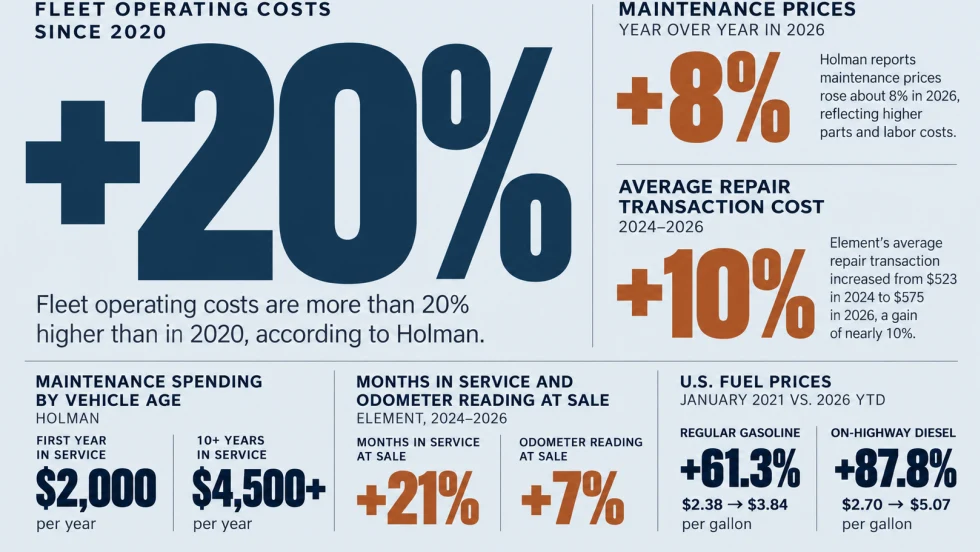
Managing Fleet Costs in an Era of Permanent Volatility
Fleet operating costs have risen more than 20% since 2020, raising a key question: When does extending a vehicle's service life stop making financial sense?
Read More →
The Next Evolution of Fleet Management: Autonomous Operations
This opening keynote session at the Fleet Forward Conference highlights the future of autonomous driving for fleets.
Read More →
How to Reduce the Total Cost of Risk From Catalytic Converter Theft
A stolen catalytic converter can cost fleets far more in downtime and lost productivity than in repairs. A total-cost-of-risk approach can help fleet managers quantify their exposure and prioritize theft prevention.
Read More →

Personal-Use Charges Rise as Vehicle Values Fall | AF News Recap
Personal-use charges are climbing, wholesale used-vehicle values are declining, and commercial fleet sales growth is slowing. This week, we're breaking down the latest fleet data, plus how Element Fleet Management is helping Waymo prepare for its first Canadian robotaxi market.
Read More →
Here's When You Should Make an Exception to Fleet Policy
Fleet policies are designed to create consistency, but not every driver or situation fits neatly within standard rules.
Read More →
AI-Native or AI-Acquired: What Should Fleet Managers Look for in an AI Platform?
Six questions can help fleet managers look beyond AI marketing claims to evaluate integration, data access, and real-world operational performance.
Read More →
A buyer's guide to fleet management software in 2027
Buying fleet management software in 2027 means looking beyond features and price. As fleet operations, technology and expectations evolve, this guide explores what today’s fleet professionals should consider when choosing a system that can deliver value now and adapt to what comes next.
Read More →
What Will Shape the Next Era of Fleet Management?
EVs, AI, and autonomous vehicles are reshaping fleet management. Discover what’s ahead—and how fleet leaders can prepare for the next era.
Read More →
How Fleets Can Recruit and Train Veterans for Technician Roles
Here's how the technician shortage has affected uptime for fleets, and what to do about it.
Read More →
Avis Budget Group Deploys Neology Toll Management Technology Across Major Brands
Neology’s neoFleet platform will manage toll transactions and toll-authority operations for vehicles across Avis, Budget, Payless, Budget Truck and Zipcar.
Read More →