




Audi Boosts Fuel Economy in 2013-MY Q5
INGOLSTADT, GERMANY – Audi announced details on its 2013-MY Q5 SUV, from its new powertrain technologies to new exterior and interior features. The automaker said it boosted fuel economy in its new engines by up to 15%.
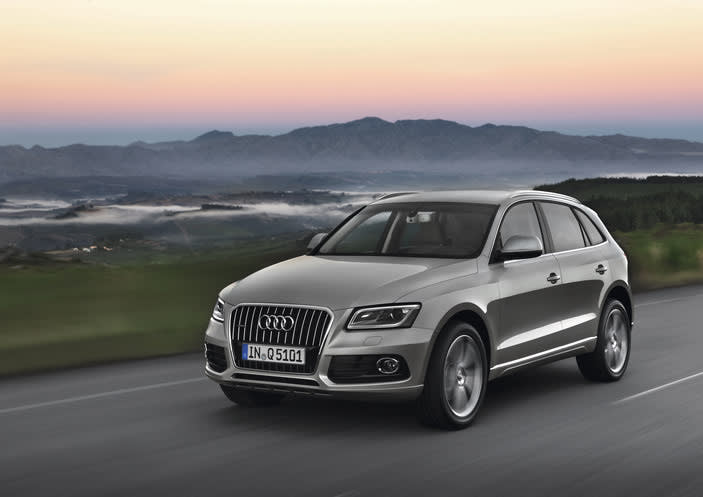
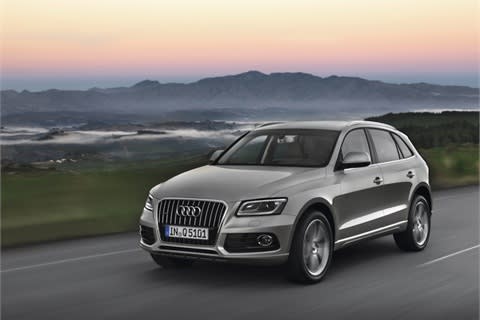
INGOLSTADT, GERMANY – Audi announced details on its 2013-MY Q5 SUV, from its new powertrain technologies to new exterior and interior features. The automaker said it boosted fuel economy in its new engines by up to 15%.
Performance
Audi’s Q5 features five engine choices, three TDI options and two TFSI engines. All engines feature direct fuel injection and start-stop technology.
The four-cylinder 2.0 TDI comes in two versions. One is capable of producing 143 hp, offering 236.02 lb. ft. of torque, and is equipped with a manual transmission and front-wheel drive. It gets 44.38 U.S. mpg, according to Audi and CO2 emissions are 223.70 g/mile. The 19.81-gallon fuel tank enables a driving range of up to 870 miles, according to Audi. The Audi Q5 2.0 model with 177 hp and 280.27 lb.-ft. of torque (with S tronic and quattro drive) has an estimated fuel economy 39.20 U.S. mpg.
The 3.0 TDI can produce 245 hp and 427.79 lb.-ft. of torque. The V-6 diesel engine, which Audi said features a new design, is paired with a seven-speed S tronic and quattro drive system, can accelerate the Q5 from zero to 62.14 mph in 6.5 seconds and has combined fuel economy of 36.75 US mpg.
The gasoline engines available for the Q5 include a 2.0L, four-cylinder engine that can produce 225 hp and 258.15 lb.-ft. With a manual transmission, the vehicle gets 30.95 mpg. The 3.0 TFSI is a V-6 (replacing the 3.2L engine) and can produce 272 hp of power and 295.02 lb.-ft. of torque. With this engine, the Q5 can travel from 0 to 62.14 mph in 5.9 seconds and gets a combined fuel economy of 27.67 US mpg, according to Audi.
Beyond the updated engines, each engine in the Q5 line has an optimized transmission, according to Audi. The four-cylinder engine comes with a manual six-speed transmission as standard. The eight-speed tiptronic is available for the225 hp TFSI engine and is standard in the 3.0 TFSI model. The seven-speed S tronic is standard in the 3.0 TDI and available in the 2.0 TDI (the 177 hp model).
The quattro permanent all-wheel drive system is standard in all models in the line except the 2.0 TDI version (which features a front-wheel drive system).
Beyond the powertrain, the Q5 features a new electromechanical power steering system, and refined springs, shocks, and stabilizers, according to Audi.
Another feature is the Audi drive select system, which lets the driver change the characteristic of the accelerator pedal, the shift points of the automatic transmission, the amount of power steering assist and operation of the automatic air conditioning system via four modes, including an efficiency mode. When an Audi navigation system is added to the vehicle, the drive select system gets a fifth, user-programmable mode. In addition, Audi drive select features three optional components: adaptive cruise control, chassis with damping control, and dynamic steering. Other features include an optional Audi hold assist and electronic stability control (ESC).
Audi also provided details on the Q5 hybrid Quattro, a hybrid model with a 2.0 TFSI with 211 hp and 258.15 lb.-ft. of torque as well as an electric motor with a peak output of 54 hp and peak torque of 154.89 lb.-ft. In electric-only mode, the vehicle can travel up to 1.86 miles at a constant speed of 37.28 mph. In this mode, its top speed is 62.14 mph and its combined fuel economy is 34.09 mpg. This model features a modified eight-speed tiptronic transmission. The driver can switch between three driving modes via a button and with the tiptronic gear selection lever.
Exterior

Outside, the Q5 features modified headlights, emphasized horizontal lines in the vehicle’s front end, and modified bumpers that integrate air inlets. Audi is offering four additional color options (a total of 15 colors) for the Q5. The Q5 also offers an S line exterior package or an off-road styling package.
Interior

Interior changes in the Q5 include narrow chrome trim, high-gloss black panels in the center console, and new Q-specific styling for the steering wheel. The Q5 also features updated ergonomics, three-zone automatic air-conditioning, climate-controlled comfort seats with ventilation, and a panoramic glass roof. Upholstery changes include three new interior colors, and the Q5 offers three fabric and three leather qualities.
Audi offers an optional rail system for the cargo area, an electric drive for the tailgate, a folding front passenger seatback and a rear seating system with 3.94 inches of longitudinal adjustment together with a cargo pass-through feature.
Infotainment Features
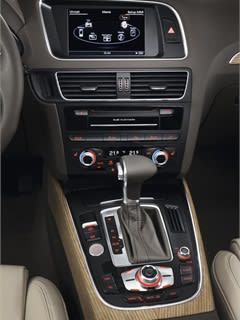
When it comes to infotainment and connectivity options, a driver information system is standard, (which features a “rest” notification system that tells the driver to rest based on the driver’s attentiveness).
At the top end of infotainment options is a Bang & Olufsen sound system and MMI navigation plus with a seven-inch color monitor, 3D graphics, and a DVD player. Features include improved voice control and optional digital radio reception. Bluetooth comes with the MMI navigation system. The MMI system also features an integrated WLAN hotspot.
Audi connect online services include Google Point of Interest search by voice control, navigation with Google Earth images, Google Street View, and Audi traffic information. Another new feature is the smartphone app Audi music stream. Q5 drivers can use it to receive more than 5,000 Internet radio stations and can save favorite choices to their cell phones.
More Operations

Top 50 Executive Fleets
It is that time of year again! Time for the 2026 list of the Top 50 Executive Fleets, presented by Automotive Fleet and Volvo as part of its annual Fleet 500. Download now to see this year's list of companies!
Read More →
Gary Van Orden Retires After Nearly Four Decades in Commercial Fleet
From answering customer calls at Ford Motor Company to leading fleet sales across multiple OEMs and a fleet management company, Gary Van Orden's career reflects nearly four decades of leadership in commercial fleet.
Read More →
How Stellantis Plans to Get Ahead of Fleet Downtime
Vehicle acquisition may grab the headlines, but fleet uptime increasingly determines operating success. Darren Bradshaw of Mopar North America gives the details.
Read More →
Hyundai Releases 2027 Commercial Program Incentives
The 2027 Model Year "Fleet Street Incentives" are available to commercial and government fleets.
Read More →
It's All Downhill from Here! Fleet Industry Raises $22,000 for Skilled Trades Scholarships
Work Truck’s Lauren Fletcher and Automotive Fleet’s Chris Brown turned a friendly racing rivalry into $22,000 for automotive technology and skilled trades scholarships.
Read More →
The Top 300 Commercial Fleets
The Top 300 Commercial Fleets: See the List
Read More →

Your Local Dealer Knows More Than You Think
Your local dealer can provide an information advantage that extends well beyond courtesy deliveries.
Read More →
Fleet Meets: Austin Schutte
Here are some industry insights, personal touches, and words of advice from the CEO and Founder of Anew Solutions.
Read More →
Soap Box Derby Challenge: What’s Powering Team Brown
The car is coming together, the students are solving real build problems, and the fleet industry is helping push Team Brown toward the starting line.
Read More →