




Are 1 Million EVs by 2015 Feasible?
WASHINGTON - An Indiana University report finds President Obama’s goal of one million EVs by 2015 unachievable without additional significant investment.
WASHINGTON - In his 2011 State of the Union Address on Jan. 25, President Barack Obama stated the goal to "become the first country to have a million electric vehicles on the road by 2015." Feasible? The Department of Energy thinks so. A group of experts commissioned by Indiana University doesn't.
President Obama's advanced-technology vehicle plan includes the following:
Make electric vehicles more affordable with a rebate up to $7,500 immediately at point of sale.
Advance innovative technologies through new R&D investments.
Provide grants for up to 30 communities that invest in electric vehicle infrastructure.
The U.S. Department of Energy released on Feb. 8 an analysis of advances in electric vehicle deployment and progress to date in meeting President Obama's goal. One Million Electric Vehicles by 2015 stated that "while the goal is ambitious, it is also achievable based on steps already taken as part of the Recovery Act and additional policy initiatives proposed by the president."
The report stated that hybrid-electric vehicle sales have grown to almost 3 percent of total light-duty vehicles. To reach the president's goal, EVs will need to average just under 1.7 percent of sales through 2015, assuming sales of 12 million light-duty vehicles each year. It also pointed to increases in CAFE (Corporate Average Fuel Economy) standards that are expected to encourage buyers to turn to electric drive technologies.
Fleet buyers often make vehicle purchasing decisions based on the total cost of ownership rather than initial price, according to the report. It pointed to a report by Boston Consulting Group stating that current incentives and oil prices in the U.S. means EV purchasers will reach lower TCO costs within three to five years of operation. GE's announcement to purchase 25,000 EVs by 2015 is a "a strong indication that as EV total cost of ownership falls below that of conventional vehicles, fleet purchasers will respond positively."
However, a recent study conducted by the Transport Electrification Panel (TEP), a group of experts from multiple disciplines and organizations commissioned by the Indiana University School of Public and Environmental Affairs (IU SPEA), found otherwise. The Plug-in Electric Vehicles: A Practical Plan for Progress stated that for a range of reasons, from manufacturer production output to slower-than-necessary infrastructure growth, meeting the 1-million EV goal is not currently possible.
First, although U.S. automakers are working on plug-in electric vehicles, the study found that the industry currently lags behind other regions, for example Asia, in battery manufacturing, supply chain development, and raw materials production. In addition, weak consumer demand for PEVs will slow adoption unless government and business takes specific steps to promote PEV usage.
The report stated that not only are automakers' production intentions insufficient to meet the 2015 goal, but current production volume plans may not even be met. Consumer demand could drive up production, but demand is uncertain.
The report listed recommendations regarding EVs, which include:
Policymakers should focus on technology-neutral policies to allow the marketplace to determine which technologies are superior.
A federally supported, national PEV demonstration program should be implemented to help overcome the information barriers faced by the PEV industry, and include guidance materials regarding niche fleet markets that may most benefit from EVs.
Additional consumer incentive programs.
According to the DOE, ARRA investments are already transforming the advanced vehicle industry in the U.S., expected to help cut battery costs by half (2009-2013) and make the U.S. a global leader in advanced battery production.
In addition, the federal GSA is preparing an initial purchase of 100 plug-in hybrid electric vehicles that are anticipated to be delivered in 2011 together with more than 40,000 alternative-fueled and fuel-efficient vehicles that will replace aging and less-efficient sedans, trucks, tankers, and wreckers for Federal agencies across the country.
Related Articles:
US Marine Corps Adds All-Electric Trucks to Fleet
U.S. Army, Gov't Fleets Gather for Electric Vehicle Showcase
More Green Fleet
EV Charging Use Is Outpacing Infrastructure Growth
ChargePoint’s 2026 Charging Forward Report points to rising charger use, higher-powered charging, commercial vehicle electrification, and energy-management technology. Here’s what fleets should know.
Read More →
Merchants Fleet Reports 290M EV Miles as Fleets Navigate Changing Electrification Market
From millions in operating savings to hundreds of millions of EV miles, Merchants Fleet’s latest report reveals what’s working and what’s changing in fleet electrification.
Read More →
The EV Breakdown Nobody's Talking About: Why Most Electric Vehicle Roadside Calls Aren't Mechanical Failures
Here's why EV breakdowns are widely misunderstood.
Read More →
ChargePoint Now Available in Energy Pass
ChargePoint and additional planned charging network integrations were added to GM's Energy Pass.
Read More →

First Look: Slate Auto's Electric Fleet Pickup
Could an affordable, modular EV pickup make electrification more practical for fleets?
Read More →
Slate Debuts Colorful, Unique EV Models
A recent media and client event, studded with electric vehicles dressed up on platforms, planted a new position for the manufacturer in the wider EV market. Fleets will find cost-saving advantages.
Read More →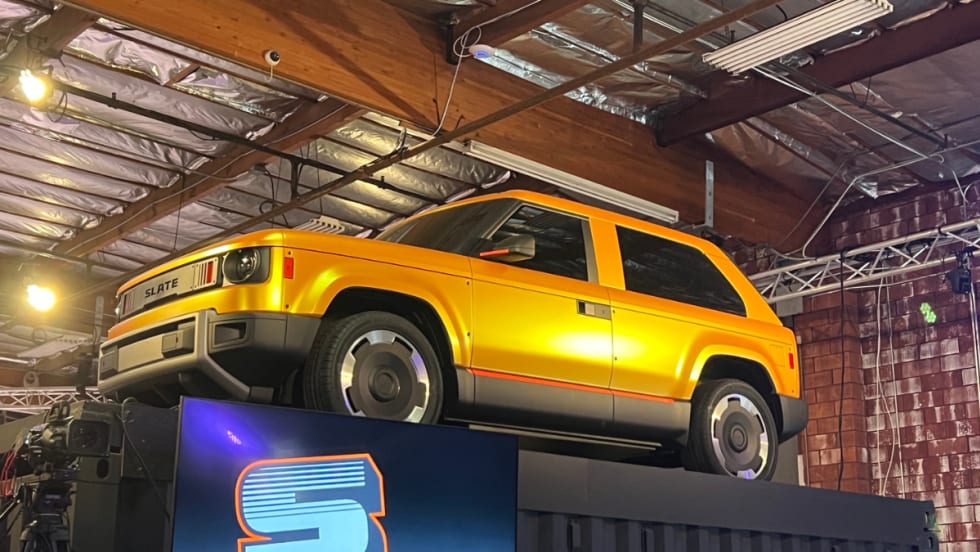
Slate Electric SUV, Pickup Switchable Model Aims For Light-Duty Fleets
Everything about this EV is counterintuitive and understated, making it stand out from the crowd.
Read More →
Inspiration Mobility Acquires Key Electrada Assets
Inspiration Mobility Group has acquired select assets of Electrada, adding the fleet electrification provider's team, technology, and charging infrastructure development capabilities to its energy management business.
Read More →
Turning Connected Vehicle Data Into Decisions That Matter
Fleet leaders have more data than ever, but turning that data into clear, actionable decisions remains a challenge. This white paper shows how leading organizations are using connected vehicle data to improve safety, reduce costs, and optimize fleet performance. Learn how to turn insight into action across your fleet.
Read More →