




AmeriFleet Transportation Represented at US DOT’s 2nd Distracted Driving Summit
ALPHARETTA, GA - AmeriFleet Transportation was represented by Juan Perez, Senior Vice President at last week's 2nd Distracted Driving Summit, as a member of the Network of Employers for Traffic Safety (NETS).
ALPHARETTA, GA - AmeriFleet Transportationwas represented by Juan Perez, Senior Vice President at last week's 2nd Distracted Driving Summit, as a member of the Network of Employers for Traffic Safety (NETS). NETS member companies and its benchmarking partners were recognized for their efforts to address the issue of driving while distracted, particularly talking and texting behind the wheel.
"NETS has been a terrific partner in helping us encourage the business community to adopt distracted driving policies," said U.S. Transportation Secretary Ray LaHood. "By putting these policies in place, businesses across the country are helping us protect tens of millions of more drivers and reduce preventable deaths and injuries."
In his opening remarks, Secretary LaHood commended NETS and announced in partnership with the organization, the DOT had identified 1600 companies with a combined 10.5 million employees that have already put a mobile device policy in place and an additional 550 companies that plan to do so in the next 12 months. Labor Secretary Hilda Solis also recognized the efforts of NETS.
"AmeriFleet applauds NETS for their efforts in raising awareness of the dangers of distracted driving and for their initiatives within the business community to encourage companies such as ours to adopt mobile device policies," said Juan Perez, Senior Vice President, AmeriFleet Transportation. "As a company with safety as a primary concern for its employees, and in cooperation and support of NETS safe driving initiatives, we have recently enforced a company wide mobile device policy for all of our employees to sign including our more than 800 service delivery professionals."
AmeriFleet's employee mobile device policy does not tolerate texting or talking on a hand-held phone while operating a company vehicle or while using a company issued cell phone while operating a personal vehicle. This includes, but is not limited to, answering or making calls, engaging in phone conversations and reading or responding to e-mails and text messages. In agreement with the policy, AmeriFleet Transportation employees are required to:
Turn cell phones off or put them on silent or vibrate prior to starting a car
Pull over to a safe place if a call must be made or received while on the road
Inform clients, associates and business partners of this policy as an explanation of why calls may not be returned immediately
In the months leading up to the Summit, NETS partnered with the DOT to launch the 2010 Drive Safely Work Week (DSWW) campaign, Focus...Safe driving is serious business. Campaign materials are designed to help prepare employees for the launch of a new mobile device policy, reinforce an existing policy or to raise awareness of the dangers of distracted driving. Materials have been made available at no charge and can be downloaded via the NETS website at www.trafficsafety.org. DSWW is recognized nationally Oct. 4-8. AmeriFleet Transportation will be conducting a 2010 Drive Safely Work Week (DSWW) campaign with details to follow.
About NETS
NETS is a 501(c)3 organization, a partnership between the U.S. Federal government and leading companies including board of directors members: Abbott, AmeriFleet Transportation, Anheuser-Busch Companies, Chubb Group of Insurance, Johnson & Johnson, Liberty Mutual Insurance Group, Nationwide Mutual Insurance, Monsanto Company and UPS. Established in 1989, NETS is dedicated to improving the safety and health of employees, their families, and members of the communities in which they live and work by preventing traffic crashes that occur both on- and off-the-job. For more information on NETS, visit www.trafficsafety.org.
About AmeriFleet
Founded in 1997, Alpharetta, Georgia-based AmeriFleet Transportation provides total logistics solutions and transportation services to the fleet management and corporate fleet industry. Through more than 16 company-owned North America locations, AmeriFleet provides the industry's most consistent high-quality transportation and ancillary services to its clients which include some of the largest fleet management/leasing companies and self managed corporate fleets in the U.S. and Canada. For more information visit www.amerifleet.com.
More Safety

Nexar-Nauto Merger Aims to Give Fleets Better Safety Intelligence Through Larger Driving Dataset
Stefan Heck tells Automotive Fleet that combining more than 10 billion miles of driving history with Nexar's AI models will give fleets deeper insights into driver risk and roadway conditions than either company could provide independently.
Read More →
Don't Wait for a Crisis: 5 Ways to Build Mental Health Into Your Fleet Safety Program
For Suicide Prevention Month, fleet and safety leaders have an opportunity to put mental health where it belongs: at the center of workplace safety.
Read More →
How Camera Data Can Strengthen a Fleet’s Insurance Renewal
Insights from a commercial insurance carrier and a broker show how fleets can turn video telematic data, driver coaching, and improved claims results into a stronger case at insurance renewal.
Read More →
The Safest Fleets Aren’t the Ones with the Most Technology
You’ve made the telematics investment. Here’s how to capture the other half of its value and build the safest fleet on the road.
Read More →
Hidden in Plain Sight: Fleet Compliance Risks
Fleet compliance isn't just about having policies — it's about consistently enforcing them. This practical guide reveals six hidden compliance risks common in public sector and shared fleet operations and outlines proven strategies to improve visibility, accountability, and audit readiness
Read More →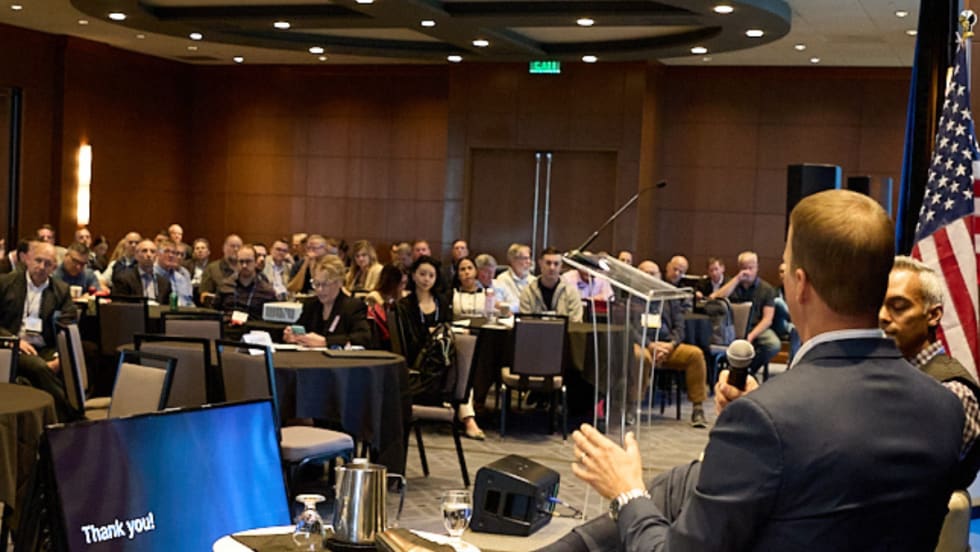
NETS Sets 2026 Fleet Safety Benchmark Conference for Indianapolis
The Sept. 15–17 program will feature fleet benchmarking data, case studies, emerging technologies, and implementation strategies while running alongside the NSC Safety Congress & Expo.
Read More →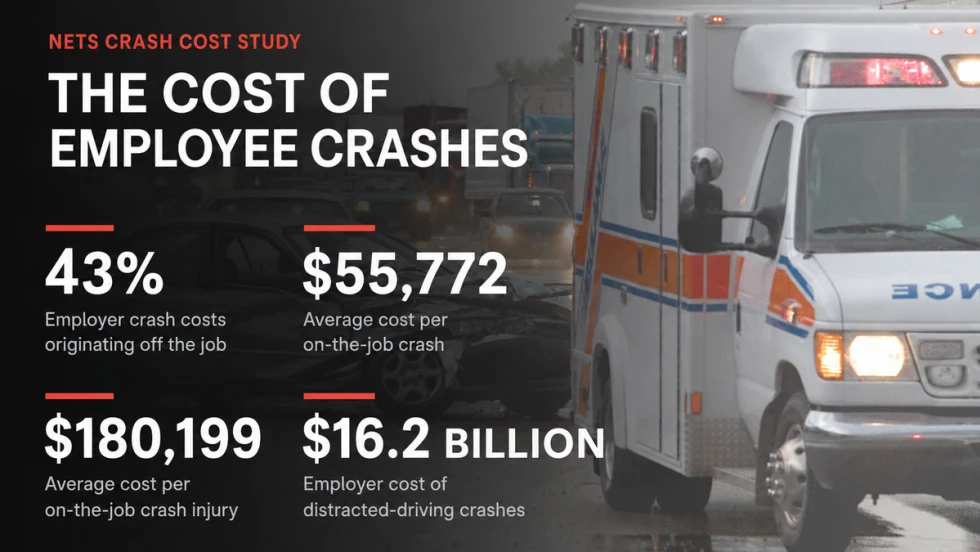
Off-the-Job Crashes Account for 43% of Employers’ $61.7 Billion Crash Burden
NETS quantifies costs dispersed across fleet, risk, HR, and other departments while providing new per-crash benchmarks for employers.
Read More →
Ram Recalls More Than 1.27 Million 1500 Pickups for Seat Belt Anchor Issue
The recall affects certain 2019-2026 Ram 1500 pickups that may have improperly attached second-row seat belt buckle anchors.
Read More →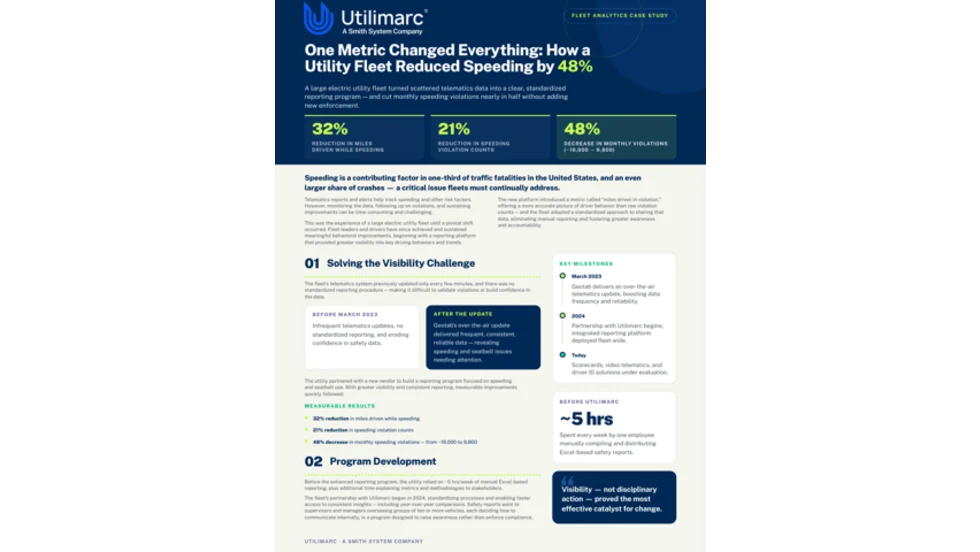
How Better Visibility Cut Speeding Violations by 48%
Fleet leaders don't need more data, they need clearer visibility into what the data is saying. This case study explores how one utility replaced speeding-event counts with a single metric — miles driven in violation — to strengthen safety and significantly reduce speeding violations.
Read More →
Operation Safe Driver Week: Why the Industry's Oldest Safety Campaign Still Matters to Fleets
A look at how a 2007 enforcement initiative became one of the most consequential weeks on the fleet safety calendar, and what it means for your drivers in 2026.
Read More →