




American Truck Dealers Association Speaks Out on Fuel Economy Rules
CHICAGO - At a hearing Nov. 15 on a proposal to establish first-ever fuel economy rules for commercial and work trucks and engines, the chairman of the American Truck Dealers (ATD) urged federal regulators to ensure that any new mandates are "appropriate, cost-effective and technologically feasible."
CHICAGO - At a hearing Nov. 15 on a proposal to establish first-ever fuel economy rules for commercial and work trucks and engines, the chairman of the American Truck Dealers (ATD) urged federal regulators to ensure that any new mandates are "appropriate, cost-effective and technologically feasible."
EISA OF 2007 SETS FORTH THE RIGHT COURSE OF ACTION
Kyle Treadway, ATD chairman, highlighted the significance of Section 102 of the Energy Independence and Security Act of 2007 (EISA), which requires that the National Highway Traffic Safety Administration (NHTSA) determine whether to issue fuel economy rules for medium and heavy duty-vehicles, work trucks and engines.
"The language set out in Section 102 of EISA is important to truck dealerships for several reasons," said Treadway, president of Kenworth Sales Company in West Valley City, Utah, which sells new Kenworth and Mitsubishi Fuso trucks.
"First, any new fuel economy regulations must meet the statute's requirement that [fuel economy rules] be 'appropriate, cost-effective and technologically feasible,'" Treadway said in testimony at a joint NHTSA and Environmental Protection Agency (EPA) hearing in Chicago, adding that if these three criteria are not met, "prospective customers will not purchase new vehicles and engines, reducing sales and leaving stock vehicles languishing on dealer lots."
"Second, Congress vested NHTSA with the exclusive authority to regulate the fuel economy of these vehicles and engines by amending the Energy Policy and Conservation Act (EPCA)," he added. "In doing so, Congress was cognizant of the EPCA's prohibition against the adoption or enforcement of state laws related to fuel economy."
"This prohibition of any patchwork of state laws related to fuel economy is critical to dealers like me who sell new vehicles in several states, yet is even more important to our customers, such as for-hire carriers, private companies, public fleets and owner operators who purchase trucks and engines in every state in the nation," Treadway said.
Treadway stressed that even though EISA requires NHTSA to consult with the Department of Energy (DOE) and the EPA on fuel economy issues for commercial trucks and engines, Congress did not specifically authorize DOE or EPA to regulate concurrently with NHTSA.
"ATD objects to all provisions in the proposal that would create enforceable EPA mandates, except for those potentially addressing air conditioning refrigerants," Treadway said.
NEW TRUCK AND ENGINE STANDARDS MUST BE UNIFORM NATIONWIDE
Treadway noted that if fuel economy mandates for new trucks allow for duplicative, non-identical state rules, it "would impose an untenable burden on the R&D resources, the manufacturing processes and the marketing and distribution systems of new truck and engine manufacturers," and "...ordering and stocking nightmares for dealers and their customers."
Providing a real world analogy, Treadway said that customers based outside of California who want to do business in California presently are forced to buy new trucks that comply with the state's emissions standards, which are different than EPA's mandates. Treadway noted that this has resulted in some customers no longer providing freight service inside California, while others have established a second, more expensive fleet of trucks to operate within California only; and others are coordinating freight handling in and out of California by relay.
"Each of these choices increases the handling of freight, restricts competition, raises freight rates and ultimately increases fuel consumption per ton/mile, said Treadway, referring to his non-California based customers who want to do business in California. "Consequently, there must only be one set of national fuel economy-related standards for new vehicles."
"Our bottom line: federal law does not permit a patchwork of state fuel economy-related mandates; ATD supports one national fuel-economy standard for new trucks and engines," Treadway said.
NEW STANDARDS MUST BE AFFORDABLE AND MUST NOT COMPROMISE PERFORMANCE
Treadway said in order for the proposed fuel economy mandates for MYs 2014-2018 to work, they must pass economic muster with truck and engine buyers.
"My customers have options," he said. "Instead of choosing to buy new fuel-efficient vehicles, they can instead pay my service and parts operations to help them keep their existing vehicles on the road, up to and including re-building engines or vehicles." Treadway added that "cost is always a concern" and that his customers can buy used vehicles at a lower cost than new federally compliant ones. "That is why new fuel economy mandates must be affordable (i.e., the cost must be justifiable up front), in order to have any chance at success in the marketplace."
"Some of the nation's largest fleets can afford to be 'early adopters' and to experiment with new fuels and technologies, even when they cost significantly more," he said. "However, the vast majority of prospective new truck buyers ... rationally consider the up-front cost of vehicle features, especially during times when credit is relatively tight and/or freight rates and profit margins are relatively low."
Treadway also cautioned that fuel economy mandates should never compromise or even appear to compromise performance, which occurred when emissions mandates took effect in 2002, 2007, and 2010, resulting in economic disruptions in the marketplace.
"Before my customers lay out the substantial investments necessary to purchase new vehicles, they want to be assured that they won't be buying performance compromises, such as a decrease in freight hauling capability or an increase in maintenance and repair," he said. "Especially with engines and other drivetrain components, improving one metric, such as fuel economy, must not diminish other critical performances metrics or result in higher vehicle costs. Otherwise, fuel-efficiency improvements won't get bought and will fail in the marketplace."
More Green Fleet

EV Charging Use Is Outpacing Infrastructure Growth
ChargePoint’s 2026 Charging Forward Report points to rising charger use, higher-powered charging, commercial vehicle electrification, and energy-management technology. Here’s what fleets should know.
Read More →
Merchants Fleet Reports 290M EV Miles as Fleets Navigate Changing Electrification Market
From millions in operating savings to hundreds of millions of EV miles, Merchants Fleet’s latest report reveals what’s working and what’s changing in fleet electrification.
Read More →
The EV Breakdown Nobody's Talking About: Why Most Electric Vehicle Roadside Calls Aren't Mechanical Failures
Here's why EV breakdowns are widely misunderstood.
Read More →
ChargePoint Now Available in Energy Pass
ChargePoint and additional planned charging network integrations were added to GM's Energy Pass.
Read More →

First Look: Slate Auto's Electric Fleet Pickup
Could an affordable, modular EV pickup make electrification more practical for fleets?
Read More →
Slate Debuts Colorful, Unique EV Models
A recent media and client event, studded with electric vehicles dressed up on platforms, planted a new position for the manufacturer in the wider EV market. Fleets will find cost-saving advantages.
Read More →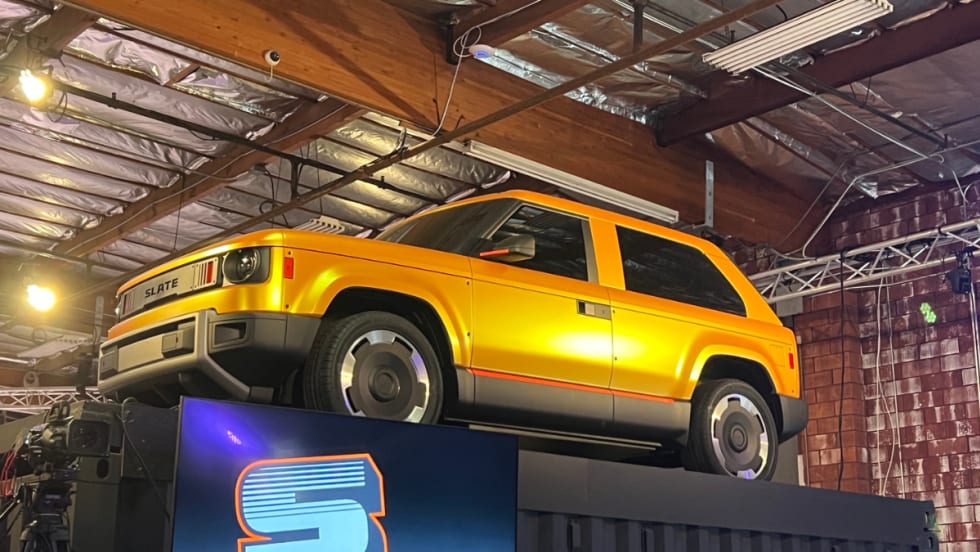
Slate Electric SUV, Pickup Switchable Model Aims For Light-Duty Fleets
Everything about this EV is counterintuitive and understated, making it stand out from the crowd.
Read More →
Inspiration Mobility Acquires Key Electrada Assets
Inspiration Mobility Group has acquired select assets of Electrada, adding the fleet electrification provider's team, technology, and charging infrastructure development capabilities to its energy management business.
Read More →
Turning Connected Vehicle Data Into Decisions That Matter
Fleet leaders have more data than ever, but turning that data into clear, actionable decisions remains a challenge. This white paper shows how leading organizations are using connected vehicle data to improve safety, reduce costs, and optimize fleet performance. Learn how to turn insight into action across your fleet.
Read More →