




All-New 2008 Ford Escape and Mercury Mariner Begin Production at Kansas City Assembly
KANSAS CITY, MO – Ford Motor Company has launched the all-new 2008 Ford Escape and Mercury Mariner at its Kansas City Assembly Plant. The vehicles go on sale first quarter 2007. The small SUVs received a 10- to 11-point improvement in resale value, while offering reduced pricing, additional content, and better fuel economy than previous models.
KANSAS CITY, MO – Ford Motor Company has launched the all-new 2008 Ford Escape and Mercury Mariner at its Kansas City Assembly Plant. The vehicles go on sale first quarter 2007. The small SUVs received a 10- to 11-point improvement in resale value, while offering reduced pricing, additional content, and better fuel economy than previous models. Both vehicles are available in gas-powered engine and full-hybrid models. The improved value equation of the new Escape and Mariner builds on gains made by other newly launched models, including the 2007 Ford Fusion, Ford Expedition, Lincoln Navigator, and Ford Edge. Fuel economy will improve by 2 mpg for gas-powered models and 3 mpg for hybrids. The redesigned Escape and Mariner launches comes at a time when customers are trending toward small SUVs and crossovers. According to a report recently issued by J.D. Power and Associates, compact vehicle market share rose to 31.2 percent in 2006, up from 27.9 percent in 2005. New inside and out, the 2008 Escape and Mariner offer standard safety equipment, including Ford's Safety Canopy side air curtains, side-impact airbags and ABS brakes. Advance Trac with Roll Stability Control (RSC) also is standard on gas-powered models. The vehicles also feature all-new styling and electronic features — such as standard audio input jack, available touch-screen navigation, and SIRIUS satellite radio. A combination of engineering and design has also helped the 2008 Escape and Mariner deliver a 12-percent reduction in noise, vibration and harshness (NVH) levels inside the vehicle, according to Ford. Powertain choices include the standard 2.3L, 16-valve Duratec I-4, producing 153 horsepower and 152 lb.-ft. of torque. The available 3.0L, 24-valve V-6 Duratec 30 engine delivers 200 horsepower and 193 lb.-ft. of torque. Hybrid versions of the 2008 Escape and Mariner continue to be "full" hybrids, meaning they can run on 100-percent electric power up to 25 mph, maximizing in-city fuel economy. Ford's hybrid engineers also made revisions to software in the vehicles' control systems to improve the transition between gasoline and electric operation. Prices for the 2008 Escape start at $19,245 (including $665 destination and delivery charges), while the Hybrid begins at $25,740. Across the model range, that's an average of $1,100 less than the 2007 prices. Mariner starts at $21,395 (including the $665 destination and delivery charges) with the Hybrid beginning at $26,430. These prices average $1,300 less than the 2007 Mariner models. In addition, the Mariner Hybrid is available for the first time in a front-wheel-drive configuration. According to Ford, resale value for the 2008 Escape after 36 months is up to 11 points higher than the 2007 model. Mariner's residual gains are comparable. Ford invested $100 million in its Kansas City Assembly Plant for new training, equipment, and tooling — including new hood and lift-gate subassembly systems — as well as upgraded materials and processes to reduce wind and road noise.
2008 FORD ESCAPE
2008 MERCURY MARINER
More Operations

How to Manage Conflict for Your Fleet Operations
Conflict management is becoming a core leadership skill. Here are five strategies fleet leaders should know.
Read More →
Turning Connected Vehicle Data Into Decisions That Matter
Fleet leaders have more data than ever, but turning that data into clear, actionable decisions remains a challenge. This white paper shows how leading organizations are using connected vehicle data to improve safety, reduce costs, and optimize fleet performance. Learn how to turn insight into action across your fleet.
Read More →
Cameras, Safety and Insurance: From Reactive Claims to Real-time Prevention
Commercial auto remains one of the most challenging and costly lines of coverage for fleet operators and insurers alike. Learn more about how to effectively address these issues from Onur Aksan, Enterprise Business Development Executive, Geotab.
Read More →

Are You Tracking Your Fleet's True Total Cost of Ownership?
Bobit Business Media surveyed 190 fleet professionals and found that while most fleets are tracking costs, fragmented systems and data gaps are keeping true TCO visibility out of reach. With rising pressure to control spend in an increasingly volatile environment, the gap between what fleets think they know and what the data actually shows is wider than you might expect. See how your peers are managing costs today and where the industry still has room to improve.
Read More →
Turn Fleet Data Into Smarter Decisions
Fleet leaders have access to more operational data than ever, but disconnected systems and unclear metrics often slow decision-making instead of improving it. This article outlines five practical steps fleets can take to transform fragmented data into actionable insights that improve planning, safety, utilization, and long-term performance.
Read More →
Hybrids: Electrification Without the Challenges
For fleet managers, fuel is one of the biggest line items in the budget — and it's one hybrids can shrink without changing how your people work. Download the eBook to see the numbers, understand the technology, and get a step-by-step guide to making the switch.
Read More →
How NOV Uses Telematics to Improve Fleet Safety Across 160 Locations
James Victory of NOV discusses how the company manages fleet safety, maintenance, and telematics across more than 150 locations supporting oilfield operations throughout the U.S.
Read More →
Fleet Meets: Steven Santostasi
This edition of the Fleet Meets series features Steven Santostasi, the current TSP channel manager for Ford Pro.
Read More →
Why Fleet Managers Are Replacing Departmental Vehicles with Shared Motor Pools
Departmentally assigned vehicles often create hidden costs through underutilization, poor visibility, and increased administrative burden. This white paper explores how shared motor pool strategies help fleets reduce costs, improve accountability, and optimize vehicle utilization.
Read More →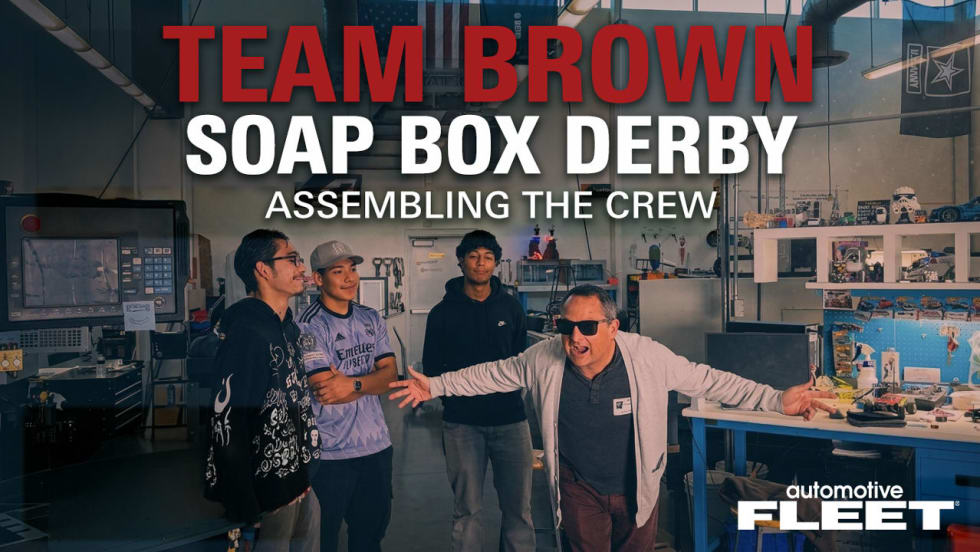
Soap Box Derby Challenge: Assembling the Crew
Meet Gabriel, Matthew, and Angel — the team helping bring this soap box derby build to life.
Read More →