




Alaska Energy Fleet Airlifts Trucks Into Service
ASRC Energy Services has been using creative methods to transport its fleet vehicles to remote areas of the state, including replacing a vehicle's wheels with smaller ones so the vehicle fits into an airplane.
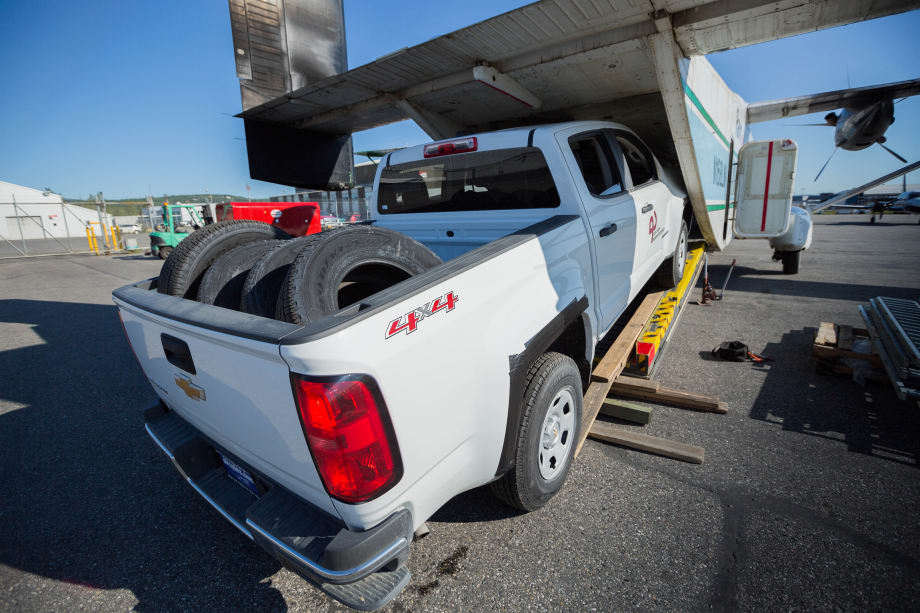
Photo of 2015 Chevrolet Colorado being loaded on to a Shorts 330 Sherpa aircraft for ASRC courtesy of GM.

Photo of 2015 Chevrolet Colorado being loaded on to a Shorts 330 Sherpa aircraft for ASRC courtesy of GM.
Arctic Slope Regional Corp. (ASRC) Energy Services, an Alaskan oilfield service partner, has been using creative methods to transport its fleet vehicles to remote areas of the state, including replacing a vehicle's wheels with smaller ones so the vehicle fits into an airplane.
The fleet has been adding 2015 Chevrolet Colorado mid-size pickups and air-lifting the trucks using a Shorts 330 Sherpa airplane. ASRC Energy Services has been experimenting with this shipping method when weather conditions permit and to meet delivery deadlines.
"Our fleet vehicles double as mobile offices for the majority of our employees, so we need to give them dependable vehicles in the remote areas where they work," said Chris Maynard, general manager of fleet operations for ASRC Energy Services. "These locations can vary from areas with no electricity to temporary roads built on top of the frozen tundra."
Their total fleet size ranges from 600 to 1,000 vehicles a year, and they purchase 100 to 200 vehicles annually as part of their rotation plan.
To fulfill its fleet's needs and ensure its employees can travel easily across Alaska, ASRC Energy Services uses Chevrolet's three-truck strategy: Chevrolet Colorado, Chevrolet Silverado 1500, and Chevrolet Silverado 2500HD and 3500HD.
The Silverado 1500, as a light-duty truck, helps ASRC's management team get to and from project sites and transport clients. The Colorado is able to meet those same needs with a smaller footprint. The Silverado HDs are a year-round, durable yet dependable truck that aids client operations in the oil and gas market, according to General Motors.
The Chevrolet trucks serve as towing vehicles, to bring trailers, mobile heaters and lights to construction zones. They also service heavy equipment.
The fleet uses “arctic upfits” to navigate the changing weather and terrain. These modifications include adding pan or transmission heaters, wind straps for the doors and -40 degree Fahrenheit fluids. Safety and rescue features are also added, including fire extinguishers, first-aid kits and flares. Most vehicles get reflective striping for detection during winter.
"We build our trucks with companies like Arctic Slope in mind," said John Schwegman, GM's director of commercial product. "Their employees don’t have time to worry about how the vehicle will operate when the weather is 40 degrees below zero. We ensure our vehicle's performance will stand up to the test so they can get their work done."
More Operations
Here's When You Should Make an Exception to Fleet Policy
Fleet policies are designed to create consistency, but not every driver or situation fits neatly within standard rules.
Read More →
AI-Native or AI-Acquired: What Should Fleet Managers Look for in an AI Platform?
Six questions can help fleet managers look beyond AI marketing claims to evaluate integration, data access, and real-world operational performance.
Read More →
A buyer's guide to fleet management software in 2027
Buying fleet management software in 2027 means looking beyond features and price. As fleet operations, technology and expectations evolve, this guide explores what today’s fleet professionals should consider when choosing a system that can deliver value now and adapt to what comes next.
Read More →

What Will Shape the Next Era of Fleet Management?
EVs, AI, and autonomous vehicles are reshaping fleet management. Discover what’s ahead—and how fleet leaders can prepare for the next era.
Read More →
How Fleets Can Recruit and Train Veterans for Technician Roles
Here's how the technician shortage has affected uptime for fleets, and what to do about it.
Read More →
Avis Budget Group Deploys Neology Toll Management Technology Across Major Brands
Neology’s neoFleet platform will manage toll transactions and toll-authority operations for vehicles across Avis, Budget, Payless, Budget Truck and Zipcar.
Read More →
Fleet Personal-Use Charges Edge Higher in 2026
Nearly eight in 10 surveyed fleets allow personal use of company vehicles, while just over half of respondents report charging employees for the privilege.
Read More →
The Future of Fleet + What’s Changing Right Now | AF News Recap
Could developments overseas offer a preview of what’s coming for U.S. fleets? This week, we’re looking at the future of AI, autonomy, and electrification, plus Ford Pro’s new certified pre-owned program, smarter vehicle offboarding, and a new way for fleets to manage toll expenses.
Read More →
How to Handle Vehicle Offboarding
What do fleet managers need to do when a driver leaves?
Read More →
Fleet Manager’s Ultimate Playbook: Navigating the New Standard in OEM Connectivity
Rising operating costs, driver safety concerns, and unplanned downtime are putting unprecedented pressure on modern fleets. Discover how fleet managers use embedded OEM connectivity and real-time vehicle data to cut TCO, prevent downtime, and protect drivers without aftermarket telematics hardware.
Read More →