




AAA to Continue Pushing for Texting Bans
WASHINGTON - AAA said this month it looks to build on a relatively successful campaign of traffic safety law reforms last year. In particular, the organization will continue to push for more state texting bans and primary seatbelt laws.
WASHINGTON - AAA said this month it looks to build on a relatively successful campaign of traffic safety law reforms last year. In particular, the organization will continue to push for more state texting bans and primary seatbelt laws.
"Last year showed states' strong commitment to traffic safety as nearly a dozen states enacted laws banning texting while driving, but there were also real safety improvements on core needs like teen driver safety, primary seatbelt laws and child passenger safety," said AAA Vice President of Public Affairs Kathleen Marvaso. "AAA is working with legislators and other safety advocates in statehouses across the country to draft and pass legislation in 2011 that will make roads safer."
AAA said its main traffic safety priorities in the states include:
Texting while driving bans: AAA in 2009 launched a national campaign to pass laws banning text messaging while driving in all 50 states. With 11 states having enacted these laws in 2010, there are now 30 states with laws prohibiting drivers of all ages from texting. AAA expects nearly every one of the 20 remaining states to consider this legislation in 2011.
Primary seatbelt laws: After a record-setting year in 2009, 2010 saw modest reforms as Kansas tightened its seatbelt law to allow primary enforcement by police and Georgia closed a loophole in its law that exempted pickup truck occupants from the state's seatbelt requirement. AAA and other safety advocates will continue to work to pass reforms in the remaining 19 states without a primary belt law, as well as attempt to increase fines in some states with weak penalties, AAA said. Primary seatbelt laws have been shown as a low-cost way for states to quickly increase belt use, reduce traffic deaths, and lower the cost of crashes.
Move over laws: Nearly every state (49 states) has a law that requires drivers to slow down and, if safe, "move over" when passing an emergency vehicle that is actively working on a roadway. Virginia reformed its law in 2010 to include tow trucks and other road service vehicles, increasing the number of states with these more comprehensive laws to 39. AAA said it will continue to promote these laws that have been shown to improve safety for police, tow truck operators, and others who work on roadways.
Teen driver safety: Although every state has some form of graduated driver licensing for new teen drivers, nearly every state still has opportunities to improve these lifesaving laws, according to AAA. States such as Alabama, Louisiana, Michigan and Oklahoma passed significant reforms in 2010, such as increasing the age and requirements for getting a license, banning the use of wireless communications devices for novice drivers, and adding or tightening limits on teen passengers and nighttime driving for newly licensed teens. Just five states (Delaware, Indiana, New York, Oklahoma and West Virginia) have graduated driver licensing systems that meet AAA's guidelines for nighttime limits, passenger limits and practice requirements.
Booster seat laws: Three states (Arizona, Florida and South Dakota) lack booster seat requirements, which have been shown to improve safety for young passengers. Colorado enacted a law in 2010 to allow the primary enforcement of its booster seat requirement. Booster seat laws in 21 states still fall short of meeting safety experts' guidelines, which includes all children under age 8, AAA said.
More Safety

Nexar-Nauto Merger Aims to Give Fleets Better Safety Intelligence Through Larger Driving Dataset
Stefan Heck tells Automotive Fleet that combining more than 10 billion miles of driving history with Nexar's AI models will give fleets deeper insights into driver risk and roadway conditions than either company could provide independently.
Read More →
Don't Wait for a Crisis: 5 Ways to Build Mental Health Into Your Fleet Safety Program
For Suicide Prevention Month, fleet and safety leaders have an opportunity to put mental health where it belongs: at the center of workplace safety.
Read More →
How Camera Data Can Strengthen a Fleet’s Insurance Renewal
Insights from a commercial insurance carrier and a broker show how fleets can turn video telematic data, driver coaching, and improved claims results into a stronger case at insurance renewal.
Read More →
The Safest Fleets Aren’t the Ones with the Most Technology
You’ve made the telematics investment. Here’s how to capture the other half of its value and build the safest fleet on the road.
Read More →
Hidden in Plain Sight: Fleet Compliance Risks
Fleet compliance isn't just about having policies — it's about consistently enforcing them. This practical guide reveals six hidden compliance risks common in public sector and shared fleet operations and outlines proven strategies to improve visibility, accountability, and audit readiness
Read More →
NETS Sets 2026 Fleet Safety Benchmark Conference for Indianapolis
The Sept. 15–17 program will feature fleet benchmarking data, case studies, emerging technologies, and implementation strategies while running alongside the NSC Safety Congress & Expo.
Read More →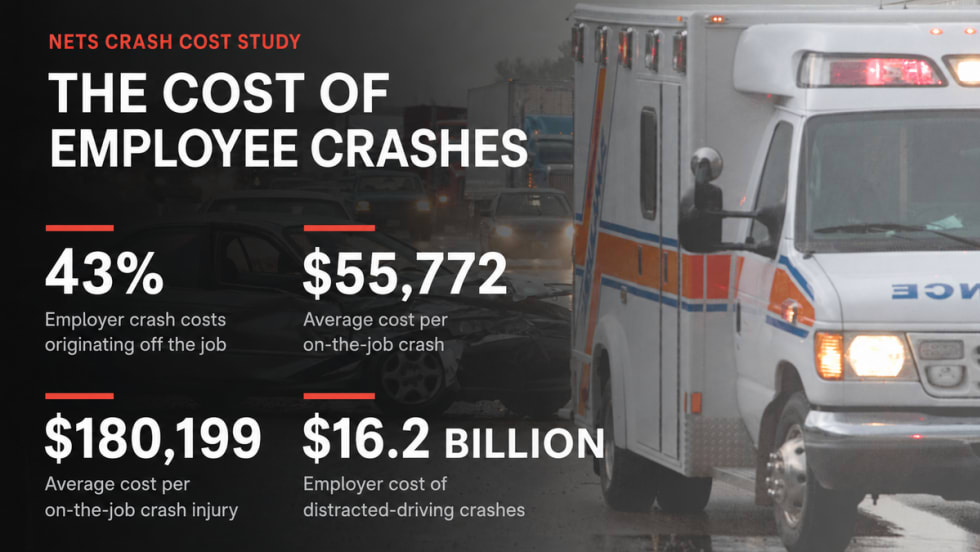
Off-the-Job Crashes Account for 43% of Employers’ $61.7 Billion Crash Burden
NETS quantifies costs dispersed across fleet, risk, HR, and other departments while providing new per-crash benchmarks for employers.
Read More →
Ram Recalls More Than 1.27 Million 1500 Pickups for Seat Belt Anchor Issue
The recall affects certain 2019-2026 Ram 1500 pickups that may have improperly attached second-row seat belt buckle anchors.
Read More →
How Better Visibility Cut Speeding Violations by 48%
Fleet leaders don't need more data, they need clearer visibility into what the data is saying. This case study explores how one utility replaced speeding-event counts with a single metric — miles driven in violation — to strengthen safety and significantly reduce speeding violations.
Read More →
Operation Safe Driver Week: Why the Industry's Oldest Safety Campaign Still Matters to Fleets
A look at how a 2007 enforcement initiative became one of the most consequential weeks on the fleet safety calendar, and what it means for your drivers in 2026.
Read More →