




Four years ago, taxi officials raised the possibility of making all New York City's yellow cabs accessible to wheelchairs. But the idea never went anywhere, according a recent New York Times article. Today, only three of the city's 12,487 yellow cabs are accessible, meaning that someone in a wheelchair has about one chance in 4,162 of hailing an accessible minivan. In contrast, other major American cities, including Chicago, Boston, and San Francisco, have significantly expanded the availability of the vehicles in recent years. In London, every cab has been wheelchair-accessible since 1989. "New York is grossly behind," said Diane McGrath-McKechnie, a former chairwoman of the city's Taxi and Limousine Commission who has become a proponent of making cabs wheelchair-accessible since leaving office several years ago. "These other cities have been out there far in advance of New York. I think it's outrageous." There is movement now, however hesitant, on a matter that to some New Yorkers is as basic as being able to get across town without a major ordeal. "The issue with yellow cabs is spontaneity," said Edith Prentiss, an advocate for the disabled and a Manhattan resident who uses a motorized wheelchair. "I don't need to make a plan like I'm invading Europe, which is really what it often feels like." The Taxi and Limousine Commission is expected to vote to modify the rules of its next medallion auction to encourage the purchase of medallions specifically designated for wheelchair-accessible cabs, something it tried but failed to do in the last auction. Although only 27 medallions would be so designated, the commission's chairman, Matthew W. Daus, said the move would be progress. "This is something we're tremendously committed to," he said last week. The taxi commission is also finally enforcing a three-year-old rule requiring that all black car and livery cab companies, more than 700 in all, either buy their own wheelchair-accessible van or contract with another company to provide it on demand. In what would be a much more radical shift, a bill that would require the eventual conversion of the entire yellow cab fleet is being considered by Councilman John Liu, chairman of the City Council's Transportation Committee. The bill is vigorously opposed, just as the commission's proposal was four years ago, by fleet owners and others in the industry with high-powered lobbyists. Over the last year, Liu has met repeatedly with opponents and with advocates for the disabled who have banded together under a group named Taxis for All. "There's no doubt that yellow cabs will be accessible for people in wheelchairs in the future," Liu said. "The question is whether it will be 20 years from now, 10 years from now, or 3 years from now." Taxi industry representatives argue that a blanket requirement would be disastrous. "Being demanding and destroying an industry to help a group of people at this time isn't the proper thing to do, either," said David Pollack, president of the Committee for Taxi Safety, a group that represents leasing managers. The organization hired a former speaker of the State Assembly, Mel Miller, now with the firm Bolton-St. Johns, to lobby against the bill.
A Little Movement Toward More Taxis for Wheelchairs
Four years ago, taxi officials raised the possibility of making all New York City's yellow cabs accessible to wheelchairs.
More Operations

Hybrids: Electrification Without the Challenges
For fleet managers, fuel is one of the biggest line items in the budget — and it's one hybrids can shrink without changing how your people work. Download the eBook to see the numbers, understand the technology, and get a step-by-step guide to making the switch.
Read More →
How NOV Uses Telematics to Improve Fleet Safety Across 160 Locations
James Victory of NOV discusses how the company manages fleet safety, maintenance, and telematics across more than 150 locations supporting oilfield operations throughout the U.S.
Read More →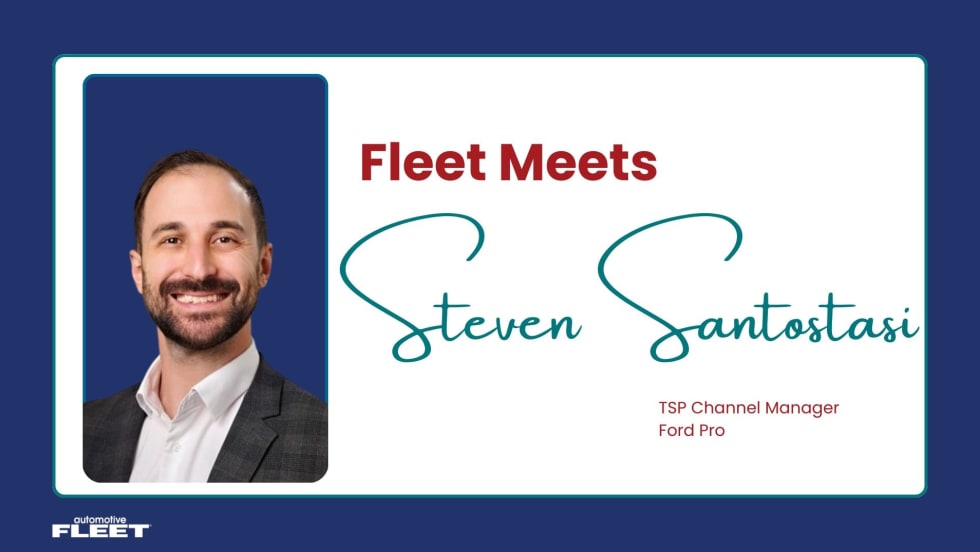
Fleet Meets: Steven Santostasi
This edition of the Fleet Meets series features Steven Santostasi, the current TSP channel manager for Ford Pro.
Read More →
Why Fleet Managers Are Replacing Departmental Vehicles with Shared Motor Pools
Departmentally assigned vehicles often create hidden costs through underutilization, poor visibility, and increased administrative burden. This white paper explores how shared motor pool strategies help fleets reduce costs, improve accountability, and optimize vehicle utilization.
Read More →
Soap Box Derby Challenge: Assembling the Crew
Meet Gabriel, Matthew, and Angel — the team helping bring this soap box derby build to life.
Read More →
BBL Fleet Acquires Velcor Leasing Corporation
BBL Fleet expanded its footprint in the fleet management industry with the acquisition of Velcor Leasing Corporation of Madison through a stock purchase agreement finalized Feb. 27, 2026.
Read More →
Lytx Introduces New AI Fleet Technologies at Protect 2026
The company introduced new AI-driven fleet safety and operations technologies during its annual user conference.
Read More →
Fleet Costs Are Rising: Here’s How Leaders Are Responding
Fleet leaders are under pressure to reduce costs, adapt to economic uncertainty, and make smarter decisions. See how peers across North America are responding with real data, proven strategies, and forward-looking insights. Download the 2026 Market Pulse Report to benchmark your strategy and uncover where you can gain an edge.
Read More →
From Waffle House to AI: Fleet Trends You Need to Know
In this AF news recap, host Faith Howell covers how Waffle House stepped up during disaster response and new AI tech on the market.
Read More →
Fleet Operations in the Age of AI: Navigating Ethical and Legal Challenges
AI is no longer a future concept for fleets—it’s already embedded in the tools, data, and decisions that operators rely on every day. In this episode of the Fleet Forward Podcast, recorded live at Fleet Forward, industry leaders take the conversation beyond hype to examine what responsible AI adoption really looks like in fleet operations.
Read More →