




7 Tips for Driving in Snowy and Icy Conditions
More than 150,000 crashes happen every year due to icy roads. Offer these safe driving tips to your fleet drivers now because winter is around the corner.

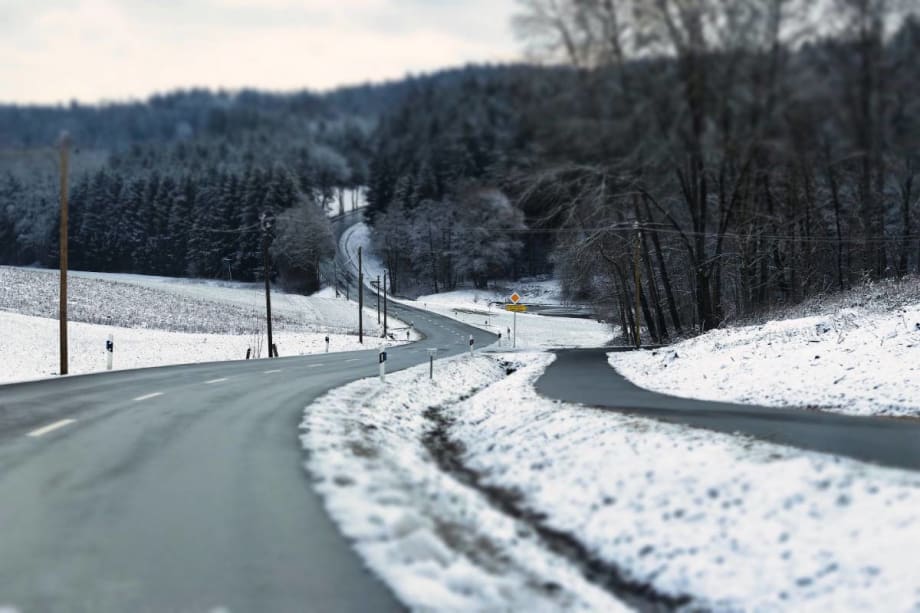
70% of U.S. roads are in snowy areas, increasing the threat of an accident significantly.
Photo via pixabay.com/Thilo Becker
Editor's Note: This content was originally published in January 2021. It has been reviewed and updated for continued relevance.
According to the AAA, more than 2,000 road deaths occur each year due to bad weather and winter storms.
Winter is peak season, so now is the time for fleet operators to remind drivers of some scary statistics to keep safety top of mind during the most frigid months.
Approximately 70% of the United States population lives in places with snowy and icy conditions during the winter.
Here are some hard, cold facts your drivers should know: Driving on snowy roads can take your car 10 times longer to stop completely, according to AAA. Moreover, The Weather Channel notes that slushy or snowy pavement causes a 30% to 40% speed reduction on major roads.
Of particular note, about 17% of vehicle crashes occur in snowy conditions, according to the National Highway Traffic Safety Administration. What’s more, 70% of roads in the United States are in snowy areas, which increases the threat of an accident significantly.
As the days grow shorter and the weather turns cooler, here are seven tips offered by Zutobi, a driver education company, about how to stay safe when behind the wheel in the winter months.
Prepare Your Vehicle
Be sure to have your vehicle serviced and your tires checked. A safe tread depth is critical for winter weather driving. Make sure your fluids are topped off. It’s safer to have at least half a tank of fuel and be sure your windshield fluid is always full. Road salt tends to increase your need to clean your windshield during the winter.
Remember the Basics
Don’t forget to buckle up and ensure that you are in a physical and mental state that’s safe for driving. Being fatigued or distracted will put you in a dangerous condition on the roadway and getting your job done.
Watch Your Speed & Increase Following Distance
Slowing down is critical in winter driving conditions. Be cautious to avoid hitting other cars or stationary items by reducing your speed. Another way to be safer is to increase the distance between you and the vehicle in front. Instead of the usual 3-second following distance, consider 5 seconds in winter driving conditions. This will allow you more time to stop should something unforeseen happen. For example, in icy conditions, the stopping distance can be up to 10 times longer compared to when driving on a dry road, so you need that extra safety margin to stay safe. We might also consider reducing your speed by half if driving on packed snow.
Keep Low Beams On
Using your headlights isn’t only about allowing you to see better, but it will also help you be seen by others. Especially during the winter, any extra visibility can be a safety precaution. However, remember that high beam headlights aren’t necessarily better than low beams. In bad weather conditions, high beams can actually make you see less instead of more.
Clear All Windows
Be sure to leave enough time to clear all your windows of snow and ice, and to defrost them before you get on the road. It can be tempting to just chip away enough so you can barely see and hope that the warmth of the car will take care of the rest during the trip. However, clear visibility is really important to stay safe in winter weather. Snow can also fly off your vehicle and create a road hazard for drivers behind you.
Don't Slam the Brakes
If you happen to lose control of your vehicle on an icy road, it can be hard to know what to do quickly enough. The most important thing is to take your foot off the gas pedal, so your vehicle slows. It can be difficult to regain control because you often instinctively want to do the wrong things, like slam on your brakes and counter-steer. If your vehicle has anti-lock brakes, that can help you avoid skidding. Regular brakes may need to be pumped to keep them from locking.
Be extra cautious around curves and shaded areas.
Curves and shaded areas are known to hide spots of ice, making them very dangerous during winter, especially on wet and cold days. These areas tend to freeze first, hide spots of ice, and remain frozen the longest.
More Safety
IIHS Crash Avoidance Tests Reveal Safety Gaps in Cargo Vans and Work Trucks
New crash-avoidance ratings from the Insurance Institute for Highway Safety reveal inconsistent performance among commercial vehicles, with several popular cargo vans and heavy-duty pickups struggling to avoid collisions with other vehicles and pedestrians.
Read More →
What’s Next for Fleet? Safety, AI & Industry Recognition | AF News Recap
Could your company's culture be encouraging distracted driving? This week, we're exploring how workplace expectations affect driver safety, what AI, EVs, and autonomous vehicles could mean for the future of fleet management, and how fleet professionals can strengthen their award nominations.
Read More →
Does Your Fleet's Culture Encourage Distracted Driving?
What happens when the people responsible for enforcing safety rules are the ones setting the wrong example? The answer may reveal why some of the biggest risks to fleet drivers have little to do with what's written in the employee handbook.
Read More →
Fleet Manager’s Ultimate Playbook: Navigating the New Standard in OEM Connectivity
Rising operating costs, driver safety concerns, and unplanned downtime are putting unprecedented pressure on modern fleets. Discover how fleet managers use embedded OEM connectivity and real-time vehicle data to cut TCO, prevent downtime, and protect drivers without aftermarket telematics hardware.
Read More →
From Driver Well-Being to EV Charging | AF News Recap
Mental health belongs in the fleet safety conversation. This week, we’re looking at five ways fleets can support employee well-being before a crisis, plus Holman’s expansion in Mexico, new one-day Fleet Forward passes, and why EV charging demand is outpacing infrastructure growth.
Read More →
Nexar-Nauto Merger Aims to Give Fleets Better Safety Intelligence Through Larger Driving Dataset
Stefan Heck tells Automotive Fleet that combining more than 10 billion miles of driving history with Nexar's AI models will give fleets deeper insights into driver risk and roadway conditions than either company could provide independently.
Read More →
Don't Wait for a Crisis: 5 Ways to Build Mental Health Into Your Fleet Safety Program
For Suicide Prevention Month, fleet and safety leaders have an opportunity to put mental health where it belongs: at the center of workplace safety.
Read More →
How Camera Data Can Strengthen a Fleet’s Insurance Renewal
Insights from a commercial insurance carrier and a broker show how fleets can turn video telematic data, driver coaching, and improved claims results into a stronger case at insurance renewal.
Read More →
The Safest Fleets Aren’t the Ones with the Most Technology
You’ve made the telematics investment. Here’s how to capture the other half of its value and build the safest fleet on the road.
Read More →
Hidden in Plain Sight: Fleet Compliance Risks
Fleet compliance isn't just about having policies — it's about consistently enforcing them. This practical guide reveals six hidden compliance risks common in public sector and shared fleet operations and outlines proven strategies to improve visibility, accountability, and audit readiness
Read More →