




2020 NAFA I&E Virtual State of the Industry Panel
The NAFA Fleet Management Association (NAFA) hosted a general session spotlighting the state of the fleet industry and the challenges of today and tomorrow during the 2020 Institute & Expo (I&E) Virtual Conference, on Sept. 17, 2020.

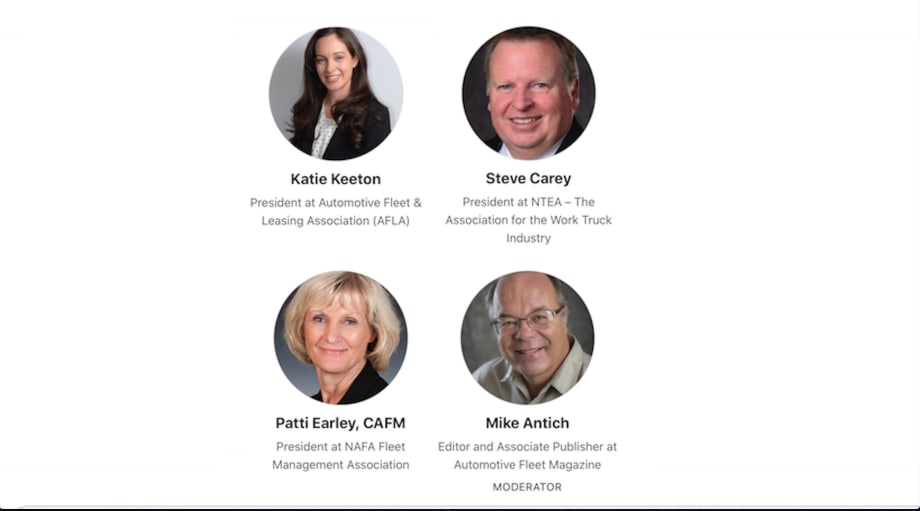
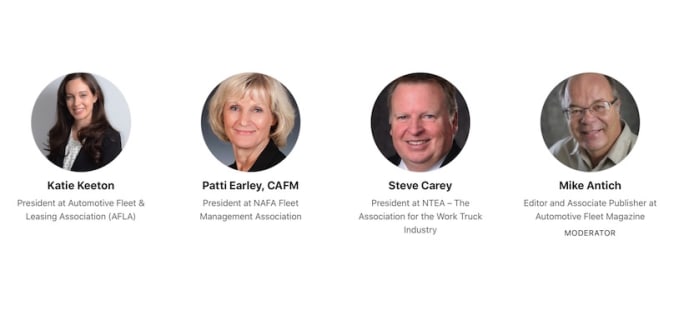
Graphic: NAFA
The NAFA Fleet Management Association (NAFA) hosted a general session spotlighting the state of the fleet industry and the challenges of today and tomorrow during the 2020 Institute & Expo (I&E) Virtual Conference, on Sept. 17, 2020.
NAFA President Patti Earley, CAFM, joined Moderator Mike Antich, editor, Automotive Fleet; Katie Keeton, President at Automotive Fleet & Leasing Association (AFLA); and Steve Carey, President at NTEA – The Association for the Work Truck Industry, for the session.
The session started with the panelists discussing fleet budget cuts and offered their perspective for fleet ordering in the 2021-MY. This segued into a discussion on trends in the development of vocational trucks and vans, and the evolution of vehicles within the fleet system with a focus on productivity and efficiency and the introduction of new vehicle technologies to this segment.
Then this turned to a discussion on how telematics and safety technologies, such as advanced driver assistance systems (ADAS), are continuing to be more ubiquitous in fleet vehicles, including in more trucks and vans. The group discussed the importance of parsing through the abundance of data that is being provided to fleets with these newer technologies and identifying areas that can best benefit their fleet using this data.
The panel also discussed the importance of driver ergonomics with how it relates to safety and maintaining driver satisfaction and employee retention.
How company budget cuts are impacting fleet expenses was another key point of discussion, which has caused fleets to be more creative with their budgets by seeking solutions with the best return on investment (ROI).
Also discussed was the current state of regulatory issues and challenges being experienced, touching on areas including vehicle data privacy, sustainability, and more. Sustainability was discussed as an area that continues to be a strong area of interest across the board for fleets, and the benefits and challenges of incorporating these technologies.
This segued into a discussion on the latest trends in for university and educational fleets, which also focused on sustainability, vehicle utilization, as well as COVID-19 safety protocols. The panlists then delved deeply into COVID-19 safety and sanitation protocols, emphasizing the need to reduce physical interaction between people as much as possible in the various facets of the industry, also looking at this for fleets with in-house maintenance shops, upfitters, and manufacturers.
Following this, panelists discussed how associations like NAFA and AFLA are supporting members of the fleet industry by helping them improve their business and elevate their careers. The panel wrapped up with a look at how the pandemic elongated order-to-delivery times for the 2020-MY and how OTD times might look moving into the new year, and touched on the significance of collaboration in the industry.
More Operations

Fleet Has a Talent Pipeline Problem. What Comes Next? | AF News Recap
Where will fleet’s next generation of leaders come from? This week, we’re looking at the industry’s talent pipeline, what certification can add to a fleet career, how to build an award-worthy track record, and the return of Automotive Fleet’s Personal Use Survey.
Read More →
Smith System Launches Driver Risk Management Program
Fleets have more driver data than ever, but identifying risky behavior doesn't necessarily correct it. Smith System's new Driver Risk Management program combines monitoring, training, and follow-up coaching to help fleets connect risk signals with driver intervention.
Read More →
Automotive Fleet Opens 2026 Personal Use Survey for Commercial Fleet Managers
Less than two weeks left! Commercial and corporate fleet managers are invited to share how their organizations handle company vehicle personal-use policies, charges, and driver eligibility.
Read More →
From AI Prompts to AI-Generated Safety Songs | AF News Recap
Can better prompts make AI more useful for fleet managers? This week, we’re breaking down smarter fleet analysis, an AI-assisted experiment that turned safety training into music, and what happened to fuel prices in August.
Read More →
How to Write Better AI Prompts for Fleet Analysis
Include these six elements in your fleet prompts to generate more relevant analysis and accurate answers.
Read More →
Fleet Meets: Eric Kilgore
This edition of the Fleet Meets series features one of the industry's best leaders driving multi-market and national operations.
Read More →
Why Reactive Fleet Management Is Becoming Too Expensive to Sustain
Research highlights a growing need for proactive management strategies to address rising costs in fleet operations effectively.
Read More →
What Your Fleet KPIs Aren’t Telling You
Tracking fleet metrics is only useful when the data leads to better decisions. This guide helps fleet leaders assess cost, utilization, and downtime more accurately, identify performance gaps, and prioritize the actions that can improve operational results.
Read More →
Hidden in Plain Sight: Fleet Compliance Risks
Fleet compliance isn't just about having policies — it's about consistently enforcing them. This practical guide reveals six hidden compliance risks common in public sector and shared fleet operations and outlines proven strategies to improve visibility, accountability, and audit readiness
Read More →
Turning Fleet Payment Data into Executive Insights
Does data alone drive results in operations?
Read More →