




Related: 2015 Nissan Altima Starts at $22,300
2016 Nissan Altima Adds Safety Tech
Nissan has revised its Altima sedan for the 2016 model year by freshening the styling, enhancing performance, and adding new safety features, the company has announced.
by Staff
September 22, 2015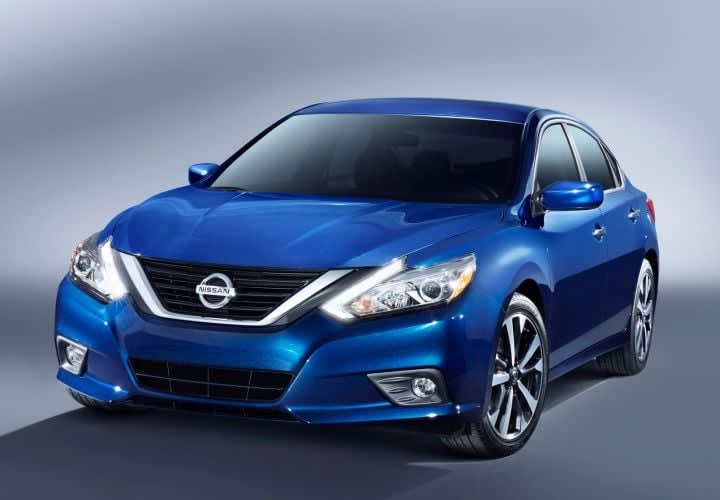
Photo of 2016 Altima courtesy of Nissan.
2 min to read
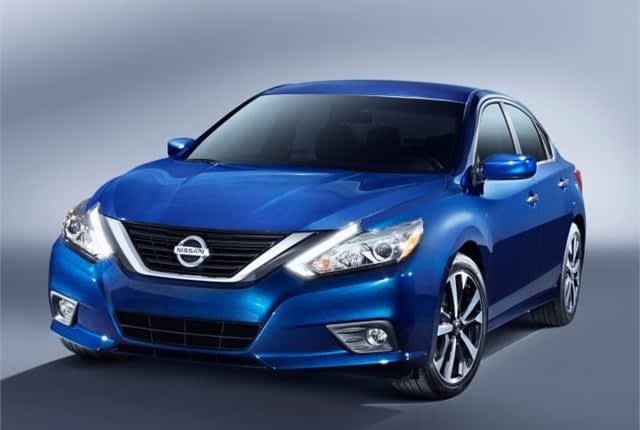
Photo of 2016 Altima courtesy of Nissan.
Nissan has revised its Altima sedan for the 2016 model year by freshening the styling, enhancing performance, and adding new safety features, the company has announced.
The Altima, which was the sixth most registered intermediate or full-size car in fleets in 2013, gets the 2016 polish in its fifth generation that started with the 2013-MY.
The most noticeable exterior styling updates include a new front end with new fascia, bumper, fenders, hood and lights. The 2016 Altima gets the new V-Motion grille and boomerang-shape headlights similar to those found on the Murano and Maxima.
Nissan is offering the Altima in the 2.5 base, 2.5 S, 2.5 SR, 2.5 SV, 2.5 SL, 3.5 SR, and 3.5 SL trim levels. The SR is a new sports model. The five 2.5-liter models feature a 182-hp 2.5-liter DOHC inline 4-cylinder engine, while 3.5-liter Altimas offer a 270-hp 3.5-liter DOHC V-6.
The reshaped headlight units incorporate halogen high beam and projector low beam lights. LED projector low beam lights and LED signature daytime running lights that sweep into the wide raised hood are standard on Altima 3.5 SR and 3.5 SL grades and available on 2.5 SR and 2.5 SL.
The new Altima improves coefficient of drag by 10 percent to 0.26 CD from the previous 0.29 CD with the addition of an active grille shutter, underfloor aero cover additions and the new front and rear fascia and windshield designs.
Expanded Altima safety features branded as Safety Shield Technologies include Predictive Forward Collision Warning, Forward Emergency Braking, Intelligent Cruise Control and Rear Cross Traffic Alert.
The 2016 Altima is expected to go on sale in November. Commercial fleets registered 7,681 Altima sedans in 2013, according to Automotive Fleet data.
More Operations

Sponsored•October 14, 2026
A buyer's guide to fleet management software in 2027
Buying fleet management software in 2027 means looking beyond features and price. As fleet operations, technology and expectations evolve, this guide explores what today’s fleet professionals should consider when choosing a system that can deliver value now and adapt to what comes next.
Read More →
What Will Shape the Next Era of Fleet Management?
EVs, AI, and autonomous vehicles are reshaping fleet management. Discover what’s ahead—and how fleet leaders can prepare for the next era.
Read More →
How Fleets Can Recruit and Train Veterans for Technician Roles
Here's how the technician shortage has affected uptime for fleets, and what to do about it.
Read More →

Avis Budget Group Deploys Neology Toll Management Technology Across Major Brands
Neology’s neoFleet platform will manage toll transactions and toll-authority operations for vehicles across Avis, Budget, Payless, Budget Truck and Zipcar.
Read More →
Fleet Personal-Use Charges Edge Higher in 2026
Nearly eight in 10 surveyed fleets allow personal use of company vehicles, while just over half of respondents report charging employees for the privilege.
Read More →
The Future of Fleet + What’s Changing Right Now | AF News Recap
Could developments overseas offer a preview of what’s coming for U.S. fleets? This week, we’re looking at the future of AI, autonomy, and electrification, plus Ford Pro’s new certified pre-owned program, smarter vehicle offboarding, and a new way for fleets to manage toll expenses.
Read More →
How to Handle Vehicle Offboarding
What do fleet managers need to do when a driver leaves?
Read More →
Sponsored•October 1, 2026
Fleet Manager’s Ultimate Playbook: Navigating the New Standard in OEM Connectivity
Rising operating costs, driver safety concerns, and unplanned downtime are putting unprecedented pressure on modern fleets. Discover how fleet managers use embedded OEM connectivity and real-time vehicle data to cut TCO, prevent downtime, and protect drivers without aftermarket telematics hardware.
Read More →
U.S. Bank Adds Verra Mobility Toll Management to Voyager Fleet Platform
The integration allows U.S. Bank Voyager fleet customers to manage toll payments and violations alongside fuel, EV charging and maintenance expenses.
Read More →
ADAS Prevents Crashes. But Repairs Cost More | AF News Recap
ADAS-equipped vehicles may crash less often, but they can cost more when they do. This week, we’re breaking down what that tradeoff means for fleets, plus Subaru’s first Forester Wilderness Hybrid, Nissan’s new e-POWER Rogue, and why Calstart has become Catalyst Mobility.
Read More →