




2015 Silverado Offers Trio of EcoTec3 Engines
The 2015 Chevrolet Silverado offers three EcoTec3 engines with advanced fuel-saving technologies that enable fleets to choose the performance and fuel efficiency that best meets their needs.
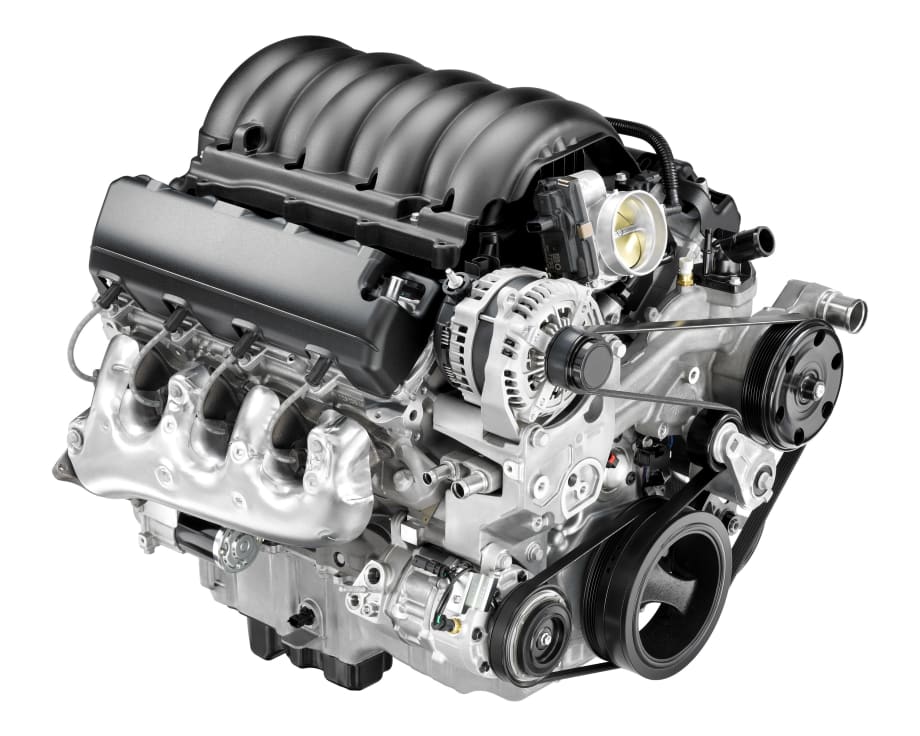
2014 5.3L V-8 EcoTec3 AFM VVT DI (L83) for Chevrolet Silverado and GMC Sierra. (PHOTO: General Motors)
2014 5.3L V-8 EcoTec3 AFM VVT DI (L83) for Chevrolet Silverado and GMC Sierra. (PHOTO: General Motors)
The 2015 Chevrolet Silverado offers three EcoTec3 engines with advanced fuel-saving technologies that enable fleets to choose the performance and fuel efficiency that best meets their needs, according to General Motors, and are:
4.3L V-6; 285 horsepower; 305 lb.-ft. of torque; up to 24 mpg EPA highway
5.3L V-8; 355 horsepower; 383 lb.-ft. of torque; up to 23 mpg EPA highway
6.2L V-8; 420 horsepower; 460 lb.-ft. of torque; up to 21 mpg EPA highway
Every EcoTec3 engine features advanced technologies such as direct fuel injection, continuously variable valve timing, and Active Fuel Management (cylinder deactivation) to provide power, torque, and efficiency across a broad range of operating conditions, according to the automaker.
“The latest Small Block engines are ideally suited to Silverado and to the tough jobs that pickup customers do every day,” said Jordan Lee, global chief engineer and program manager for Small Block engines at General Motors. “We give customers the power and torque of a full-size truck engine when they need it, then use Active Fuel Management and other advanced technologies to seamlessly shift to four-cylinder operation when the truck is under light loads, making the most of fuel efficiency.”
Silverado’s EcoTec3 engines are direct descendants of the original Small Block Chevy V-8, and benefit from more than 60 years – and more than 100 million engines’ worth – of continuous improvement.
The latest Gen 5 Small Block engine has endured tough testing, including a grueling performance durability procedure, where it was subjected to a high-speed/high-load torture session that simulated full-throttle blasts from the equivalent of 0 to 120 mph. With simulated transmission shift points inserted during the high-load test, the engine cycles non-stop between peak torque and peak horsepower for hundreds of hours – the equivalent of thousands of miles.
Testing on the Gen 5 Small Block engines include:
Severe thermal cycle testing, which quickly cycles the engine between extreme cold and hot coolant temperatures to validate the durability of engine components such as the head gaskets, exhaust manifolds and more.
The “hot scuff” test, in which a brand-new engine – or “green” engine to the engineers – is run at wide-open throttle with no break-in period, helping test critical engine parts such as bearings, piston ring sealing and bore scuffing.
Active Fuel Management (AFM) validation, which cycled the engine in and out of the cylinder-deactivating feature hundreds of thousands of times at a variety of engine speeds to ensure the performance and durability of its unique valve lifters.
Additionally, 2015 marks the 10th anniversary of AFM, the cylinder deactivation technology that improves fuel economy in trucks by seamlessly switching to four-cylinder mode to help save fuel during light-load driving. Introduced in 2005, it is currently available on the 2015 Chevrolet Silverado, Tahoe, Suburban, Camaro and Corvette.
More Operations

Fleet Has a Talent Pipeline Problem. What Comes Next? | AF News Recap
Where will fleet’s next generation of leaders come from? This week, we’re looking at the industry’s talent pipeline, what certification can add to a fleet career, how to build an award-worthy track record, and the return of Automotive Fleet’s Personal Use Survey.
Read More →
Smith System Launches Driver Risk Management Program
Fleets have more driver data than ever, but identifying risky behavior doesn't necessarily correct it. Smith System's new Driver Risk Management program combines monitoring, training, and follow-up coaching to help fleets connect risk signals with driver intervention.
Read More →
Automotive Fleet Opens 2026 Personal Use Survey for Commercial Fleet Managers
Less than two weeks left! Commercial and corporate fleet managers are invited to share how their organizations handle company vehicle personal-use policies, charges, and driver eligibility.
Read More →
From AI Prompts to AI-Generated Safety Songs | AF News Recap
Can better prompts make AI more useful for fleet managers? This week, we’re breaking down smarter fleet analysis, an AI-assisted experiment that turned safety training into music, and what happened to fuel prices in August.
Read More →
How to Write Better AI Prompts for Fleet Analysis
Include these six elements in your fleet prompts to generate more relevant analysis and accurate answers.
Read More →
Fleet Meets: Eric Kilgore
This edition of the Fleet Meets series features one of the industry's best leaders driving multi-market and national operations.
Read More →
Why Reactive Fleet Management Is Becoming Too Expensive to Sustain
Research highlights a growing need for proactive management strategies to address rising costs in fleet operations effectively.
Read More →
What Your Fleet KPIs Aren’t Telling You
Tracking fleet metrics is only useful when the data leads to better decisions. This guide helps fleet leaders assess cost, utilization, and downtime more accurately, identify performance gaps, and prioritize the actions that can improve operational results.
Read More →
Hidden in Plain Sight: Fleet Compliance Risks
Fleet compliance isn't just about having policies — it's about consistently enforcing them. This practical guide reveals six hidden compliance risks common in public sector and shared fleet operations and outlines proven strategies to improve visibility, accountability, and audit readiness
Read More →
Turning Fleet Payment Data into Executive Insights
Does data alone drive results in operations?
Read More →