




2014 Fiat 500L, Jeep Cherokee Named Top Safety Picks
In recent IIHS crash tests, the vehicles recorded the highest-possible rating of “good.”
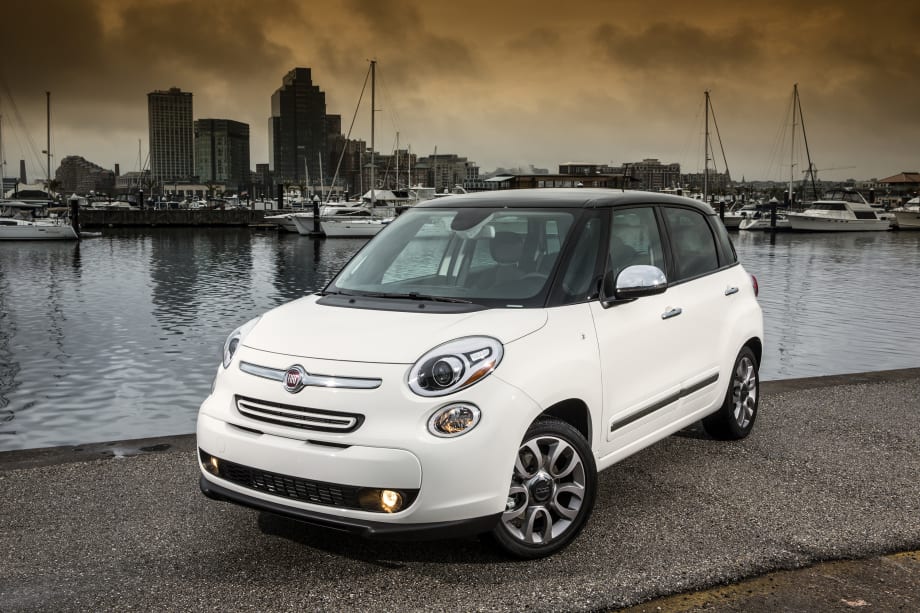
2014 Fiat 500L
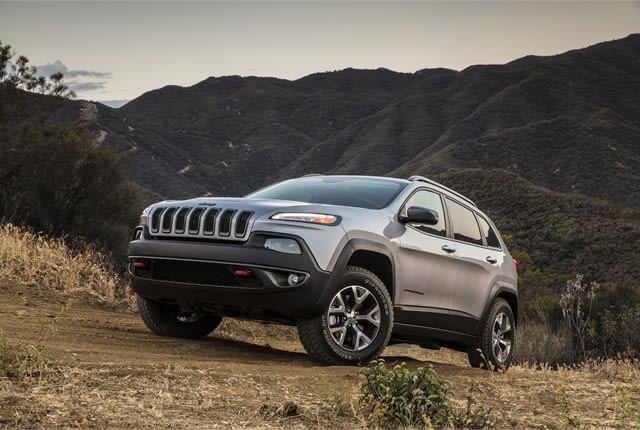
2014 Jeep Cherokee
The Insurance Institute of Highway Safety (IIHS) this week designated both the 2014 model-year Fiat 500L and the 2014 model-year Jeep Cherokee as “Top Safety Picks,” based on their performance in recent crash tests.
In the past 10 months, a total of 14 Chrysler Group vehicles have earned the Top Safety Pick designation. Top Safety Pick testing simulates a side impact, front moderate-overlap impact, roof-crush consistent with a rollover, and a rear collision capable of inducing whiplash. In each of these tests, both the 2014 MY Fiat 500L and Jeep Cherokee recorded the highest-possible rating of “good.”
The other Chrysler Group vehicles that have drawn the Top Safety Pick honor in the past 10 months include:
• The 2013 Fiat 500 minicar
• 2013 Chrysler 300 and Dodge Charger large family cars
• 2013 Chrysler Town & Country and Dodge Grand Caravan minivans
• 2013 Dodge Journey, 2014 Durango and 2014 Jeep Grand Cherokee mid-size SUVs
• 2014 Jeep Patriot small SUV.

2014 Fiat 500L
[PAGEBREAK]
Three additional 2013 vehicles – the Dodge Dart in the IIHS small-car category and the Dodge Avenger and Chrysler 200 sedans among mid-size, moderately priced cars – share not only Top Safety Pick ratings but also the new IIHS Top Safety Pick+ award for superior performance in a small overlap front-crash test.
Among the more than 40 available safety and security features on the all-new 2014 Fiat 500L are technologies designed to mitigate the impact of collisions, such as:
• Advanced multistage air bags, which inflate with a force appropriate to the severity of the impact. The design includes tethers to shape the air bag (standard).
• Full-length side-curtain air bags, which extend protection to all outboard front- and rear-seat passengers. Each side air bag has its own impact sensor that triggers deployment on the side where an impact occurs (standard).
• Driver’s-side knee air bag, which deploys with the driver’s advanced multistage air bag. Located below the instrument panel, this air bag is designed to properly position the occupant during impact and offer additional lower leg protection (standard).
• Seat-mounted side pelvic-thorax air bags, which provide enhanced protection to the driver and front outboard passenger in certain impacts. Each side air bag has its own impact sensor that triggers deployment on the side where an impact occurs (standard).
• Reactive head restraints, which deploy in the event of a rear collision by minimizing the gap between the heads of the driver and front passenger and their respective head restraints (standard).
• Three second-row head restraints (standard).
• Seat belt pretensioners, which remove slack from the seat belt system to reduce forward movement of the occupant’s body, thereby maximizing the system’s efficiency. They are activated by impact sensors (standard).
• Digressive load limited retractors, which regulate force exerted on the occupant by the seat belt and then gradually release seat belt webbing in a controlled manner. The system features a digressive load limiter for the driver and the front passenger (standard).
• Three-point seat belts for front occupants. All rear-seating positions have lap and shoulder belts (standard).
• Energy management system of three front load paths designed from high-strength steel manage vehicle crush and minimize cabin intrusion.
• Crumple zones designed to deform during an accident to absorb energy from an impact, which decreases transfer of that energy to occupants.
• Safety cage body structure, which protects occupants by managing and controlling energy in the event of an impact (standard).
• Side guard door beams, which provide occupant protection during a side impact.
• Daytime running lamps for additional forward illumination. The all-new 2014 Jeep Cherokee boasts more than 70 available safety and security features, many of which – such as the Cherokee’s 65-percent content-ratio of advanced-technology steel and 10 standard air bags – help protect in the event of collision.
[PAGEBREAK]
The 2014 Jeep Cherokee safety features include:
• Advanced multistage driver and front passenger air bags, which inflate with force appropriate to the severity of the impact. They meet FMVSS 208 advanced air bag requirements for smaller, out-of-position occupants.
• All-row full-length side-curtain air bags, which extend protection to all outboard front- and rear-seat passengers. Housed in the headliner above the side windows, each side air bag has its own impact sensor that triggers deployment on the side where an impact occurs.
• Front-seat and rear-seat-mounted side pelvic thorax bags, which provide enhanced protection to the driver and front and rear outboard passenger in certain impacts. Each side air bag has its own impact sensor that triggers deployment on the side where an impact occurs.
• Driver’s-side knee air bag deploys with the advanced multistage driver air bag. Located below the instrument panel, this air bag is designed to properly position the occupant during impact and offer additional lower leg protection.
• Front-passenger knee air bag deploys with the advanced multistage front passenger air bag. Located below the instrument panel, this air bag is designed to properly position the occupant during impact and offer additional lower leg protection.
• Front and rear crumple zones comprising specially formed structural members that absorb energy in a collision, helping protect the occupant cabin.
• Safety cage body structure to help protect occupants by managing and controlling energy in the event of an impact.
• Side guard door beams, consisting of reinforcement beams inside the doors that increase occupant protection in a side collision.
• Front seat-belt adaptive/active load limiters, which are designed to optimize chest loading in an impact event.
• Reactive head restraints that deploy in the event of a rear collision. They are designed to reduce injuries by minimizing the gap between the head restraint and the occupant’s head.
• Front seat-belt pretensioners, which remove slack in the seat belt system, thereby reducing the forward movement of the occupant’s head and torso. They are activated by impact sensors.
• Energy-absorbing steering column, which uses two hydroformed coaxial tubes that can move relative to each other, allowing the column to move forward for enhanced energy absorption during a crash. The feature employs a calibrated bending element that deforms during column stroke for optimal energy management.
More Safety

Nexar-Nauto Merger Aims to Give Fleets Better Safety Intelligence Through Larger Driving Dataset
Stefan Heck tells Automotive Fleet that combining more than 10 billion miles of driving history with Nexar's AI models will give fleets deeper insights into driver risk and roadway conditions than either company could provide independently.
Read More →
Don't Wait for a Crisis: 5 Ways to Build Mental Health Into Your Fleet Safety Program
For Suicide Prevention Month, fleet and safety leaders have an opportunity to put mental health where it belongs: at the center of workplace safety.
Read More →
How Camera Data Can Strengthen a Fleet’s Insurance Renewal
Insights from a commercial insurance carrier and a broker show how fleets can turn video telematic data, driver coaching, and improved claims results into a stronger case at insurance renewal.
Read More →
The Safest Fleets Aren’t the Ones with the Most Technology
You’ve made the telematics investment. Here’s how to capture the other half of its value and build the safest fleet on the road.
Read More →
Hidden in Plain Sight: Fleet Compliance Risks
Fleet compliance isn't just about having policies — it's about consistently enforcing them. This practical guide reveals six hidden compliance risks common in public sector and shared fleet operations and outlines proven strategies to improve visibility, accountability, and audit readiness
Read More →
NETS Sets 2026 Fleet Safety Benchmark Conference for Indianapolis
The Sept. 15–17 program will feature fleet benchmarking data, case studies, emerging technologies, and implementation strategies while running alongside the NSC Safety Congress & Expo.
Read More →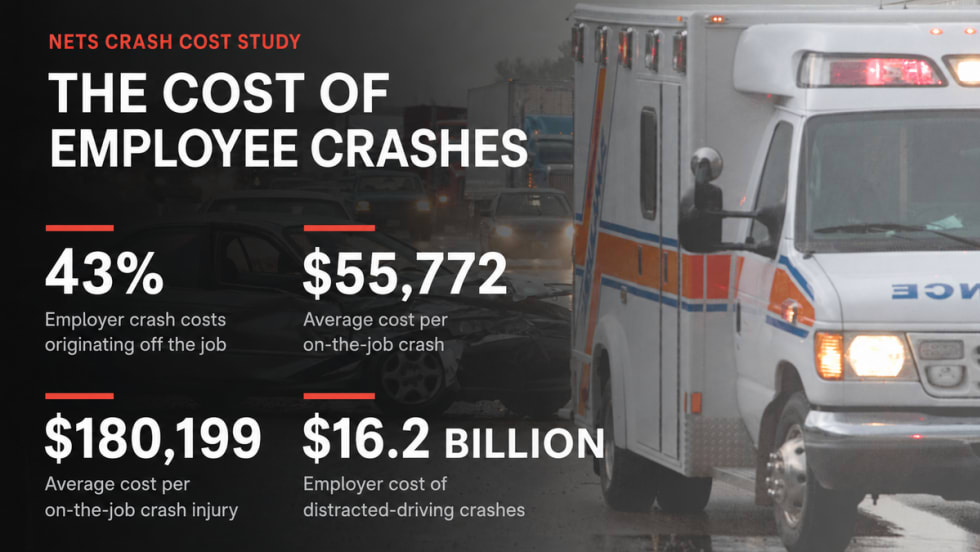
Off-the-Job Crashes Account for 43% of Employers’ $61.7 Billion Crash Burden
NETS quantifies costs dispersed across fleet, risk, HR, and other departments while providing new per-crash benchmarks for employers.
Read More →
Ram Recalls More Than 1.27 Million 1500 Pickups for Seat Belt Anchor Issue
The recall affects certain 2019-2026 Ram 1500 pickups that may have improperly attached second-row seat belt buckle anchors.
Read More →
How Better Visibility Cut Speeding Violations by 48%
Fleet leaders don't need more data, they need clearer visibility into what the data is saying. This case study explores how one utility replaced speeding-event counts with a single metric — miles driven in violation — to strengthen safety and significantly reduce speeding violations.
Read More →
Operation Safe Driver Week: Why the Industry's Oldest Safety Campaign Still Matters to Fleets
A look at how a 2007 enforcement initiative became one of the most consequential weeks on the fleet safety calendar, and what it means for your drivers in 2026.
Read More →