




2012 Ford Focus to Offer New Safety Features
DEARBORN, MI - Ford safety engineers in the U.S. and Germany crash tested the new 2012 Ford Focus more than 12,000 times in real and virtual worlds to prove out new technologies designed to protect occupants in crashes, Ford Motor Co. said.
DEARBORN, MI - Ford safety engineers in the U.S. and Germany crash tested the new 2012 Ford Focus more than 12,000 times in real and virtual worlds to prove out new technologies designed to protect occupants in crashes, Ford Motor Co. said.
The new Focus, which debuts around the world starting early next year, underwent a testing regimen of occupant and full-vehicle computer simulations. Those simulations have become so realistic, according to Ford, that physical vehicle crash tests have been significantly reduced.
"Developing the Focus to meet the global safety standards has resulted in improved crash performance to help protect occupants in crashes," said Matt Niesluchowski, Focus safety manager. "Ford's safety team had a head start in working together around the world, which helped tremendously in ensuring the new Focus meets or exceeds a complex web of global safety regulations."
The thousands of computer-aided engineering (CAE) crashes and simulations allowed engineers to test hundreds of designs. The physical crash tests, conducted after a battery of virtual simulations, verify and validate the computer simulations to ensure every internal and external requirement is met, according to Ford.
"We are using more computer simulations than ever to optimize the designs of all the components that make up a vehicle to help enhance safety," Niesluchowski said. "The complexity of crash tests, with hundreds of parts and systems interacting, still requires physical testing to validate those simulation results."
The Focus offers a suite of new safety innovations, which includes Ford's next-generation driver-front airbag with enhanced chest protection technology. The new airbag uses a reconfigured curve-shaped tether system that pulls in the lower section to create a "pocket" to help lessen the impact of the airbag on the driver's chest and ribs in frontal crashes.
Ford's side airbags feature shoulder vents that stay open and reduce pressure for smaller occupants who typically benefit from reduced forces. Taller occupants whose shoulders block the vent could benefit from the higher pressures.
The Focus also will be Ford's first car to feature front passenger airbags with adaptive venting technology that diverts some of the gas from the air bag inflators through vents outside of the airbags. The restraints control module -- the control center of Ford's advanced safety systems -- adjusts the level of venting based on seat position.
The new passenger airbag is designed to enhance head and neck protection by better matching deployment force with occupant size. This system uses a small pyrotechnic device to force open the vent and can provide less pressure in the airbag when it's sufficient to help protect the occupant.
In addition to the new airbags, the new Focus' vehicle structure provides improved crash protection with a B-pillar reinforcement, a key structural part made from ultra-high-strength steel produced using the "tailor rolling" process, according to Ford. The process allows the thickness of the steel sheet to be varied along its length so the component has increased strength in the areas that are subjected to the greatest loads.
High-strength steels comprise 55 percent of the Focus' body shell, and ultra-high-strength and boron steels make up more than 31 percent of its skeletal structure. These advanced materials help the structure meet crash regulations across world markets while minimizing the vehicle's weight to help maximize fuel economy.
The Ford Focus also features a suite of advanced active safety technologies, including:
AdvanceTrac with electronic stability control, anti-lock braking system (ABS) and traction control
LATCH (Lower Anchors and Tethers for CHildren) System
Three-point, height-adjustable seat belts for each passenger; height-adjustable, Belt-Minder system and pretensioners in the front outboard seating positions
More Safety

Nexar-Nauto Merger Aims to Give Fleets Better Safety Intelligence Through Larger Driving Dataset
Stefan Heck tells Automotive Fleet that combining more than 10 billion miles of driving history with Nexar's AI models will give fleets deeper insights into driver risk and roadway conditions than either company could provide independently.
Read More →
Don't Wait for a Crisis: 5 Ways to Build Mental Health Into Your Fleet Safety Program
For Suicide Prevention Month, fleet and safety leaders have an opportunity to put mental health where it belongs: at the center of workplace safety.
Read More →
How Camera Data Can Strengthen a Fleet’s Insurance Renewal
Insights from a commercial insurance carrier and a broker show how fleets can turn video telematic data, driver coaching, and improved claims results into a stronger case at insurance renewal.
Read More →
The Safest Fleets Aren’t the Ones with the Most Technology
You’ve made the telematics investment. Here’s how to capture the other half of its value and build the safest fleet on the road.
Read More →
Hidden in Plain Sight: Fleet Compliance Risks
Fleet compliance isn't just about having policies — it's about consistently enforcing them. This practical guide reveals six hidden compliance risks common in public sector and shared fleet operations and outlines proven strategies to improve visibility, accountability, and audit readiness
Read More →
NETS Sets 2026 Fleet Safety Benchmark Conference for Indianapolis
The Sept. 15–17 program will feature fleet benchmarking data, case studies, emerging technologies, and implementation strategies while running alongside the NSC Safety Congress & Expo.
Read More →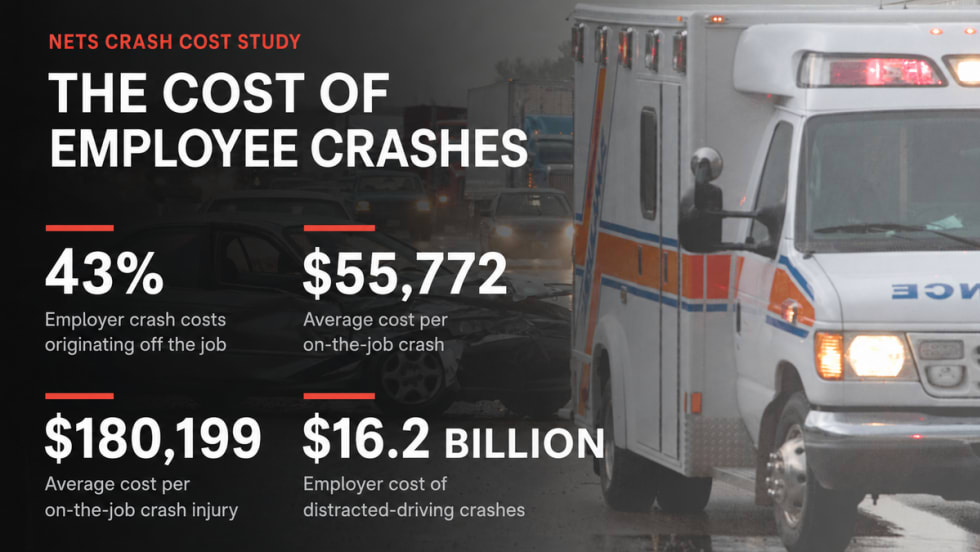
Off-the-Job Crashes Account for 43% of Employers’ $61.7 Billion Crash Burden
NETS quantifies costs dispersed across fleet, risk, HR, and other departments while providing new per-crash benchmarks for employers.
Read More →
Ram Recalls More Than 1.27 Million 1500 Pickups for Seat Belt Anchor Issue
The recall affects certain 2019-2026 Ram 1500 pickups that may have improperly attached second-row seat belt buckle anchors.
Read More →
How Better Visibility Cut Speeding Violations by 48%
Fleet leaders don't need more data, they need clearer visibility into what the data is saying. This case study explores how one utility replaced speeding-event counts with a single metric — miles driven in violation — to strengthen safety and significantly reduce speeding violations.
Read More →
Operation Safe Driver Week: Why the Industry's Oldest Safety Campaign Still Matters to Fleets
A look at how a 2007 enforcement initiative became one of the most consequential weeks on the fleet safety calendar, and what it means for your drivers in 2026.
Read More →