




2012 Buick LaCrosse with eAssist to Achieve 37 MPG
LOS ANGELES - Buick unveiled the 2012 LaCrosse with eAssist, a new fuel-saving technology that increases fuel economy by 25 percent compared to the four-cylinder/six-speed powertrain in the 2011 LaCrosse.
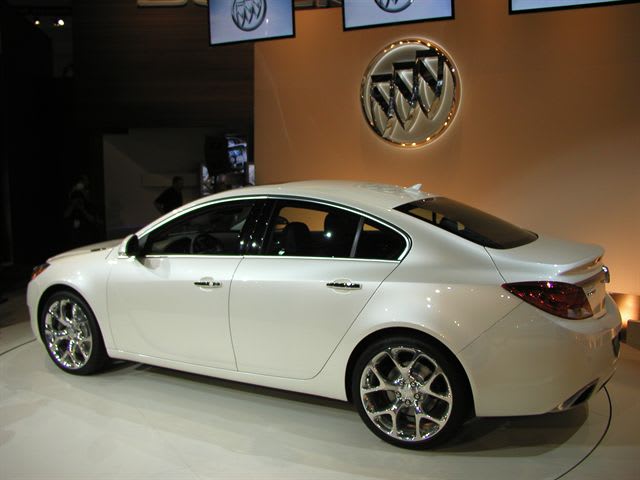
The Buick LaCrosse with eAssist was revealed at the 2010 LA Auto Show.
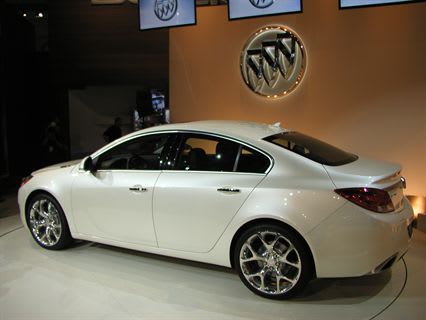
LOS ANGELES - Buick unveiled the 2012 LaCrosse with eAssist, a new fuel-saving technology that increases fuel economy by 25 percent compared to the four-cylinder/six-speed powertrain in the 2011 LaCrosse. The eAssist technology provides class-leading highway fuel economy of 37 mpg, while maintaining the luxury, performance and value expected from Buick's flagship sedan.
The eAssist system becomes the standard powertrain on LaCrosse starting next summer. The system uses a state-of-the-art lithium-ion battery system and electric motor-generator to enable regenerative braking capability to improve LaCrosse fuel economy by an estimated 25 percent.
Mated to a 2.4L Ecotec direct injection four-cylinder engine and next-generation six-speed automatic transmission, the eAssist system uses power stored in the battery to provide needed electrical boost in various driving scenarios, optimizing engine and transmission operation. An advanced 115V lithium-ion battery and latest-generation 15-kW motor-generator unit help increase fuel economy through:
Regenerative braking, which provides up to 15 kW of electricity to charge the battery.
Providing up to 11 kW (15 hp) of electric power assistance during acceleration.
Automatic engine shut-off when the vehicle is stopped.
Aggressive fuel cut-off during deceleration down to zero vehicle speed, enabled by the torque smoothing provided by the motor-generator unit.
Intelligent charge/discharge of the high-voltage battery.
Buick LaCrosse with eAssist technology also features improved underbody aerodynamics and tires optimized for performance and fuel economy, as well as active control of front-end airflow that improves aerodynamics and engine warm-up. Electronically controlled shutters in the lower grille close at higher speeds to push more air over the vehicle, which increases aerodynamic efficiency to enhance fuel economy. All of these technologies increase the eAssist system's regenerative braking capability, while also improving the vehicle's efficiency while driving.
LaCrosse with eAssist includes an ECO gauge on the instrument panel that continuously responds to driving behavior, enabling the driver to drive with maximum efficiency. It also features a hill-assist system that captures brake pressure to help the driver more comfortably accelerate from a stop on a moderate or steep grade. It does this by greatly reducing the tendency of the vehicle to roll backward with the engine in shut-down mode.
While the eAssist system shares the same basic belt-alternator-starter configuration of previous BAS designs, it delivers more than three times the power and is much more capable than the previous-generation BAS system, according to the automaker.
More Fuel
Fuel is Just the Start: How Middle East Tensions are Driving Up Fleet Maintenance Costs
The Middle East conflict is doing more than pushing up fuel prices. It’s also raising the cost of key maintenance products your fleet depends on, from motor oil to tires to windshield wipers. Here’s what you need to know about this budget-busting situation.
Read More →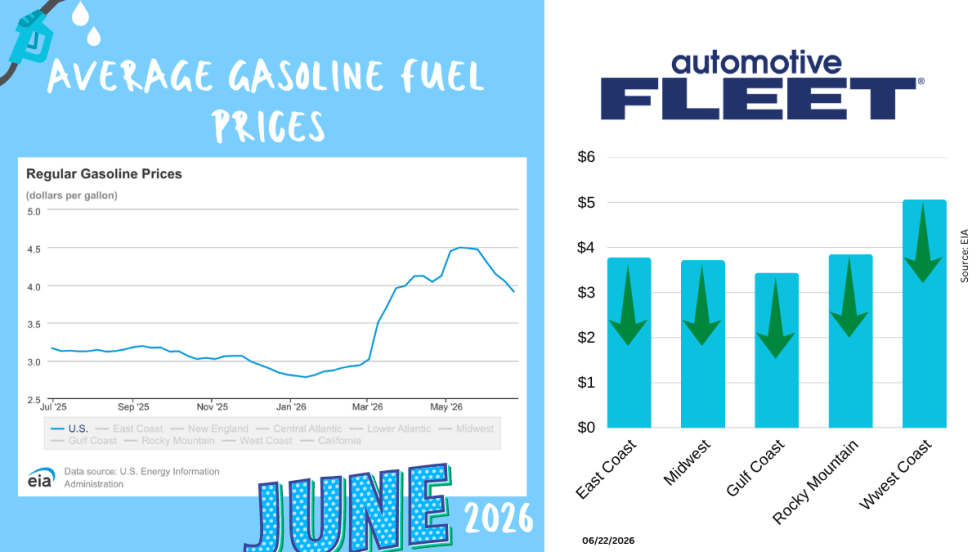
June Fuel Update: Prices Fall Below $4
Drivers are finally getting some relief at the pump. The national average gas price has dropped below $4 a gallon for the first time in months, with prices falling in 47 states as oil markets react to developments in U.S.-Iran negotiations.
Read More →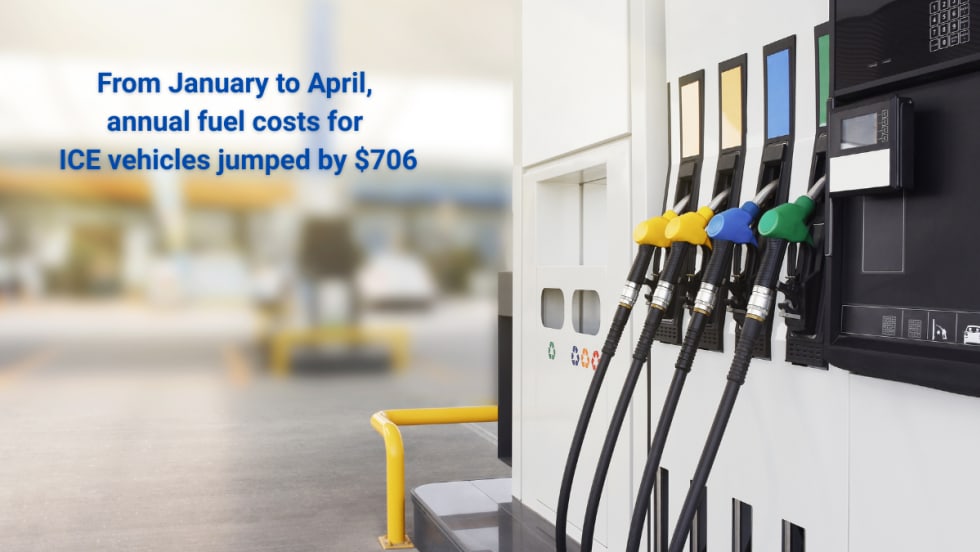
Study: How 2026's Gas Price Hikes Affect Different Vehicle Types
New data from iSeeCars reveals how rising fuel costs have affected different vehicle segments as gasoline prices climbed nearly 46% over the past four months.
Read More →
Are You Tracking Your Fleet's True Total Cost of Ownership?
Bobit Business Media surveyed 190 fleet professionals and found that while most fleets are tracking costs, fragmented systems and data gaps are keeping true TCO visibility out of reach. With rising pressure to control spend in an increasingly volatile environment, the gap between what fleets think they know and what the data actually shows is wider than you might expect. See how your peers are managing costs today and where the industry still has room to improve.
Read More →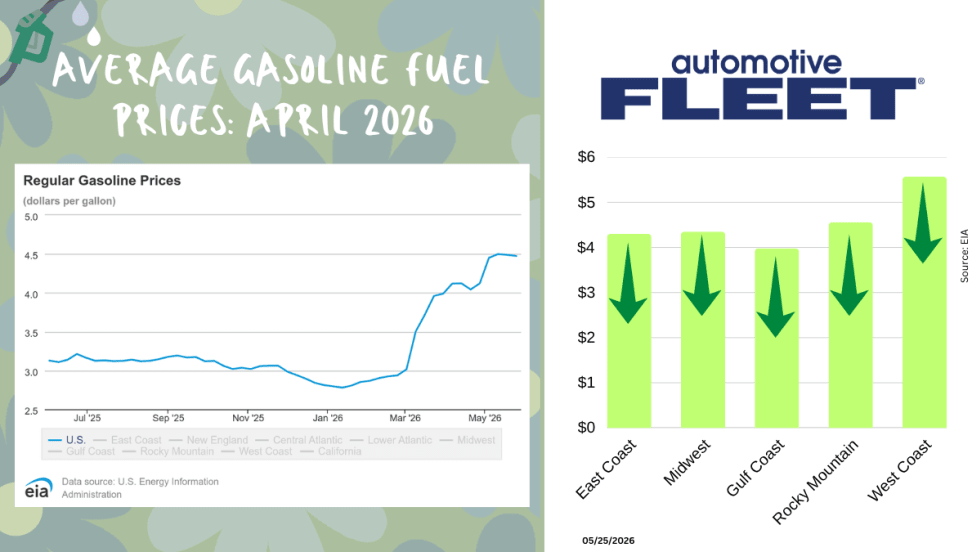
May Fuel Update: All Regions Experience Declines
Gas prices are finally easing in much of the country, but experts warn global tensions could quickly reverse the trend as the national average remains well above last month’s levels.
Read More →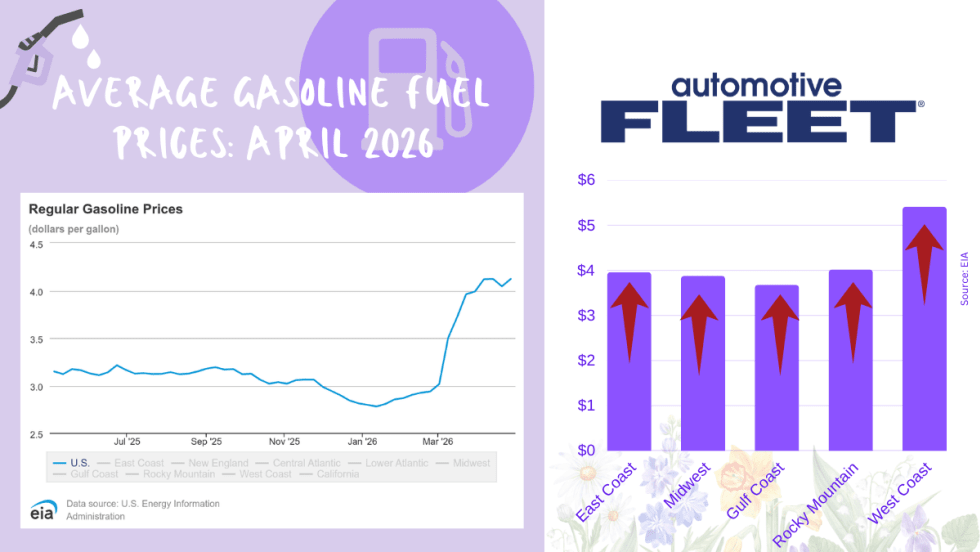
April Fuel Update: Prices Climb Above $4 as Spring Surge Accelerates
National average jumps to $4.04 per gallon, up sharply from last year, with West Coast prices topping $5 and further increases expected amid rising oil tensions.
Read More →
Tips from Fleet Managers on Saving Fuel Costs
Fleet leaders share practical strategies to reduce fuel spend through smarter policy, routing, and driver guidance.
Read More →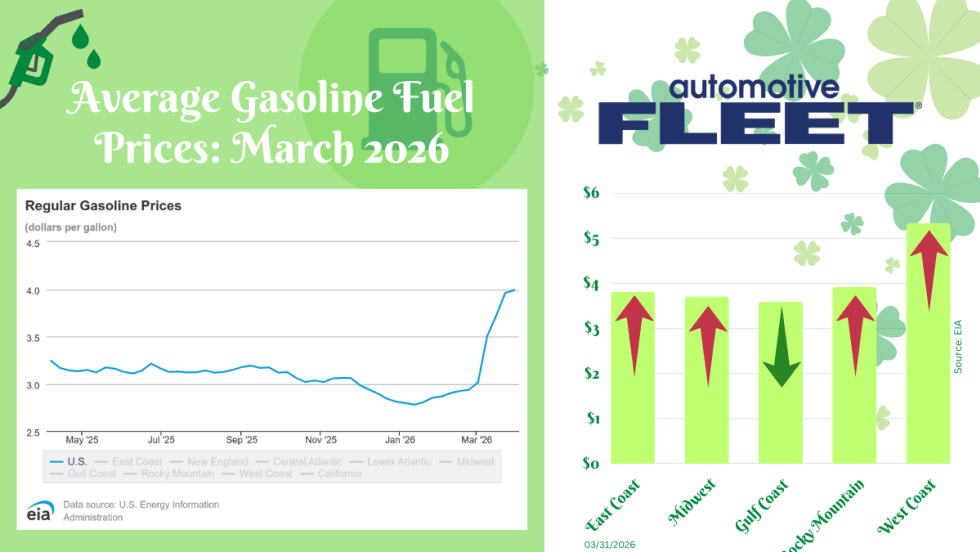
March Fuel Update: Prices Settle With a $4 Average
Fuel prices significantly slowed this week, but a $4 national average is still expected.
Read More →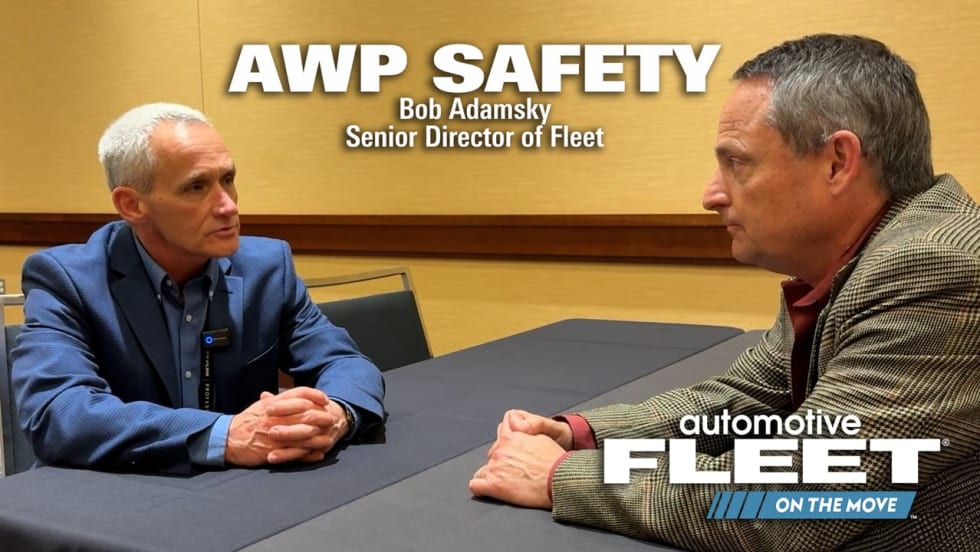
Bob Adamsky on Fuel Volatility: “Don’t Panic — Have a Plan”
With oil prices rising again, AWP Safety’s fleet manager shares how to respond to rising fuel costs and how the right strategy can turn fuel spikes into cost-saving opportunities.
Read More →
Oil Market Turbulence Is Complicating Fleet Cost Planning
Rapid swings in crude oil prices driven by the conflict in the Middle East could create longer-term cost pressures for fleets, affecting fuel prices, supply chains, and vehicle strategy, says NTEA’s Andrew Wrobel.
Read More →