




Miss. Health-Care Provider Adds 125-Vehicle Fleet
A southern Mississippi home health-care provider has set up a 125-vehicle fleet of Ford Focus and Escape vehicles so its workers will no longer have to drive their personal cars.

Photo courtesy of Enterprise.
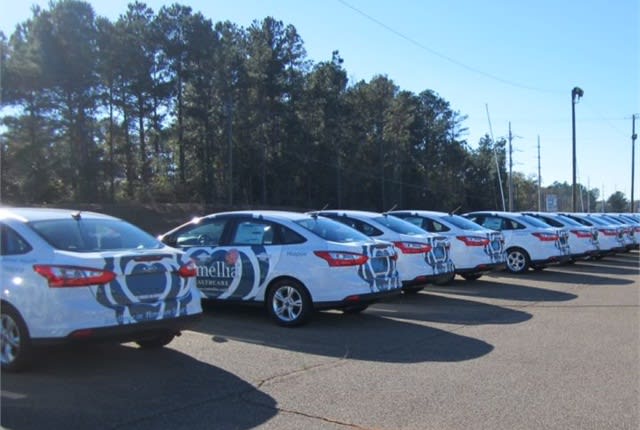
Photo courtesy of Enterprise.
A southern Mississippi home health-care provider has set up a 125-vehicle fleet of Ford Focus and Escape vehicles so its workers will no longer have to drive their personal cars.
The addition of the leased vehicles via Enterprise Fleet Management will help Camellia Home Health and Hospice of Hattiesburg lower operating costs and provide an added benefit to its team members, according to the company.
Camellia is achieving the cost savings by "leveraging Enterprise Fleet Management's buying power, expertise in cycling vehicles out of the fleet at the optimal time, and by providing greater control over maintenance costs for customers," a Camellia spokesperson told Automotive Fleet.
"The decision to switch to providing company vehicles from mileage reimbursement is reducing our expenses and those of our employees while offering employees the benefit of driving vehicles that are safe and reliable," said Abb Payne, Camellia's president and CEO.
Camellia staff log as much as 2.2 million miles per year. Company associates will use fuel cards so fuel purchases and mileage are monitored for each vehicle. Camellia will provide insurance and covers all maintenance expenses.
Camellia provides service to 39 home health and hospice locations in Mississippi, east Louisiana, east Tennessee, and metro Atlanta. Enterprise provides fleet management services for medium-size fleets through regional subsidiaries.
More Operations

The Next Evolution of Fleet Management: Autonomous Operations
This opening keynote session at the Fleet Forward Conference highlights the future of autonomous driving for fleets.
Read More →
How to Reduce the Total Cost of Risk From Catalytic Converter Theft
A stolen catalytic converter can cost fleets far more in downtime and lost productivity than in repairs. A total-cost-of-risk approach can help fleet managers quantify their exposure and prioritize theft prevention.
Read More →
Personal-Use Charges Rise as Vehicle Values Fall | AF News Recap
Personal-use charges are climbing, wholesale used-vehicle values are declining, and commercial fleet sales growth is slowing. This week, we're breaking down the latest fleet data, plus how Element Fleet Management is helping Waymo prepare for its first Canadian robotaxi market.
Read More →

Here's When You Should Make an Exception to Fleet Policy
Fleet policies are designed to create consistency, but not every driver or situation fits neatly within standard rules.
Read More →
AI-Native or AI-Acquired: What Should Fleet Managers Look for in an AI Platform?
Six questions can help fleet managers look beyond AI marketing claims to evaluate integration, data access, and real-world operational performance.
Read More →
A buyer's guide to fleet management software in 2027
Buying fleet management software in 2027 means looking beyond features and price. As fleet operations, technology and expectations evolve, this guide explores what today’s fleet professionals should consider when choosing a system that can deliver value now and adapt to what comes next.
Read More →
What Will Shape the Next Era of Fleet Management?
EVs, AI, and autonomous vehicles are reshaping fleet management. Discover what’s ahead—and how fleet leaders can prepare for the next era.
Read More →
How Fleets Can Recruit and Train Veterans for Technician Roles
Here's how the technician shortage has affected uptime for fleets, and what to do about it.
Read More →
Avis Budget Group Deploys Neology Toll Management Technology Across Major Brands
Neology’s neoFleet platform will manage toll transactions and toll-authority operations for vehicles across Avis, Budget, Payless, Budget Truck and Zipcar.
Read More →
Fleet Personal-Use Charges Edge Higher in 2026
Nearly eight in 10 surveyed fleets allow personal use of company vehicles, while just over half of respondents report charging employees for the privilege.
Read More →