




10 Cars Americans Don't Want to Buy Anymore
The 10 vehicles that spent the longest time on dealer lots in 2014 has been released. The Honda Insight had the longest time to turn spending an average of 100 days longer on a lot than any other vehicle, according to a report from 24/7 Wall St.
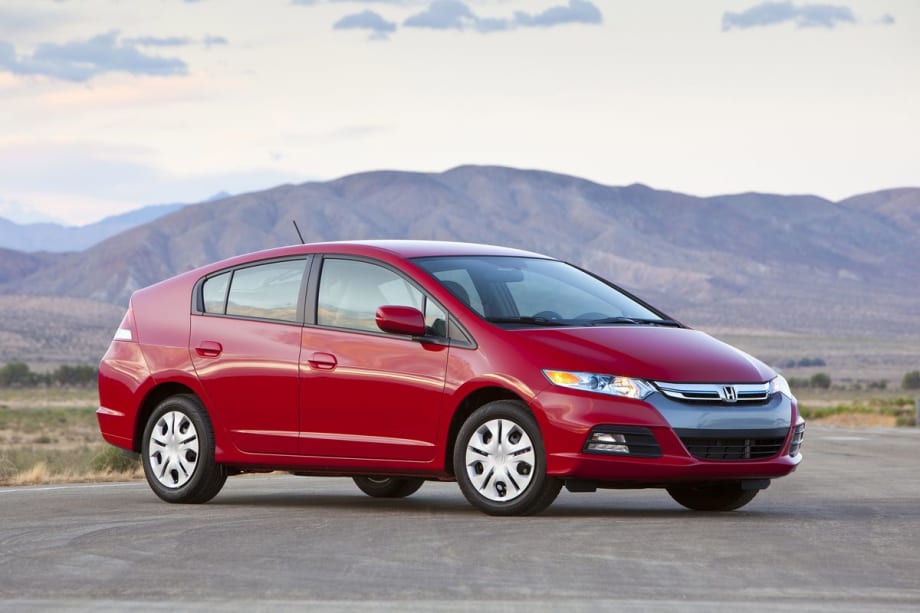
Less than 4,000 Honda Insights were sold in 2014. Photo via Honda
Less than 4,000 Honda Insights were sold in 2014. Photo via Honda
The 10 vehicles that spent the longest time on dealer lots in 2014 has been released. The Honda Insight had the longest time to turn spending an average of 100 days longer on a lot than any other vehicle, according to a report from 24/7 Wall St.
Long turnover time is a result of low car sales and many of these vehicles will be discontinued if they are not already, said Tim Fleming, analyst for Kelley Blue Book, in an interview with 24/7 Wall St.
High turnover time isn’t always due to unpopularity, but rather that it was popular or unpopular relative to the manufacturer’s expectations.
The vehicle faring the best on the list was the Cadillac ATS, with an average of 138.1 days in inventory. The ATS is one of three Cadillac models with the longest days to turn. The Kia Cadenza spent 138.8 average days in inventory, followed by the Volvo XC90, FIAT 500L, Cadillac XTS, Buick Verano, Infiniti Q60, Cadillac ELR, Nissan GT-R, and the vehicle on the bottom of the list was the Honda Insight. In 2014 the Honda Insight took an average of 171 days to sell. The industry-wide average is around 71 days to turn. One possible reasoning behind the long period of time on dealer lots is due to the declining gas prices in the U.S., resulting in less fuel-efficient vehicles being purchased.
Cadillac produced three cars on this list with the longest turnover times. "These vehicles all launched recently as sort of a resurgence for Cadillac," Fleming said. However, "the inventory was not managed properly."
Fleming notes that long turnover time is normal for older vehicles, but “when there’s a newer product that isn’t selling, that’s never a good sign.”
KBB also provided average turnover times from previous years in addition to unit sales figures by make. Click here to read more details.
More Operations

Here's When You Should Make an Exception to Fleet Policy
Fleet policies are designed to create consistency, but not every driver or situation fits neatly within standard rules.
Read More →
AI-Native or AI-Acquired: What Should Fleet Managers Look for in an AI Platform?
Six questions can help fleet managers look beyond AI marketing claims to evaluate integration, data access, and real-world operational performance.
Read More →
A buyer's guide to fleet management software in 2027
Buying fleet management software in 2027 means looking beyond features and price. As fleet operations, technology and expectations evolve, this guide explores what today’s fleet professionals should consider when choosing a system that can deliver value now and adapt to what comes next.
Read More →

What Will Shape the Next Era of Fleet Management?
EVs, AI, and autonomous vehicles are reshaping fleet management. Discover what’s ahead—and how fleet leaders can prepare for the next era.
Read More →
How Fleets Can Recruit and Train Veterans for Technician Roles
Here's how the technician shortage has affected uptime for fleets, and what to do about it.
Read More →
Avis Budget Group Deploys Neology Toll Management Technology Across Major Brands
Neology’s neoFleet platform will manage toll transactions and toll-authority operations for vehicles across Avis, Budget, Payless, Budget Truck and Zipcar.
Read More →
Fleet Personal-Use Charges Edge Higher in 2026
Nearly eight in 10 surveyed fleets allow personal use of company vehicles, while just over half of respondents report charging employees for the privilege.
Read More →
The Future of Fleet + What’s Changing Right Now | AF News Recap
Could developments overseas offer a preview of what’s coming for U.S. fleets? This week, we’re looking at the future of AI, autonomy, and electrification, plus Ford Pro’s new certified pre-owned program, smarter vehicle offboarding, and a new way for fleets to manage toll expenses.
Read More →
How to Handle Vehicle Offboarding
What do fleet managers need to do when a driver leaves?
Read More →
Fleet Manager’s Ultimate Playbook: Navigating the New Standard in OEM Connectivity
Rising operating costs, driver safety concerns, and unplanned downtime are putting unprecedented pressure on modern fleets. Discover how fleet managers use embedded OEM connectivity and real-time vehicle data to cut TCO, prevent downtime, and protect drivers without aftermarket telematics hardware.
Read More →