Automotive Fleet
MenuMENU
SearchSEARCH
Ad Loading...
Market Trends•by Mike Antich•December 5, 2011

Impact of Future CAFE Standards on Resale Values

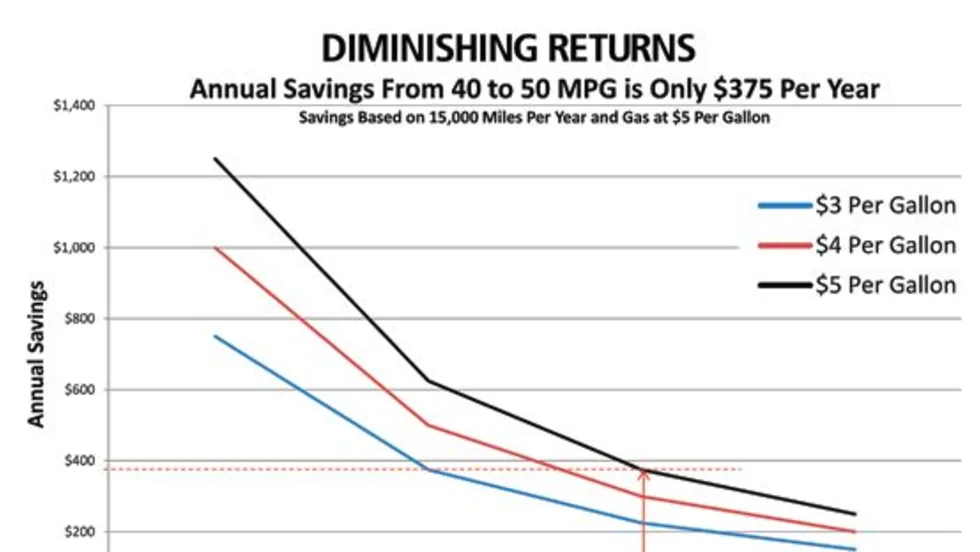
The cost to design and build vehicles to meet the higher 2017-2021 fuelefficiency standards will average an additional $2,000 to $6,000 per vehicle. Proponents of the higher CAFE standards argue the higher acquisition costs will be offset by much greater fuel savings. However, is there a diminishing return on cost savings as fuel efficiency increases? Kelley Blue Book thinks so.

Read More →
Market Trends•by Mike Antich•November 29, 2011

Overloading is the No. 1 Danger Facing Your Fleet

Overloading is an ongoing industry problem. Besides violating numerous state and federal regulations, when a vehicle is overloaded its emergency handling capability is reduced, operating expenses increase, and service lives decrease. Statistics show that overloaded and improperly loaded trucks are among the leading causes of truck accidents and the number one cause of unscheduled maintenance.

Read More →
Market Trends•by Mike Antich•November 22, 2011

Weight Reduction as a Green Fleet Strategy

There's a direct correlation between vehicle weight, fuel consumption, and greenhouse gas (GHG) emissions. Every pound of extra weight requires an engine to work harder, increasing fuel consumption and, as a consequence, increasing tailpipe emissions. For instance, an extra 100 lbs. in vehicle weight can reduce mpg up to 2 percent. If you reduce vehicle weight, you reduce fuel consumption,and, by default, you will decrease emissions. Here are some ways to put your fleet on a "diet."

Read More →
Ad Loading...
Market Trends•by Mike Antich•November 10, 2011

Budget Cutbacks Impacting Turnaround Times on Fleet-Related DMV Services

Decreases in property and sales tax revenues have created budgetary shortfalls for most state governments. Many Department of Motor Vehicles offices have closed branch locations, reduced workforce through layoffs, implemented hiring freezes, shortened hours of operation, eliminated overtime, and instituted work furloughs for remaining employees. In some states, this has increased turnaround times for fleet-related DMV services. Some see this as being an ongoing issue for the years to come.

Read More →
Market Trends•by Mike Antich•October 24, 2011

Higher Operating Costs Forecast for CY-2012

Fleet operating costs are forecast to trend higher in calendar-year 2012. Replacement tire prices are expected to increase 6-10 percent due to higher raw material costs and higher commodity prices. In addition, higher commodity prices will put upward pressure on component costs. Similarly, inflation will put upward pressure on labor rates in high-cost markets. The one bright spot is that fuel prices are forecast to remain at 2011 levels due to the ongoing sluggish economy.

Read More →
Market Trends•by Mike Antich•October 19, 2011

MVRs Miss Many Red-Light Camera Infractions

Leased vehicles are registered in the lessor's name. As a consequence, some drivers with multiple red-light camera violations may go undetected by corporate safety and HR departments. Since a red-light camera violation is charged to the lessor - the registered owner of the vehicle - in many states, it won't appear on the driver's MVR. Because it is likely that red-light camera infractions won't appear on an MVR, an employer won't know they occurred if only relying on MVR violation history.

Read More →
Ad Loading...
Market Trends•by Mike Antich•October 13, 2011

Right-Sizing Is an Easy Way to Green Your Fleet

There’s a direct correlation between vehicle weight, fuel economy, and greenhouse gas (GHG) emissions. Ultimately, the fleet application dictates vehicle size. But when it is possible to do so, right-sizing vehicles reduces fuel consumption, which, in turn, reduces GHG emissions. Right-sizing is a complex strategy that goes far beyond simply downsizing to a smaller class of vehicle.

Read More →
In Memoriam: Coach's Insights•by Ed Bobit•October 11, 2011

Consider Complete Safety Knowledge for Your Own Job Safety

With so many other corporate departments interested in a company’s overall welfare, you have an obligation to prioritize the prudent care of your drivers. If ignored, you are vulnerable.

Read More →
Market Trends•by Mike Antich•September 30, 2011

Pros & Cons of New Medium- & Heavy-Duty Truck Fuel Standards

Medium- and heavy-duty trucks comprise 4 percent of the total vehicles on the road, but account for 20 percent of the fuel consumed and 20 percent of the greenhouse gases (GHG) emitted by the transportation sector. Now, for the first-time ever, fuel economy standards for heavy- and medium-duty trucks over 8,500 lbs. will be regulated by the federal government. Here are the pros and cons of this new mandate.

Read More →
Ad Loading...
Market Trends•by Mike Antich•September 13, 2011

Resale Values Forecast to Decline 10-15% by 2014 as Used-Vehicle Supply Increases

Today’s high resale values are an anomaly caused by the shortage of used vehicles in the wholesale market due to the extremely low sales of new vehicles during the 2008-2011 timeframe. Nowadays, everyone is a hero when it comes to getting top dollar for their out-of-service fleet vehicles. However, these artificially high prices will ultimately decline as used-vehicle supply increases.

Read More →
Market Trends•by Mike Antich•September 2, 2011

Modifying Driver Behavior: The 'Last Mile' in Greening a Fleet

If you are constrained by equipment limitations, the "last mile" to achieving corporate sustainability objectives is modifying driver behavior. This is possibly the greatest opportunity available to fleet managers to green their fleets.

Read More →
Market Trends•by Mike Antich•August 16, 2011

Vehicle Remote Starting and Door Unlocking Can be Hacked

Recently, a security systems consultant demonstrated that the technology used to link a car to a smart phone can be hacked to gain control of these vehicle functions. The demonstration showed that the wireless communication protocols between a server and a vehicle can be intercepted allowing a hacker to “reverse engineer” the encrypted software protocols. Once the software protocols are replicated, a hacker can maliciously communicate with a vehicle to unlock doors or start the engine.

Read More →