




The Emergence of e-Plates to Track Fleet Assets
I enjoy following the fleet management industry in the UK since it is among the most sophisticated in the world. Innovative trends often first appear in the UK, which makes for interesting conjecture as to whether they may be a prelude to what might emerge in the U.S. fleet market. One recent development was a controversial decision to test radio frequency identification (RFID) chips embedded in the license plates of vehicles. The UK Ministry of Transport gave the official go-ahead in August
The U.S. is Closely Watching
State officials in the U.S. say they’ll be closely watching the UK trial. “We definitely have an interest in testing an RFID-tagged license plate,” said Jerry Dike, chairman of the American Association of Motor Vehicle Administrators and director of the Vehicle Titles and Registration Division of the Texas Department of Transportation, in an article on the Web site, www.wired.com/. “We see tremendous advantages to (e-plate) for everything from verifying registration and insurance to Amber (missing child) Alerts,” said Dike.
An e-plate is the same shape and size as a conventional license plate and is mounted to a vehicle in the same way. However, each e-plate contains an embedded tag with a unique, 128-bit encrypted identification number that is transmitted for detection by an RFID reader. This provides the ability to identify and locate in real-time any vehicle, anywhere (whether stationary or mobile), and in any weather condition. An RFID reader network, which includes fixed location readers for use on the roadside and portable readers (for use in surveillance vehicles and handheld devices), transmits in real-time the unique identifier to a central system where it is matched with the corresponding vehicle data, such as vehicle registration number, owner details, make, model, color, and tax/insurance renewal dates. Each vehicle’s e-plate ID code is registered in the UK Ministry of Transport’s vehicle database.
State Governments Interested in RFID Tracking
In Texas, a state bill has been introduced to replace vehicle
inspection stickers with RFID tags for use by law enforcement to enforce compliance with the state's mandatory insurance laws.
The Oregon Department of Transportation is evaluating a proposal to use RFID to calculate road use taxes based on actual usage. The state is investigating two approaches. The first uses a GPS device in the vehicle to calculate how many miles are traveled. The second approach uses an electronic system to log the distance traveled. In both cases, a black box records and stores the mileage data. When a driver refuels, a built-in RFID chip transmits the data to a reader near the fuel pump, and the mileage charge is added to the fuel bill.
U.S. Fleets Use RFID for Asset Management
Many U.S. fleets have been actively experimenting with RFID as a fleet management tool. For instance, Wal-Mart is using RFID to track trucks, forklifts, and other mobile devices in Dallas. It says it plans to expand its RFID asset-tracking program.
Likewise, United Parcel Service is testing a mix of active and passive RFID to monitor vehicle movement and location. In its most recent vehicle-tracking pilot, UPS installed RFID equipment at gates and entry points at facilities in New York City and Atlanta. RFID tags were placed on vehicles to monitor their activity at controlled access points as they entered or exited a facility.
Walgreens Co. recently announced it would deploy I.D. Systems' Wireless Asset Net industrial fleet management system on a fleet of material handling vehicles at a distribution center in Illinois. This is Walgreens’ third major distribution center equipped with the Wireless Asset Net. In another fleet application, AXCESS International installed its ActiveTag system at JFK International Airport for use by food service companies to control vehicle access. The system provides automatic identification and validation of authorized trucks to improve security and safety, and reduces the time it takes to enter the facility. Automatic e-mail alerting and paging is activated should a security breach occur.
Are e-Plates Feasible in the U.S.?
RFID-embedded license plates cost 10 time more than ordinary plates. As a result, strong support from governors and state legislatures is needed before e-plates are tested in individual states. However, the increased cost of e-plates may be offset if it can be shown that they can help generate supplemental tax revenues. From a fleet perspective, an e-plate can be an effective tool for access control, asset tracking, mileage tracking, and fleet policy compliance. However, there are legitimate concerns regarding privacy infringement and the legality of tracking individuals by movement of their vehicles.
Let me know what you think.
mike.antich @bobit.com
More Blog Posts

Fleets Want Trust Restored with Suppliers
During this period of ongoing supply constraints, the trust that fleet managers had with OEMs, upfitters, and dealers has been strained. Fleet managers say they have had too many experiences over the past three years coping with erroneous information, adjusting to multiple price increases, and feeling betrayed by inadequate transparency from suppliers.
Read More →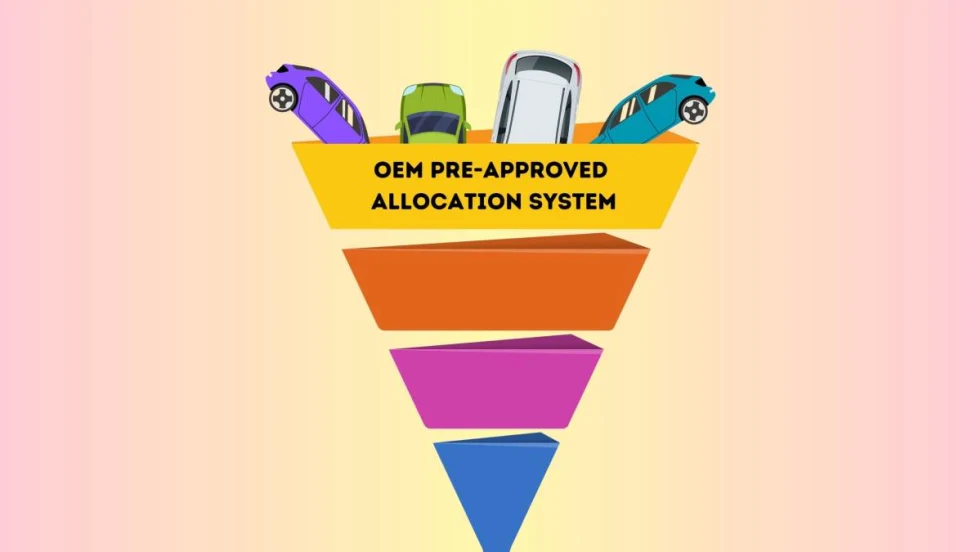
Scheduled Replacement Cycles Are Becoming a Distant Memory
The ongoing difficulty in sourcing replacement vehicles is forcing companies to extend the service lives of vehicles that are unable to be replaced, which, inevitably, increases unscheduled maintenance expenses.
Read More →
Fleet Simplification is the Antidote to Asset Variability
Fleet simplification identifies asset functions to uncover commonality among the equipment and assets. Simplification increases operational efficiency as end-users become accustomed to the controls, displays, and operation of less diverse units.
Read More →
The Dangers of Static Fleet Policies
A fleet policy is a living document, flexible enough to adapt to evolving business priorities, developing industry trends, and changing industry best practices and standards.
Read More →
Short-Term vs. Long-Term Cost Reductions
Corporate procurement staff are often driven by short-term, immediate cost reductions. However, a longer perspective to soft cost savings is critical because fixating on short-term results will hurt a company in the long run.
Read More →
Uptick in Unscheduled Maintenance Increasing Vehicle Downtime
Fleet data analysis can identify recurring downtime issues. It’s important to determine the root causes of downtime so procedures can be developed to minimize such problems.
Read More →
Eliminate Needless Curb Weight to Maximize ICE & EV Efficiencies
Vehicle weight relates directly to fuel economy. In today’s era of electrification, there is also a direct correlation between vehicle weight and battery range.
Read More →
Tech Dependence Risks Dumbing Down Fleet Manager Expertise
The line between creative thinking and problem solving and doing what the data indicates is thin. To lead in fleet management, you need to balance understanding the fundamentals and embracing what smart technology offers.
Read More →
Leverage the Synergy of Safe Driving to Achieve Sustainability and Cost Goals
Safe driving, emission reductions, and cost containment can all be achieved at the same time.
Read More →
The Playbook for Fleet Manager Success
There are many paths to success — most of them involve being flexible, open-minded, and willing to learn.
Read More →