




Fleet Car Maintenance Costs Remain Flat for 2006-CY
Maintenance expenses for fleet cars were flat during the 2006 calendar year compared to 2005. The main factors contributing to the stability of fleet maintenance costs in 2006 were longer oil drain intervals, extended tire tread wear, and increased life from ceramic brake pads.
Maintenance expenses for fleet cars were flat during the 2006 calendar year compared to 2005. The main factors contributing to the stability of fleet maintenance costs in 2006 were longer oil drain intervals, extended tire tread wear, and increased life from ceramic brake pads. These were among the key findings of the 12th annual fleet passenger car maintenance study conducted by GE Capital Solutions Fleet Services, a fleet management company headquartered in Eden Prairie, Minn. The GE study was based on a survey of actual maintenance expenses incurred by 28,292 passenger cars during the 12-month period from Jan. 1 to Dec. 31, 2006.
Although flat, these costs are comparable to the 2005-calendar year when maintenance costs for fleet cars increased an average of 10 to 15 percent, compared to calendar year 2004. The increase in 2005 was the result of higher replacement tire costs and increased labor rates.
A key factor keeping maintenance costs flat has been the overall increase in vehicle quality. “We have seen fewer warranty claims and overall maintenance repairs,” said Eric Strom, product manager maintenance, for GE Capital Solutions Fleet Services. “As shop labor rates and overhead go up, it is offset by having fewer maintenance incidents. These costs will be further offset as OEMs now offer extended powertrain warranties.” Improvements in vehicle diagnostic equipment have also stabilized maintenance costs by increasing first-repair resolution.
Although vehicle quality has improved, Strom does not foresee fleet maintenance costs declining in future years. “There will be an increase in new technology, such as tire pressure monitoring systems, navigation equipment, and increased electronics, which are expensive to replace should a failure occur,” said Strom.
Oil Drain Intervals Extended
A key reason for the stability in preventive maintenance (PM) expense in 2006 is the proliferation of onboard vehicle oil life monitoring systems, said Mark Lange, customer service specialist for GE Capital Solutions Fleet Services. “There is a growing acceptance among fleets to move to a longer oil change interval period when using an oil life monitoring system. We are seeing oil change intervals ranging from 8,000 to 12,000 miles. The extended oil change interval is becoming
an industry norm,” said Lange.
A growing number of fleets are basing oil drain intervals on the onboard oil life monitoring system currently installed on all GM models. This trend is primarily occurring in fleets comprised of 100-percent GM products. However, it has not extended to mixed fleets comprised of multi-manufacturer products, since some fleets feel that different PM schedules may complicate driver communication and create an inconsistent fleet policy.
During normal vehicle operation, onboard oil life monitoring systems tend to extend the oil change interval longer than following a months-in-service or miles-driven PM schedule.
“Overall, there are fewer oil changes, on average, using the onboard oil life monitoring system,” said Strom. Initially, when oil life monitors were first introduced, there was concern that drivers would ignore the oil change light resulting in engine damage. “Over the years, we have not witnessed any catastrophic incidents as a result of a driver failing to change oil when alerted by the oil life monitoring system,” said Lange.
However, GE recommends that fleets do not extend oil change intervals longer than one year. “You need to change the oil annually, regardless of whether the oil light monitor light comes on,” said Lange.
There is also an industry-wide trend to extend oil drain intervals, regardless of whether a vehicle is equipped with an onboard oil monitoring system.
“There are some fleets that follow the old-school recommendation of 3,000-mile oil change intervals; however, DaimlerChrysler recommends a 7,500-mile schedule, and Ford recommends a 5,000- mile schedule,” said Strom.
For the 2007-model year, Ford extended the oil drain interval on the 3.5L engine to 7,500 miles. In 2008, Ford will extend oil change intervals for all engines to 7,500 miles. “As a result of these changes, we will most likely see a decline in the number of PM incidents for oil changes next year,” said Lange.
Preventive maintenance costs have also been impacted by the OEM decision to recommend a blended synthetic oil to reduce engine wear and increase fuel economy.
“For the past six model-years, Ford Motor Co. has recommended the use of 5W20 blended synthetic oil for its vehicles,” said Strom. “This can add between $3 to $7 per oil change.”
Replacement Tire Costs are Up
Replacement tire costs have increased; however, the incident ratio has
decreased due to tires lasting longer.
One reason for increased tire expense is a series of price hikes throughout 2006 by the tire manufacturers in reaction to the higher cost of oil, a key ingredient in manufacturing tires. In addition, there have been ongoing price increases for replacement tires by all manufacturers in the first half of the 2007-calendar year.
“As a result, more fleets are now specifying off-brand, value-price tires as part of their replacement parameters to reduce overall expense,” said Strom.
In addition, one segment of the midsize fleet market has shifted from front-wheel-drive to rear-wheel-drive vehicles. One outcome from this shift has been a continued driver misperception regarding seasonal tire requirements for RWD models.
“There is still a perception among some drivers, and some fleet managers, that a snow tire is required on a RWD vehicle, even though the manufacturer does not recommend it,” said Lange. “Many fleet managers err on the side of caution and approve snow tire purchases, even though they may not be necessary. This has increased overall tire replacement costs.”
Another factor leading to higher tire costs is the trend to larger 17-inch and 18-inch wheel sizes. “The bigger the tire, the more Expensive the replacement tire,” said Lange.
However, ongoing improvements in tire quality in the past decade has resulted in longer wear life, which has helped to offset price increases, said Strom. Tire life has been extended by 10 percent in the past five to 10 years.
Brake Expenses Remain Flat
Brake expenses up to 72,000 miles have remained flat primarily due to the increased use of longer-lasting ceramic brake pads.
“Depending on the replacement parameters, a vehicle could go through its entire service life without having to replace brake pads,” said Lange. “Although ceramic brake pads last longer, it costs about $40 more to replace brake pads made with ceramic materials.”
Four Other Maintenance Trends
Rising Labor Rates: Labor rates are continuing to increase. Today, the average national account labor rate is $60 to $75 per hour, while the average labor rate at a dealership is between
$90 to $100. Some high-cost metro areas, such as the San Francisco Bay
area, have labor rates averaging $125-$150 per hour.
Stainless Steel Exhaust Systems: The maintenance cost for exhaust systems has gone down because they are lasting longer. Today most vehicles are built with a stainless steel exhaust system, which has increased longevity, especially in the snow-belt areas of the country.
Lifetime Fuel Filters: DaimlerChrysler vehicles are equipped with lifetime fuel filters. In the past, fuel filters needed to be changed every 30,000-50,000 miles as part of preventive maintenance. Now all DaimlerChrysler models have a lifetime fuel filter/fuel system regulator in the fuel tank. Substantial savings have resulted by eliminating the need for the $75 per service fuel filter changes.
Cabin Filter Replacements: Most new vehicles are equipped with cabin filters. “This was an expense that didn’t exist 12 years ago. It costs approximately $50 to replace a cabin filter,” said Lange.
More Blog Posts

Fleets Want Trust Restored with Suppliers
During this period of ongoing supply constraints, the trust that fleet managers had with OEMs, upfitters, and dealers has been strained. Fleet managers say they have had too many experiences over the past three years coping with erroneous information, adjusting to multiple price increases, and feeling betrayed by inadequate transparency from suppliers.
Read More →
Scheduled Replacement Cycles Are Becoming a Distant Memory
The ongoing difficulty in sourcing replacement vehicles is forcing companies to extend the service lives of vehicles that are unable to be replaced, which, inevitably, increases unscheduled maintenance expenses.
Read More →
Fleet Simplification is the Antidote to Asset Variability
Fleet simplification identifies asset functions to uncover commonality among the equipment and assets. Simplification increases operational efficiency as end-users become accustomed to the controls, displays, and operation of less diverse units.
Read More →
The Dangers of Static Fleet Policies
A fleet policy is a living document, flexible enough to adapt to evolving business priorities, developing industry trends, and changing industry best practices and standards.
Read More →
Short-Term vs. Long-Term Cost Reductions
Corporate procurement staff are often driven by short-term, immediate cost reductions. However, a longer perspective to soft cost savings is critical because fixating on short-term results will hurt a company in the long run.
Read More →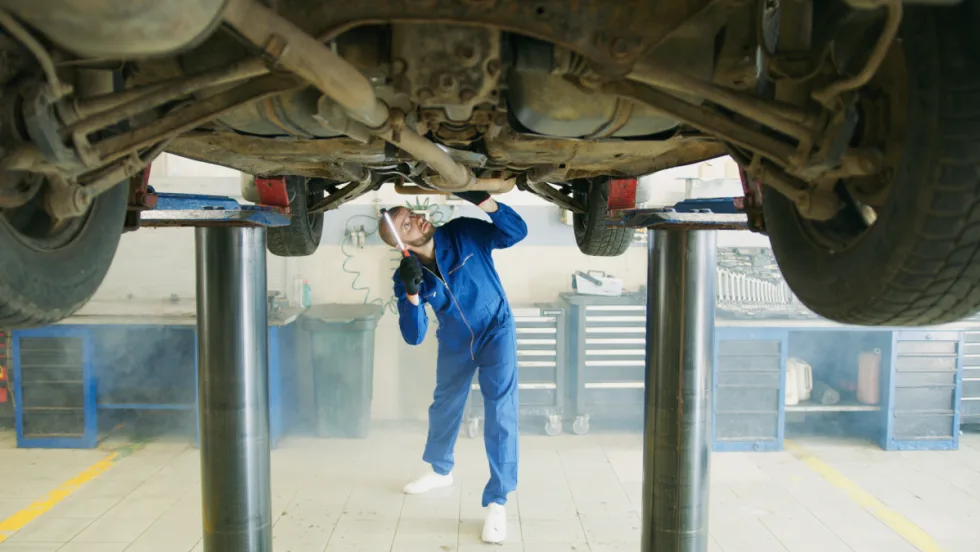
Uptick in Unscheduled Maintenance Increasing Vehicle Downtime
Fleet data analysis can identify recurring downtime issues. It’s important to determine the root causes of downtime so procedures can be developed to minimize such problems.
Read More →
Eliminate Needless Curb Weight to Maximize ICE & EV Efficiencies
Vehicle weight relates directly to fuel economy. In today’s era of electrification, there is also a direct correlation between vehicle weight and battery range.
Read More →
Tech Dependence Risks Dumbing Down Fleet Manager Expertise
The line between creative thinking and problem solving and doing what the data indicates is thin. To lead in fleet management, you need to balance understanding the fundamentals and embracing what smart technology offers.
Read More →
Leverage the Synergy of Safe Driving to Achieve Sustainability and Cost Goals
Safe driving, emission reductions, and cost containment can all be achieved at the same time.
Read More →
The Playbook for Fleet Manager Success
There are many paths to success — most of them involve being flexible, open-minded, and willing to learn.
Read More →