





AF Readers Sound-Off: Should the Fair Housing Act Protect Vocational Fleet Drivers?
Discrimination Against Vocational Vehicles
Many homeowners’ associations (HOAs) place restrictions on the parking rights of commercial vehicles. Here’s how fleet companies can help affected workers.
December 22, 2017
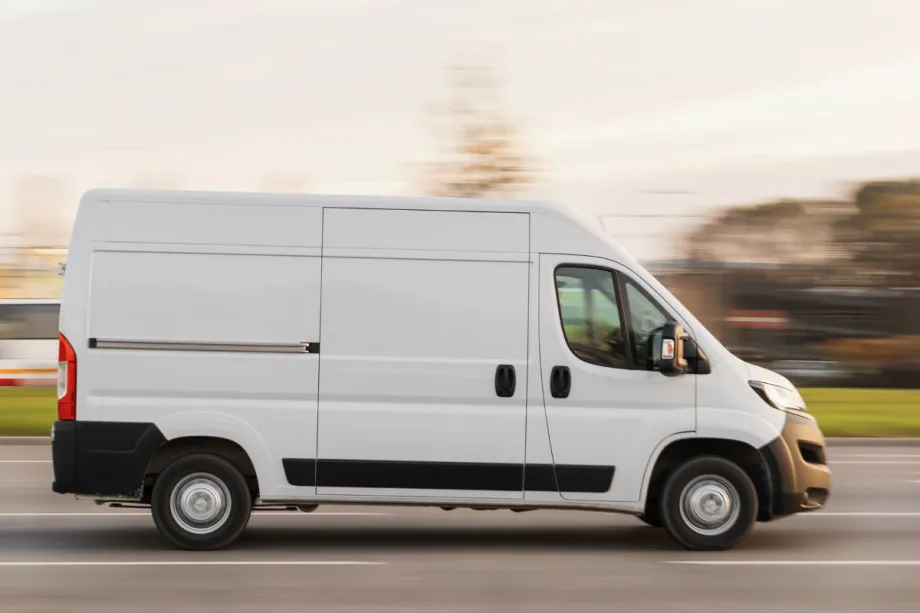
About 70 million Americans live in a community with an HOA. Yet many HOAs do not allow overnight parking of commercial vehicles in the common areas of their communities.
Photo: Canva
5 min to read
Can a branded vocational vehicle be ticketed for being parked in an employee driver’s home driveway? Or can it be subject to a fine if legally parked overnight on the side of a street? Before you say no, think again. These discriminatory practices occur regularly when vocational vehicles are parked in residential areas governed by a homeowners’ association (HOA). In fact, the type of restrictions that can be implemented against vocational or branded vehicles can vary widely and are at the whim of the HOA.
If you think this doesn’t affect many employees, think again. An estimated 70 million Americans live in HOA-governed communities. Approximately 6,000-8,000 new community associations are formed every year, including condominiums, housing cooperatives, and planned communities.
When a company decides to brand its fleet vehicles with either corporate logos or full-vehicle advertising signage, it may inadvertently create a situation that puts its employees in conflict with HOA restrictions on the parking of commercial vehicles in common areas. Most HOA covenants allow commercial vehicles as long as they are garaged with the garage door down, but not all commercial fleet vehicles can be parked in a garage. The dimensions or overall size of the vehicle often precludes parking in these structures. In addition, there is no national uniformity to HOA parking restrictions; they run the gamut, with each local entity having the right to determine its own commercial vehicle restrictions.
The Legal Authority of HOAs
HOAs are formal legal entities created to maintain common areas and have the authority to enforce deed restrictions. Most condominiums, townhouse developments, and many newer single-family subdivisions are governed by HOAs, usually created when the development is built.
Covenants, Conditions & Restrictions (CC&R) are the governing documents that dictate how an HOA operates and what rules owners must obey. These documents and rules are legally enforceable by the HOA, unless a specific provision conflicts with federal, state, or local laws. When you purchase a home, you enter into a contractual agreement with the HOA to abide by its covenants, which include bylaws that empower the board to adopt and enforce rules they believe are necessary for everyone’s good.
Why HOAs Often Restrict Commercial Fleet Vehicle Parking
It is fairly common and permissible among HOAs to restrict or, in more extreme cases, prohibit the parking of commercial vehicles. Restrictions governing commercial motor vehicles are typically found in the CC&Rs governing parking privileges. The parking policy explains the parking rules and specifies procedures for enforcing them; not only is the board allowed to develop the policy, it’s legally obligated to do so.
Often, HOA neighborhoods have very limited parking capacity. Typically, developers want to build the most homes possible to make the most money, so they tend to allot the minimum parking spaces required by law. Unfortunately, that leaves the HOA management company to deal with the shortage. The roads are subject to local regulations that specify the space needed for access by emergency vehicles. When cars are parked on the street, sometimes there isn’t enough clearance for fire trucks to maneuver, which can result in street parking restrictions.
It is customary for HOAs to forbid overnight parking of commercial vehicles in the common areas of their communities. Branded cars or trucks of local vendors or tradesmen, such as plumbers, electricians, HVAC, etc., are allowed to temporarily park within an HOA community as long as they do not park overnight.
Many HOA covenants have rules about parking in driveways, but the rules are mostly to prohibit residents from parking their commercial vehicles out in the open, such as a contractor’s truck, which may have logos and visible equipment on the vehicle.
How Homeowners’ Association Rules Typically Define “Commercial Vehicle”
Broad restrictions on commercial vehicles, like many other provisions in community associations’ governing documents, are well intentioned and meant to preserve the residential character of the community. However, these provisions can give rise to difficult questions regarding how to define commercial vehicles. In many cases, community rules do not provide a clear definition as to what differentiates a work vehicle from a personal vehicle. For instance, an HOA declaration may prohibit a tow truck from being parked in a driveway while at the same time allow a police officer to park an assigned patrol car in a neighboring driveway. While government vehicles and law enforcement vehicles are used for work, they are often not considered “commercial,” and so they evade the restrictions placed on prohibited vehicles.
Typically, the definition of a commercial vehicle is one involved in commerce, such as the buying and selling of goods and services. Some HOA board members argue that all trucks are commercial in nature, so they should not be allowed in driveways. While it is up to the HOA’s discretion to prohibit commercial vehicles, they can’t prohibit every vehicle.
An HOA covenant that simply says “no commercial vehicles,” and attempts to establish a blanket ban regardless of whether any particular car or truck is actually registered as a commercial vehicle, might not hold up in a court of law. Most courts will agree that a passenger truck without any business logos or equipment is a private, passenger vehicle. But HOAs have been known to ticket passenger vehicles parked overnight or in a driveway if they have decals on the rear windows advertising a part-time business, such as pet grooming, cosmetic sales, or a web service.
What Can Be Done?
Legally, HOAs have the authority to control the type of vehicles allowed to park within the communities they administer. However, restricting certain kinds of commercial vehicles becomes problematic, especially if the vehicle is a resident's primary transportation. The common retort is that the individual should have read the CC&R before buying a home in an HOA community.
But what if a company decides to brand its vehicles after an individual becomes a property owner in an HOA? Sometimes, company drivers have a legal recourse in these situations. Most CC&Rs allow their provisions to be amended to eliminate the ban on certain vehicle characteristics if a sufficient percentage of the property owners agree to the change, but this is usually difficult and often very time-consuming.
Let me know what you think at mike.antich@bobit.com.
Subscribe to Our Newsletter
More Blog Posts

Fleets Want Trust Restored with Suppliers
During this period of ongoing supply constraints, the trust that fleet managers had with OEMs, upfitters, and dealers has been strained. Fleet managers say they have had too many experiences over the past three years coping with erroneous information, adjusting to multiple price increases, and feeling betrayed by inadequate transparency from suppliers.
Read More →
Scheduled Replacement Cycles Are Becoming a Distant Memory
The ongoing difficulty in sourcing replacement vehicles is forcing companies to extend the service lives of vehicles that are unable to be replaced, which, inevitably, increases unscheduled maintenance expenses.
Read More →
Fleet Simplification is the Antidote to Asset Variability
Fleet simplification identifies asset functions to uncover commonality among the equipment and assets. Simplification increases operational efficiency as end-users become accustomed to the controls, displays, and operation of less diverse units.
Read More →
The Dangers of Static Fleet Policies
A fleet policy is a living document, flexible enough to adapt to evolving business priorities, developing industry trends, and changing industry best practices and standards.
Read More →
Short-Term vs. Long-Term Cost Reductions
Corporate procurement staff are often driven by short-term, immediate cost reductions. However, a longer perspective to soft cost savings is critical because fixating on short-term results will hurt a company in the long run.
Read More →
Uptick in Unscheduled Maintenance Increasing Vehicle Downtime
Fleet data analysis can identify recurring downtime issues. It’s important to determine the root causes of downtime so procedures can be developed to minimize such problems.
Read More →
Eliminate Needless Curb Weight to Maximize ICE & EV Efficiencies
Vehicle weight relates directly to fuel economy. In today’s era of electrification, there is also a direct correlation between vehicle weight and battery range.
Read More →
Tech Dependence Risks Dumbing Down Fleet Manager Expertise
The line between creative thinking and problem solving and doing what the data indicates is thin. To lead in fleet management, you need to balance understanding the fundamentals and embracing what smart technology offers.
Read More →
Leverage the Synergy of Safe Driving to Achieve Sustainability and Cost Goals
Safe driving, emission reductions, and cost containment can all be achieved at the same time.
Read More →
The Playbook for Fleet Manager Success
There are many paths to success — most of them involve being flexible, open-minded, and willing to learn.
Read More →